Deep-Sea Shielded Data & Power Cable

Deep-Sea Shielded Data & Power Cable

BS-SSC-SHDCB-PRP-04A1


Regular price$17.70

Additional Units Made to Order - Ships in 2-5 Weeks

HS 8544.42 (CN)
Shipping calculated at checkout.

Cable Configuration

Deep-Sea Shielded Data & Power Cable is a flexible hybrid underwater cable designed for combined subsea power and data transmission in ROVs, underwater robots, subsea cameras, sensors, control systems, and other marine electronics operating in fresh water or seawater.

Compared with the standard Deep-Sea Underwater Cable, this shielded cable is intended for applications where cleaner signal transmission and reduced electrical noise are important. Aluminum foil shielding, drain wires, and twisted data pairs help reduce interference between conductors and support reliable communication for common subsea data links such as CAN bus, RS485, Ethernet, USB-connected network cameras, and other low-voltage signal systems.

Two cable configurations are available. The 4-conductor purple cable uses 2 × 22AWG power conductors and 1 twisted pair of 24AWG data conductors, making it well suited for compact camera, sensor, and control applications that require both power and a shielded data pair in one cable. The 10-conductor green cable uses 2 × 22AWG power conductors and 4 twisted pairs of 24AWG data conductors, providing additional signal capacity for multi-channel communication, Ethernet-style wiring layouts, or custom subsea electronics requiring multiple data pairs.

Both versions use fine-stranded tinned copper conductors, Teflon FEP insulation, a polyether PUR outer jacket, Kevlar tensile reinforcement, and materials selected for compatibility with resin potting or vulcanized sealing methods. Waterproof sealing must be implemented at both cable ends before underwater use.

The cable can be used with compatible Blu-Sub cable penetrators, gland cable penetrators, coupling tubes, and Deep-Sea Cable Connector Series components. Compatible sealing and connection components are sold separately, and connector pin count should be checked carefully before selecting a connector style.

Sold in 1-meter (3.28-foot) increments. Quantities are entered in 1-meter units.

Standard spool length is 50 meters (164 feet), but longer continuous lengths may be available upon special request. Please contact us if you require extended runs beyond 50 meters. Extended lead times may apply.

Material Fine-stranded tinned copper conductors, Teflon FEP insulation, aluminum foil shielding with drain wire, Kevlar tensile layer, ultra-thin non-woven separator, polyether PUR outer jacket
Available Configurations 4-conductor hybrid shielded cable: 2C 22AWG power + 1TP 24AWG data
10-conductor hybrid shielded cable: 2C 22AWG power + 4TP 24AWG data
Color Purple jacket: 4-conductor version
Green jacket: 10-conductor version
Depth Rating Up to 1,000 m / 3,281 ft (with appropriate waterproofing at cable ends)
Dimensions Overall cable diameter: 7.5 ±0.2mm for both cable variants

This site is protected by hCaptcha and the hCaptcha Privacy Policy and Terms of Service apply.

Description

Deep-Sea Shielded Data & Power Cable is intended for subsea systems where power conductors and protected data conductors need to be routed together through a single underwater cable. The hybrid construction helps simplify cable management for compact underwater electronics while providing shielded conductor groups for signal transmission.

The aluminum foil shielding and drain wire construction help reduce electrical noise and interference in data circuits, while the twisted 24AWG signal pairs support common subsea communication layouts such as CAN bus, RS485, Ethernet-style wiring, and USB-connected camera or network-device applications. Final communication performance depends on protocol, termination method, cable length, connected electronics, and system-level testing.

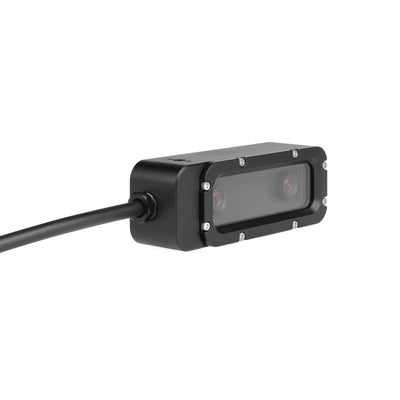
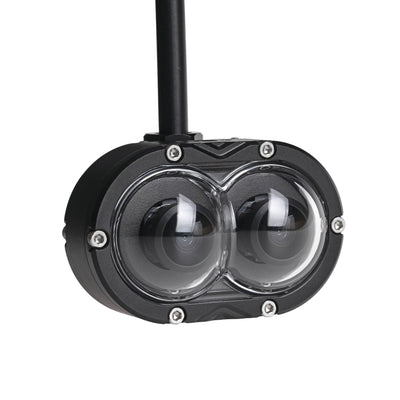
The 4-conductor purple cable is the simpler option for systems requiring 2 × 22AWG power conductors and one twisted 24AWG data pair. This makes it a useful choice for compact cameras, sensors, or low-conductor-count control devices. This cable format is used in Blu-Sub camera systems such as the Blu-Vision Fish-Eye Binocular Video Camera and Blu-Vision Binocular Video Camera.

The 10-conductor green cable provides 2 × 22AWG power conductors and four twisted 24AWG data pairs for applications requiring additional signal capacity. This can be useful for custom subsea electronics, multi-signal camera systems, sensor packages, or applications where multiple shielded data pairs are preferred in one cable.

Both cable versions use fine-stranded tinned copper conductors, Teflon FEP insulation, a polyether PUR jacket, Kevlar tensile reinforcement, and non-woven internal separation. The outer jacket and conductor construction are selected to support sealing methods such as resin potting or vulcanized cable termination. Waterproof sealing must be completed at both cable ends before underwater use.

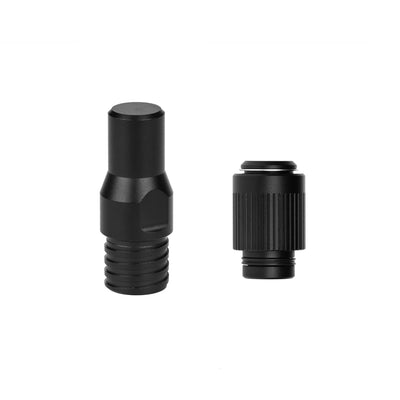
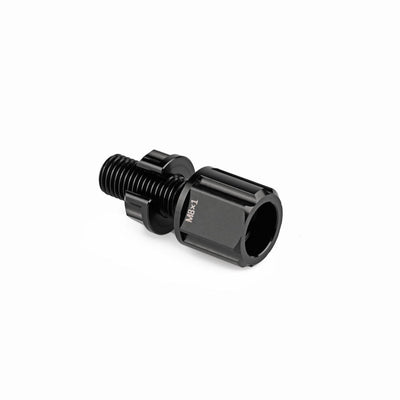
For enclosure pass-throughs, both cable versions are compatible with the 7.8 × 5.6 sizes of the Deep-Sea M10 Gland Cable Penetrator in aluminum or stainless steel, and the 7.8 × 5.6 size of the Low-Depth M10 Gland Cable Penetrator. They may also be used with the M10×1 Deep-Sea Cable Penetrator for potted installations. Cable penetrators, gland penetrators, potting materials, and connector hardware are sold separately.

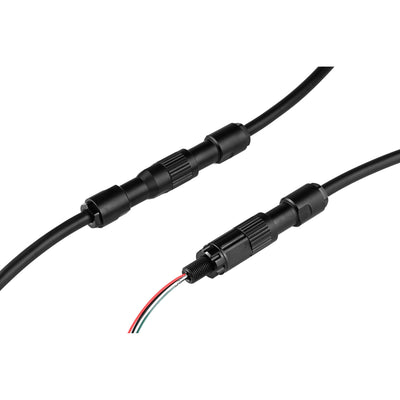
These cables can also be integrated with the Deep-Sea Cable Connector Series and the Subsea M10 Coupling Tube for modular cable assemblies, inline joints, or enclosure-mounted connections. Connector pin count must be checked carefully before selecting a connector, since 3-pin and 6-pin connector versions may not provide enough contacts to terminate every conductor in the 4-conductor or 10-conductor cable.

The final depth capability and waterproof performance of any cable assembly depend on the selected penetrator, connector, potting method, sealing process, installation quality, and the lowest-rated component in the assembly.


Large Top Image

Cable Penetrator Options

Sold Separately

Blu-Sub offers several cable penetrator options that can be used with the Deep-Sea Shielded Data & Power Cable, depending on the required depth rating, sealing method, and whether the cable needs a potted pass-through or a gland-style compression seal.

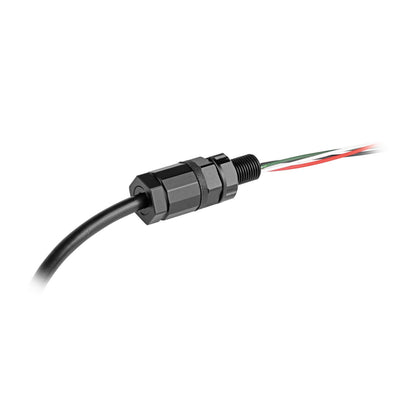
Deep-Sea Cable Penetrators – Potted cable penetrators for high-pressure subsea pass-throughs. Both shielded cable variants are compatible with the M10×1 size. Depth Rating: Up to 1,000m / 3,281ft

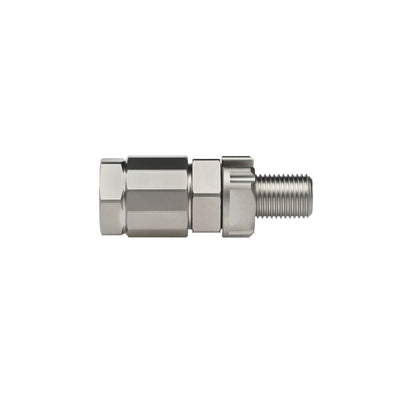
Deep-Sea M10 Gland Cable Penetrators – Threaded M10 gland penetrators with compression sealing for modular housing use and added cable strain relief. Both shielded cable variants are compatible with the 7.8 × 5.6 aluminum and stainless steel versions. Depth Rating: Up to 1,000m / 3,281ft

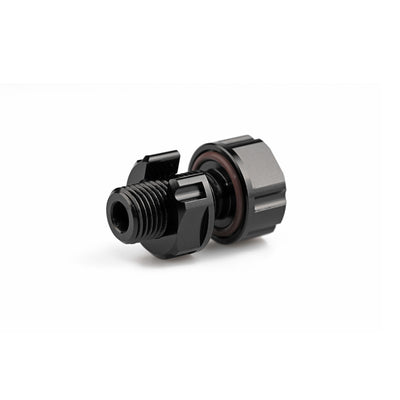
Low-Depth M10 Gland Cable Penetrators – Compact gland penetrators for shallow water, low-pressure, or cost-sensitive systems. Both shielded cable variants are compatible with the 7.8 × 5.6 copper version. Depth Rating: Up to 100m / 328ft

Mid-Depth M8 Gland Cable Penetrators – Not compatible with these shielded cable variants due to cable diameter and gland size requirements.

A compatibility guide is provided below to help you choose the correct penetrator based on cable diameter, sealing method, depth requirement, and installation style. Cable penetrators, gland cable penetrators, potting compound, and related sealing hardware are sold separately.

Compatible With: Deep-Sea Cable Connector Systems

Sold Separately

Deep-Sea Cable Connectors – Female Socket & Male Plug
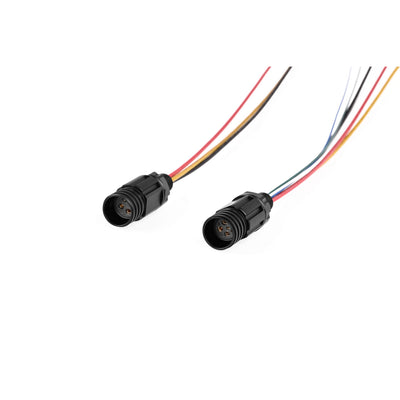
Modular in-line connectors designed to terminate underwater cables with sealed male or female plug ends. These connectors allow the Deep-Sea Shielded Data & Power Cable to form removable connections between subsea devices, cameras, sensors, and control systems.

Deep-Sea Cable Connectors – M10 Bulkhead
Panel-mount connectors that allow the cable to interface directly with watertight enclosures, end-caps, or other subsea housings. A matching male plug from the Deep-Sea Cable Connector Series is required to complete a watertight removable connection.

Deep-Sea Cable Connectors – Dummy Sealing Cap
Used to seal and protect unused connector ends when not in operation. Dummy caps help prevent moisture ingress and protect connector contacts during storage, transit, deployment preparation, or standby conditions.

The Deep-Sea Shielded Data & Power Cable may be used with compatible components from the Deep-Sea Cable Connector Series, but connector pin count must be checked carefully before selection. Some connector versions are available with 3-pin or 6-pin layouts, which may not provide enough contacts to terminate every conductor in the 4-conductor or 10-conductor shielded cable. In these cases, only selected conductors may be usable, or a different termination method may be required.

Compatible With: Subsea M10 Coupling Tube

Sold Separately

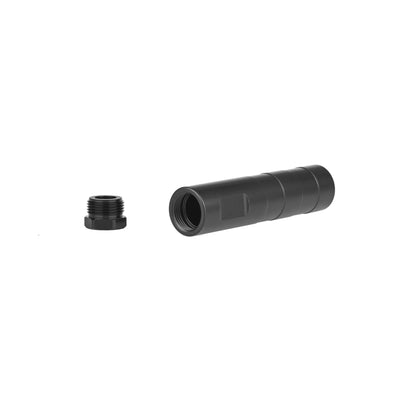
The Deep-Sea Shielded Data & Power Cable is compatible with the Subsea M10 Coupling Tube, which can be used to create inline cable joints, modular cable assemblies, or pass-through connection points using compatible penetrators and potting compound.

This can be useful when joining shielded cable sections, repositioning penetrator-mounted components, or creating serviceable cable routing layouts for subsea cameras, sensors, control modules, and other underwater electronics. Compatible penetrators, potting compound, and coupling hardware are sold separately.

Waterproofing performance depends on the selected penetrators, potting method, installation quality, and the lowest-rated component in the finished assembly.

Non-Shielded Underwater Cable

Sold Separately

For applications that do not require shielded data pairs, the Deep-Sea Underwater Cable is available as a standard non-shielded cable option for subsea power, signal, and general underwater wiring applications.

The Deep-Sea Shielded Data & Power Cable is the better option when power and protected data conductors need to be routed together in one hybrid cable, especially for subsea cameras, sensors, control systems, CAN bus, RS485, Ethernet-style wiring, or USB-connected network camera applications.

Choose the standard Deep-Sea Underwater Cable when shielding is not required, or choose the Deep-Sea Shielded Data & Power Cable when twisted data pairs and shielding are important for the application.

SHIPPING LIST

Deep-Sea Shielded Data & Power Cable
4-Conductor, 2C 22AWG Power + 1TP 24AWG Data, Purple
Cable of corresponding specification × N meters

Deep-Sea Shielded Data & Power Cable
10-Conductor, 2C 22AWG Power + 4TP 24AWG Data, Green
Cable of corresponding specification × N meters

Technical Specifications
Specification 4-Conductor Purple Cable
2C 22AWG Power + 1TP 24AWG Data
10-Conductor Green Cable
2C 22AWG Power + 4TP 24AWG Data
Blu-Sub SKU BS-SSC-SHDCB-PRP-04A1 BS-SSC-SHDCB-GRN-10A1
Product Type Hybrid shielded underwater data and power cable Hybrid shielded underwater data and power cable
Conductor Layout 2 × 22AWG power conductors + 1 twisted pair of 24AWG data conductors 2 × 22AWG power conductors + 4 twisted pairs of 24AWG data conductors
Overall Cable Diameter 7.5 ±0.2mm 7.5 ±0.2mm
Jacket Material Polyether PUR Polyether PUR
Jacket Color Purple Green
Jacket Thickness ≥1.35mm ≥1.0mm
22AWG Power Conductors Fine-stranded tinned copper wire, 19 × 0.16mm Fine-stranded tinned copper wire, 19 × 0.16mm
22AWG Power Core Colors Red + Black, tightly twisted pair Red + Black, not twisted
22AWG Insulated Wire Diameter 1.3 ±0.1mm 1.3 ±0.1mm
24AWG Data Conductors Multi-stranded fine-stranded tinned copper wire, 19 × 0.12mm Multi-stranded fine-stranded tinned copper wire, 19 × 0.12mm
24AWG Data Pair Colors Blue + White, tightly twisted pair White-Blue, White-Green, White-Orange, White-Brown, tightly twisted pairs
24AWG Insulated Wire Diameter 1.05 ±0.05mm 1.05 ±0.05mm
Insulation Material Teflon FEP Teflon FEP
Drain Conductor Fine-stranded tinned copper drain wire, 19 × 0.12mm Fine-stranded tinned copper drain wire, 19 × 0.12mm
Shielding Structure Aluminum foil shielding around the red/black twisted pair, aluminum foil shielding around the blue/white twisted pair, plus overall aluminum foil shielding over the cabled cores; conductive side contacts drain wire Overall aluminum foil shielding over the cabled cores; conductive side faces inward and contacts the drain wire
Tensile Strength Member Kevlar yarn filled, placed outside the aluminum foil Kevlar yarn filled, placed outside the aluminum foil
Separator Ultra-thin non-woven fabric Ultra-thin non-woven fabric
Working Voltage 300V 300V
Long-Term Working Temperature -20°C to 80°C -20°C to 80°C
Storage Temperature -20°C to 50°C -20°C to 50°C
Cable Tensile Strength >100kg >100kg
Compatible Gland Size 7.8 × 5.6 7.8 × 5.6
Waterproofing Requirement Waterproof sealing required at both cable ends before underwater use Waterproof sealing required at both cable ends before underwater use


Image 4
Image 5


Cable Penetrators & Gland Cable Penetrators Compatibility Guide:

Item Deep-Sea Cable Penetrators Deep-Sea M10 Gland Cable Penetrators Low-Depth M10 Gland Cable Penetrators Mid-Depth M8 Gland Cable Penetrators
Deep-Sea Shielded Data & Power Cable
4-Conductor, 2C 22AWG Power + 1TP 24AWG Data, Purple
BS-SSC-SHDCB-PRP-04A1
M10×1 Aluminum
BS-SSC-CBLPN-BLK-10A1
7.8 × 5.6 Stainless Steel
BS-SSC-GLPEN-SSX-78A1
7.8 × 5.6 Aluminum
BS-SSC-GLPEN-ALU-78A1
7.8 × 5.6 Copper
BS-SSC-GLPEN-NPB-BRA1
Not Compatible
Deep-Sea Shielded Data & Power Cable
10-Conductor, 2C 22AWG Power + 4TP 24AWG Data, Green
BS-SSC-SHDCB-GRN-10A1
M10×1 Aluminum
BS-SSC-CBLPN-BLK-10A1
7.8 × 5.6 Stainless Steel
BS-SSC-GLPEN-SSX-78A1
7.8 × 5.6 Aluminum
BS-SSC-GLPEN-ALU-78A1
7.8 × 5.6 Copper
BS-SSC-GLPEN-NPB-BRA1
Not Compatible

Both cable variants have an outer diameter of 7.5 ±0.2mm and are compatible with the 7.8 × 5.6 gland cable penetrator sizes listed above. Cable penetrators, gland cable penetrators, potting compound, connectors, and related sealing hardware are sold separately.

The final depth rating and waterproof performance of the cable assembly depend on the selected penetrator or connector, sealing method, installation quality, and the lowest-rated component in the assembly.


What is the Deep-Sea Shielded Data & Power Cable used for?
The Deep-Sea Shielded Data & Power Cable is used for underwater and subsea systems that need to carry both power and data through a single hybrid cable. Typical applications include ROVs, underwater robots, subsea cameras, sensors, control systems, and custom marine electronics.

What is the difference between the 4-conductor purple cable and the 10-conductor green cable?
The 4-conductor purple cable includes 2 × 22AWG power conductors and 1 twisted pair of 24AWG data conductors. It is suitable for compact systems that require power and one shielded data pair. The 10-conductor green cable includes 2 × 22AWG power conductors and 4 twisted pairs of 24AWG data conductors, providing additional signal capacity for systems requiring multiple data pairs.

Why use a shielded cable instead of a standard underwater cable?
Shielded cable is useful when signal quality and electrical noise reduction are important. The aluminum foil shielding, drain wires, and twisted data pairs help reduce interference between conductors and support cleaner data transmission in subsea communication and camera systems.

Can this cable be used for CAN bus, RS485, Ethernet, or USB camera systems?
Yes, this cable is intended for data communication applications such as CAN bus, RS485, Ethernet-style wiring, USB-connected network cameras, and other low-voltage signal systems. Final communication performance depends on cable length, protocol, termination, shielding connection, connected electronics, and system-level testing.

Does cable length affect signal transmission?
Yes. Cable length can affect signal quality, voltage drop, noise susceptibility, and communication reliability. The cable length should be selected and tested based on the specific data protocol, baud rate, voltage, connected equipment, and operating environment.

Is the cable waterproof by itself?
The cable jacket is designed for underwater and subsea use, but the cable ends are not waterproof unless properly sealed. Waterproof sealing must be implemented at both cable ends before underwater use.

How can the cable ends be waterproofed?
Waterproofing depends on the required depth rating, service life, connection style, and whether the cable needs to be removable. Common methods include compatible cable penetrators, gland cable penetrators, resin potting, vulcanized cable terminations, or waterproof connector assemblies.

Which Blu-Sub cable penetrators are compatible?
Both cable variants are compatible with the 7.8 × 5.6 sizes of the Deep-Sea M10 Gland Cable Penetrator in aluminum or stainless steel, and the 7.8 × 5.6 size of the Low-Depth M10 Gland Cable Penetrator. They may also be used with the M10×1 Deep-Sea Cable Penetrator for potted cable pass-throughs. These components are sold separately.

Can this cable be used with Blu-Sub Deep-Sea Cable Connectors?
Yes, it can be used with compatible components from the Deep-Sea Cable Connector Series, including inline connectors, M10 bulkhead connectors, and dummy sealing caps. Connector pin count must be checked before selection, since 3-pin and 6-pin connector versions may not provide enough contacts to terminate every conductor in the 4-conductor or 10-conductor cable.

Can this cable be used with the Subsea M10 Coupling Tube?
Yes, this cable can be used with the Subsea M10 Coupling Tube for inline joints, modular cable assemblies, or repositioning penetrator-mounted components. Compatible penetrators, sealing materials, and coupling hardware are sold separately.

What is the operating temperature range?
The long-term working temperature range is -20°C to 80°C. The storage temperature range is -20°C to 50°C.

Can the cable jacket be damaged and still used underwater?
No. A damaged cable jacket can affect waterproofing and may lead to short circuits, open circuits, corrosion, or signal problems. Do not use damaged cable in underwater applications unless it has been properly inspected, repaired, and re-qualified for the intended use.

How should the cable be stripped?
Cable stripping can be done with suitable hand tools such as diagonal cutters or a sharp blade, or with appropriate stripping equipment for batch processing. Care should be taken not to damage the insulation, shielding, drain wire, or conductors. The internal Kevlar tensile layer may require separate cutting.

What is the minimum order quantity?
The cable is sold in 1-meter increments. Quantities are entered in 1-meter units.


Recently viewed