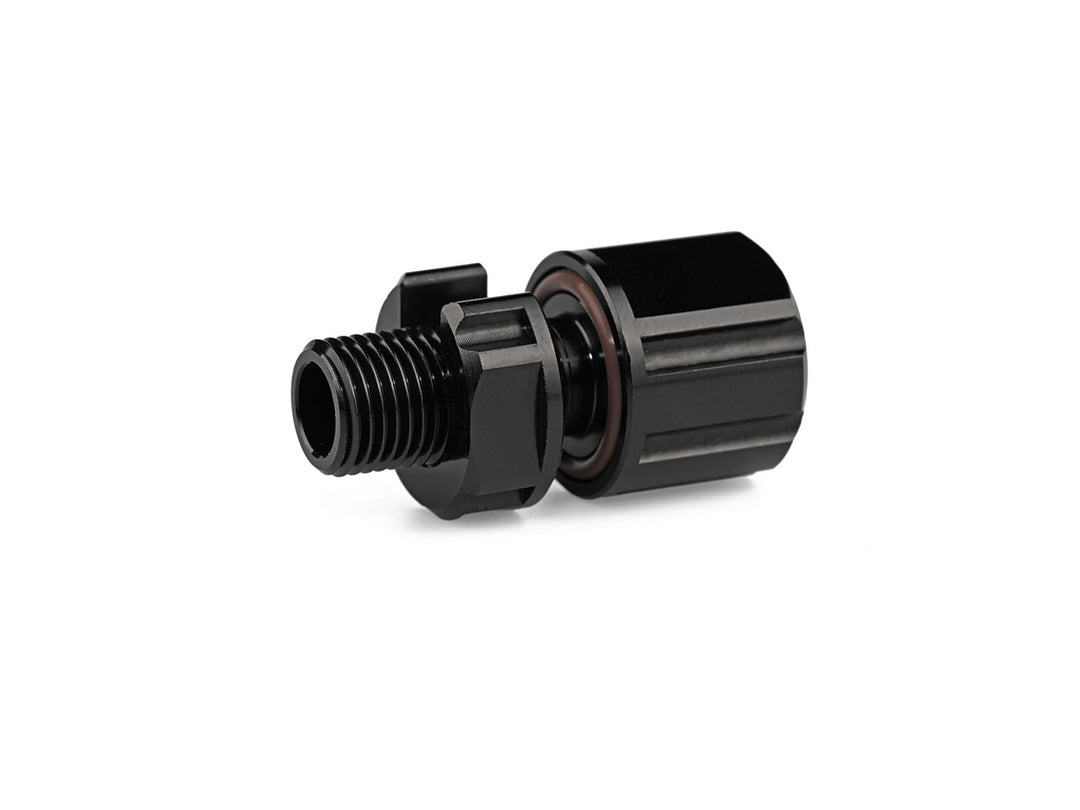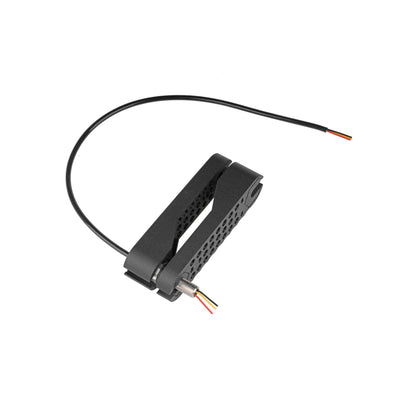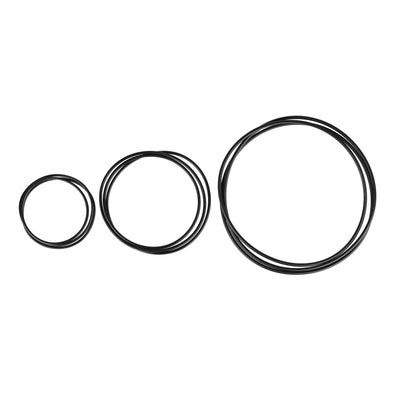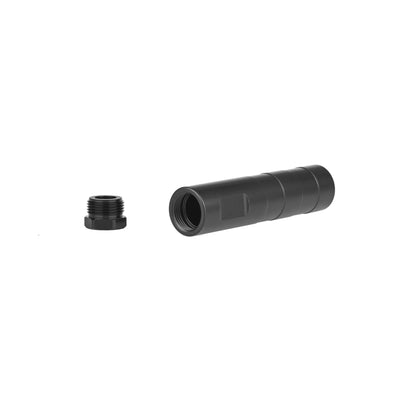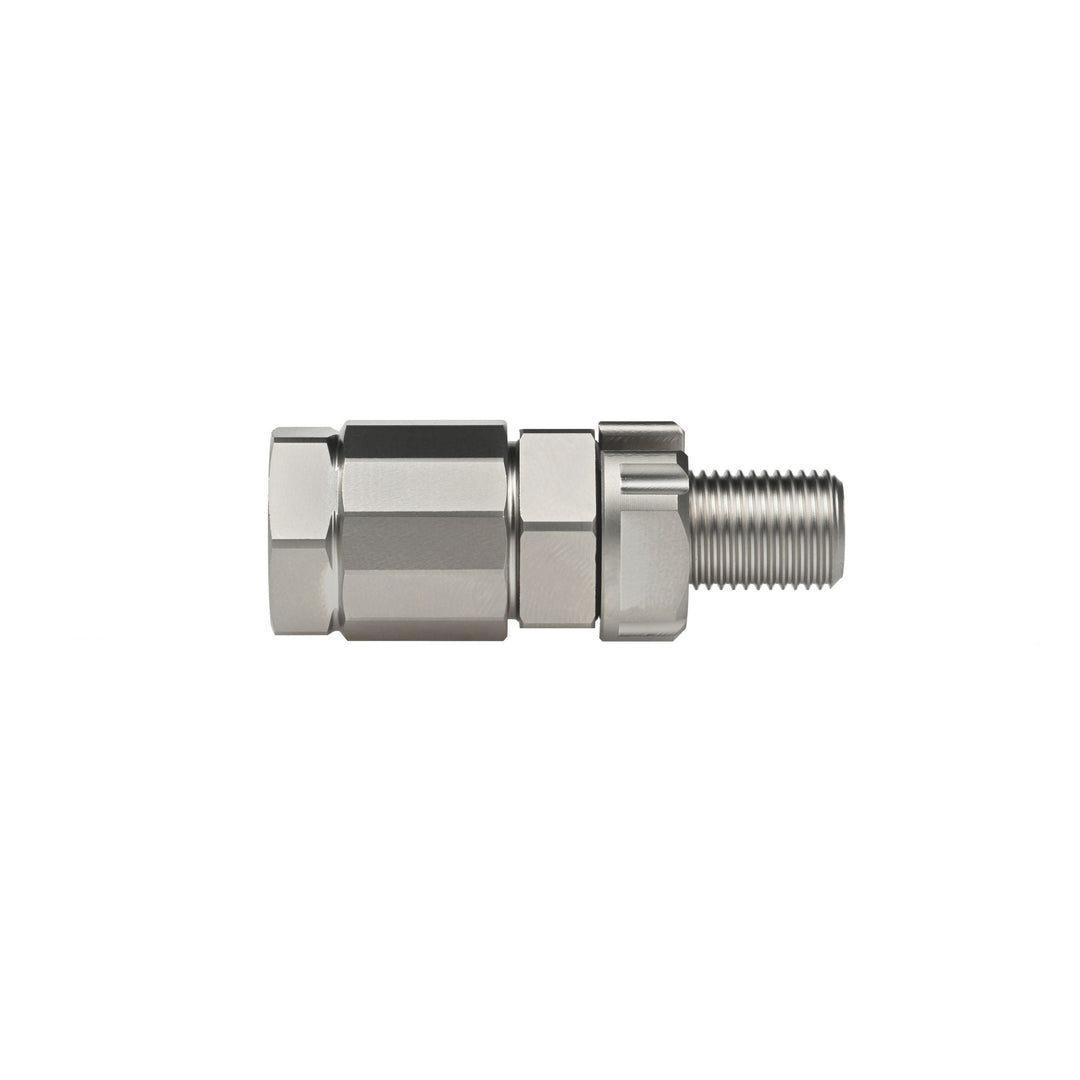
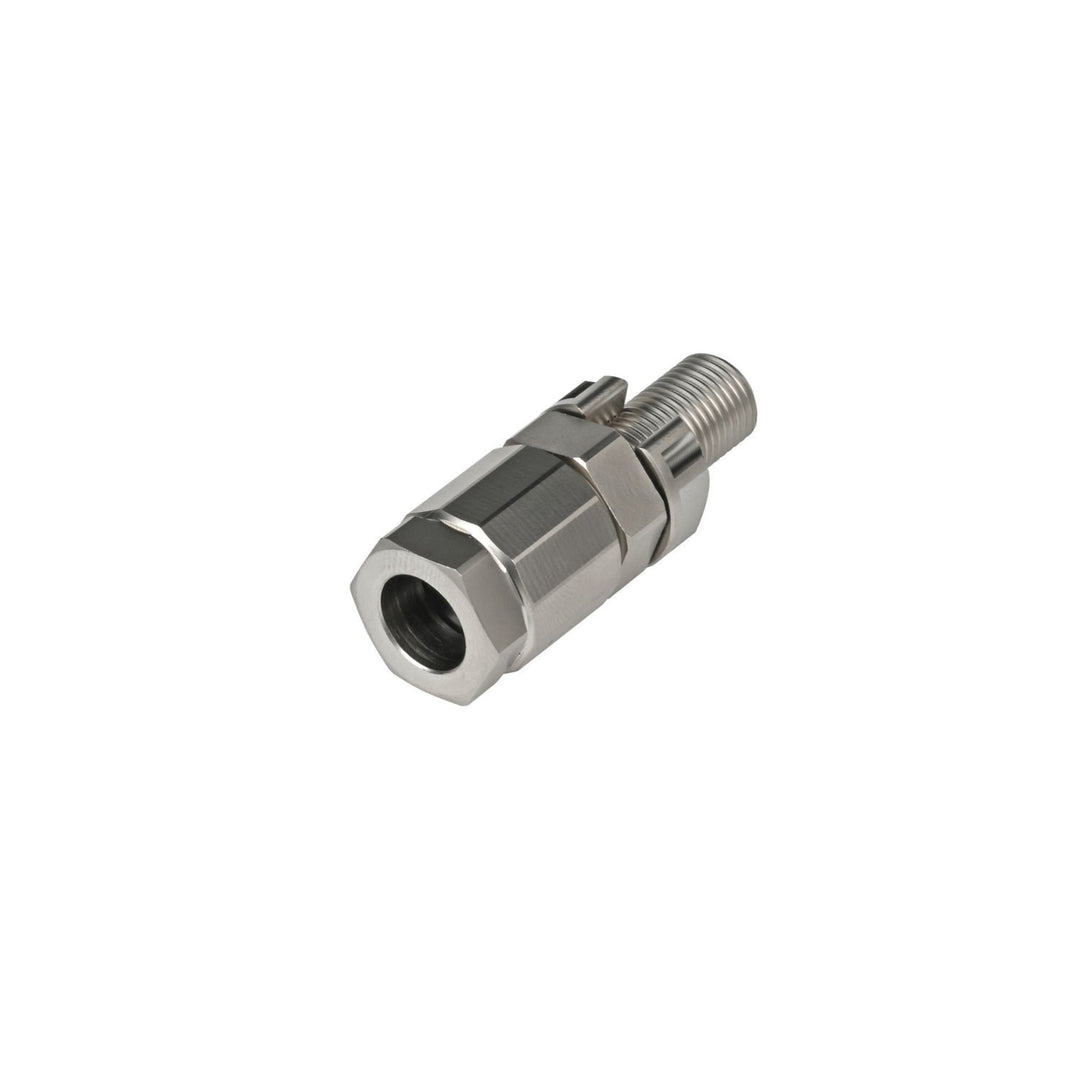


Low-Depth M10 Gland Cable Penetrator is a compact, cost-effective sealing solution engineered for underwater cable pass-through applications at depths up to 100m / 328ft. It uses O-rings and mechanical compression to form a watertight seal around the cable sheath, enabling secure cable entry into shallow subsea enclosures.
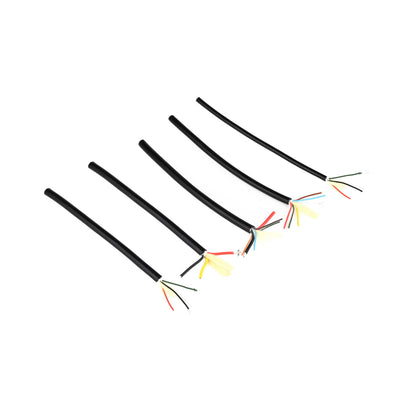
This penetrator is compatible with selected variants from Blu-Sub’s two deep-sea cable families: the Deep-Sea Underwater Cable for general subsea power, signal, and equipment wiring, and the Deep-Sea Shielded Data & Power Cable for hybrid power/data runs with twisted-pair shielded data conductors. A compatibility guide is provided below to assist with model selection based on cable diameter.
This low-depth model offers a more economical alternative to Deep-Sea M10 Gland Cable Penetrators, which are pressure-rated between 300m and 1,000m. The Low-Depth version is ideal for sensor housings, ROVs, inspection systems, and other shallow-water applications requiring secure and waterproof cable access. It can also work with many third-party subsea cables when the cable diameter matches the selected gland size. Please refer to the specification guide and contact us if you need help confirming compatibility.
Compatibility Chart for Low-Depth M10 Gland Cable Penetrator with Deep-Sea Underwater Cable:
| Cable | Compatible Low-Depth M10 Gland Cable Penetrator |
|---|---|
|
3-Core (16AWG) BS-SSC-3CORE-BLK-16A1 |
7.8 × 5.6 Copper (Nickel-Plated Brass) BS-SSC-GLPEN-NPB-BRA1 |
|
6-Core (24AWG) BS-SSC-6CORE-BLK-24A1 |
7.2 × 4.6 Copper (Nickel-Plated Brass) BS-SSC-GLPEN-NPB-BRA2 |
|
4-Core (28AWG) BS-SSC-4CORE-BLK-28A1 |
5.6 × 3.4 Copper (Nickel-Plated Brass) BS-SSC-GLPEN-NPB-BLA1 |
|
6-Core Mixed (2 × 16AWG / 4 × 26AWG) BS-SSC-6CORE-BLK-MXA1 |
8.4 × 5.9 Copper (Nickel-Plated Brass) BS-SSC-GLPEN-NPB-BRA3 |
|
4-Core Mixed (2 × 24AWG / 2 × 26AWG) BS-SSC-4CORE-BLK-MXA1 |
7.8 × 4.1 Copper (Nickel-Plated Brass) BS-SSC-GLPEN-NPB-BRA4 |
|
3-Core (20AWG) BS-SSC-3CORE-BLK-20A1 |
6.4 × 4.3 Copper (Nickel-Plated Brass) BS-SSC-GLPEN-NPB-BLA2 |
Compatibility Chart for Low-Depth M10 Gland Cable Penetrator with Deep-Sea Shielded Data & Power Cable:
| Cable | Compatible Low-Depth M10 Gland Cable Penetrator |
|---|---|
|
4-Conductor, 2C 22AWG Power + 1TP 24AWG Data, Purple BS-SSC-SHDCB-PRP-04A1 |
7.8 × 5.6 Copper (Nickel-Plated Brass) BS-SSC-GLPEN-NPB-BRA1 |
|
10-Conductor, 2C 22AWG Power + 4TP 24AWG Data, Green BS-SSC-SHDCB-GRN-10A1 |
7.8 × 5.6 Copper (Nickel-Plated Brass) BS-SSC-GLPEN-NPB-BRA1 |
Seal Construction Theory:
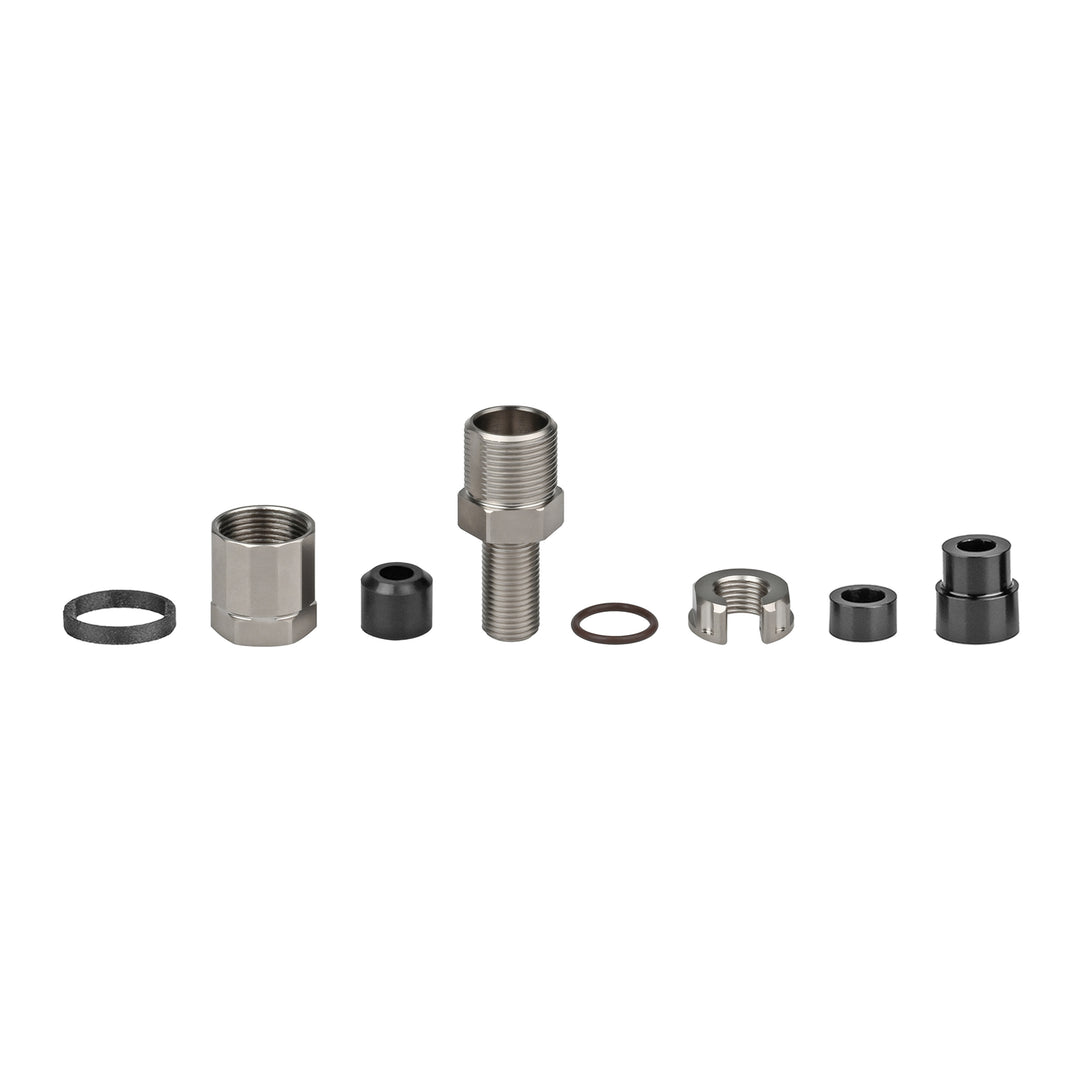
The sealing mechanism uses a split compression plug and a sleeve ring, which are pressed inward by the locking cap to deform and expand the sealing element both radially and axially. This forms a watertight grip around the cable sheath while locking it mechanically into place. When the locking cap is properly tightened, the seal compresses until the cable sheath exhibits a visible reduction in diameter—indicating a secure hold and resistance to cable pullout. As external pressure increases with submersion, the cable sheath compresses inward, forcing the sealing sleeve to press more firmly into the beveled interior of the penetrator, enhancing the watertight seal under pressure.
Each penetrator model is supplied with a matched set of components: locking cap, split compression plug, sleeve ring, and sealing ring. These parts are tailored to accommodate different cable sheath diameters and wall thicknesses. The internal bore of the sleeve ring is sized to the cable's minimum sheath diameter, preventing pressure-driven cable migration. The split design of the compression plug ensures even sealing and prevents twisting or displacement during tightening. Optional custom sleeve rings may be used to reduce cost by integrating the sleeve directly into the penetrator body.
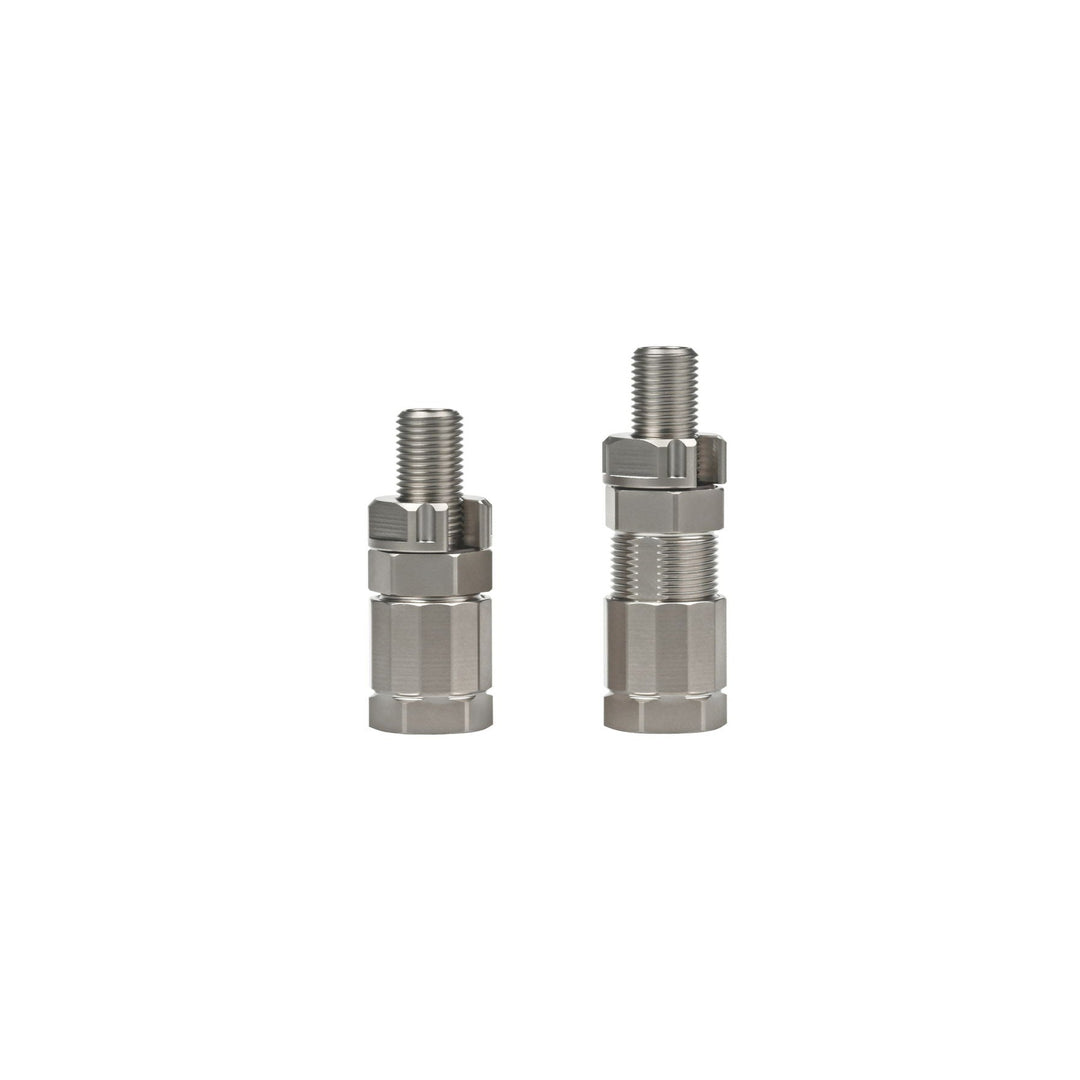
The thickness of the gap ring (washer) determines the depth of thread engagement, the compression pressure applied by the locking cap, and the final sealing force. It is important to follow the recommended gap ring thickness to ensure proper installation and consistent waterproofing performance.

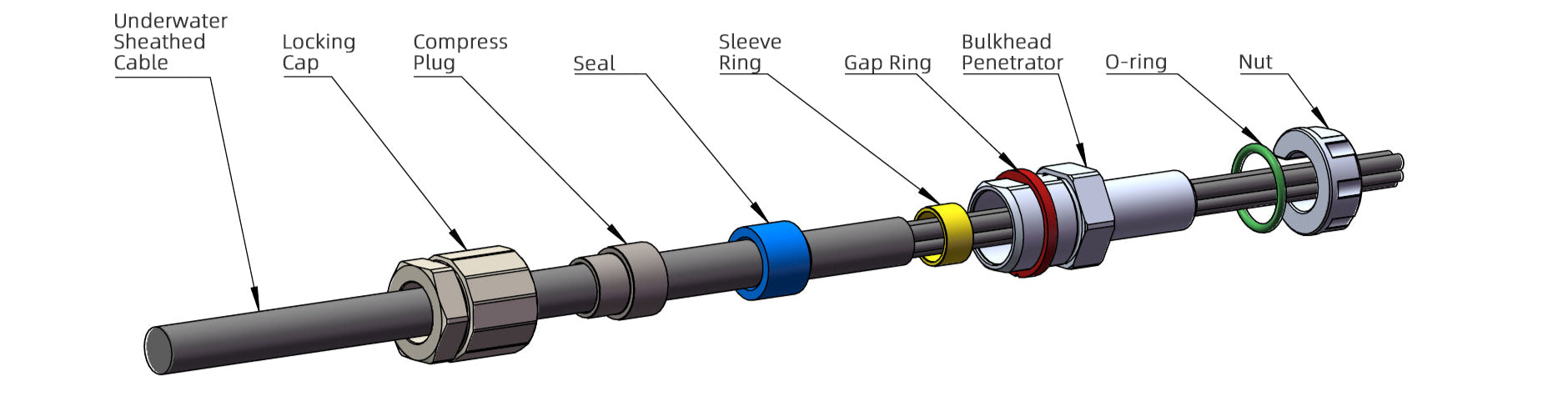


Low-Depth M10 Gland Cable Penetrators are designed to create a watertight seal around compatible Blu-Sub deep-sea cable sizes using a compression-based locking system. A compatibility guide is provided above to help identify which cable types and gland sizes are supported.
These penetrators can be used with selected variants from both Blu-Sub deep-sea cable families: the Deep-Sea Underwater Cable for general subsea power, signal, and equipment wiring, and the Deep-Sea Shielded Data & Power Cable for hybrid power/data runs with twisted-pair shielded data conductors.
These penetrators are also suitable for use with third-party cables when the cable diameter matches the selected gland size. Refer to the specifications for dimensional guidance, and contact us to confirm compatibility if needed.

Blu-Sub offers several alternative cable penetrators for subsea power and communication cables, each suited for different installation and depth requirements:
Deep-Sea Cable Penetrators – Epoxy-sealed design ideal for permanent, high-pressure installations. Depth Rating: Up to 1,000 m / 3,281 ft
Deep-Sea M10 Gland Cable Penetrators – Similar threaded format with a longer body and robust strain relief for deepwater modular housing. Depth Rating: Up to 1,000 m / 3,281 ft
Mid-Depth M8 Gland Cable Penetrators – Slimmer profile suited for compact enclosures and tight mounting spaces. Depth Rating: Up to 300 m / 984 ft
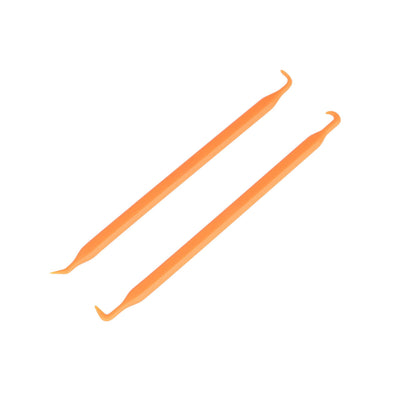
The Scratch-Proof Wrench Tool is designed to fit Blu-Sub Low-Depth M10 Gland Cable Penetrators, enabling safe and accurate installation without damaging the gland body. It is strongly recommended when working with copper and aluminum penetrators to avoid surface scratches and ensure sealing surfaces remain intact. The tool is also fully compatible with stainless steel versions, though metal wrenches may be used if preferred. Two tools are required to achieve proper alignment and sealing pressure during assembly.

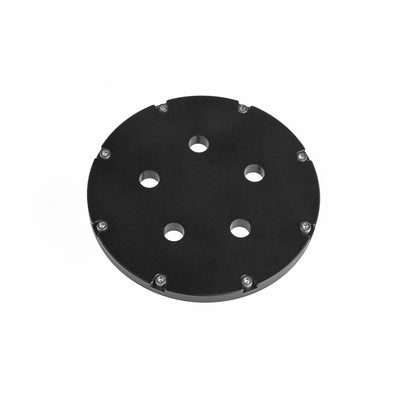
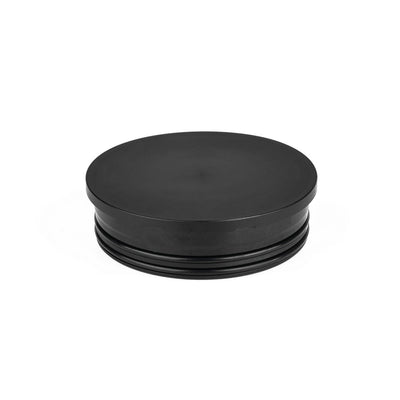
Subsea Aluminum End-Cap
Select versions include unthreaded M10 holes or blank positions that can be drilled to accept the Low-Depth M10 gland cable penetrator. Installed using a rear locking nut to ensure a watertight seal.
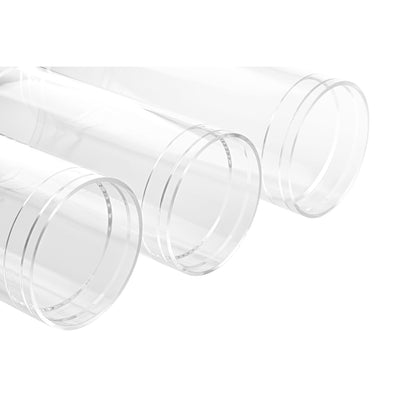
Subsea Acrylic End-Cap
Transparent, cost-effective end-cap option available with precision-drilled M10 thru-holes or blank versions for custom drilling. Compatible with the Low-Depth M10 gland cable penetrator using a rear locking nut. Intended for shallow-water use with lower depth ratings.
Subsea Polymer Flange & End-Cap
User-drillable to accept M10 penetrators. Ideal for low-pressure, modular, or surface-rated systems requiring flexible cable access with secure sealing.
Subsea Watertight Enclosure Box
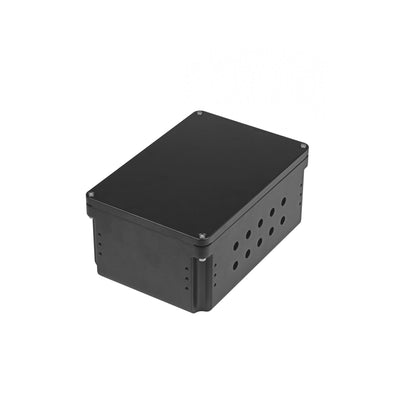
Pre-configured with 20 unthreaded M10 ports, allowing direct installation of Low-Depth M10 gland cable penetrators using standard rear locking nuts for pressure-rated entry.
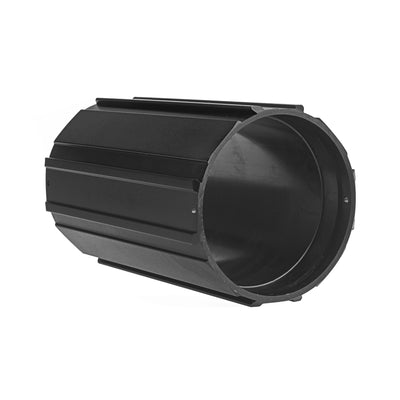
Subsea M10 Coupling Tube
Enables an inline sealed feedthrough using a single M10 threaded port. Compatible with the Low-Depth M10 gland cable penetrator and includes an internal cavity for protected splices or terminations.


This product can be installed using the Universal M8/M10 Installation Wrench, a dedicated tool designed for Blu-Sub M8 and M10 bulkhead-style components such as penetrators, switches, sensors, and connector-style hardware.
Its compact dual-end design allows installation in tight or closely spaced layouts, while cable-pass slots allow the wrench to slide over pre-attached cables, enabling installation or servicing without disconnecting wiring.
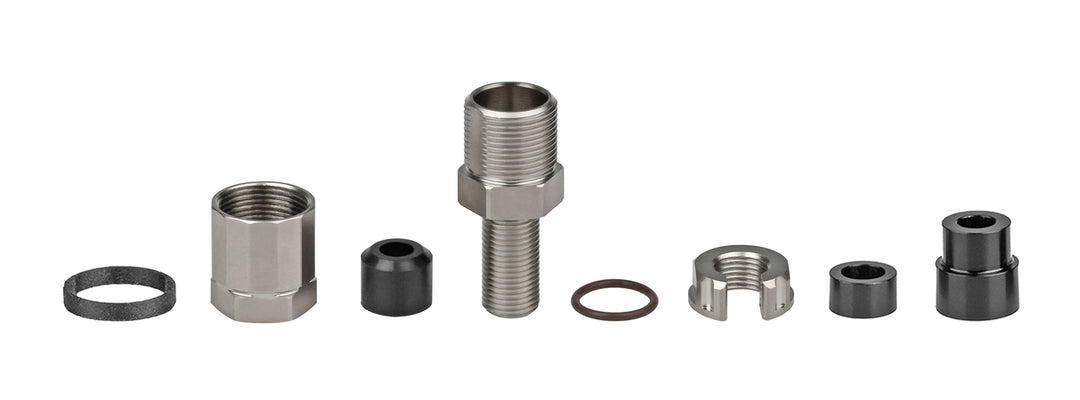
Compatible With: Deep-Sea Underwater Cable
| Item | Main Material | Applicable Cable Specifications | Sleeve Ring (A × B) | Compression Plug (A) | Gap Ring Thickness (S) | O-ring | Waterproofing Depth | Weight |
|---|---|---|---|---|---|---|---|---|
|
Subsea M10 Low-Depth Gland Cable Penetrator 7.8 × 5.6 BS-SSC-GLPEN-NPB-BRA1 |
Copper (Nickel-Plated Brass) |
3 × 16AWG BS-SSC-3CORE-BLK-16A1 |
7.8 × 5.6 | 7.8 | 3.0 | #3 Brown | 100m | ≈46g |
|
Subsea M10 Low-Depth Gland Cable Penetrator 7.2 × 4.6 BS-SSC-GLPEN-NPB-BRA2 |
Copper (Nickel-Plated Brass) |
6 × 24AWG BS-SSC-6CORE-BLK-24A1 |
7.2 × 4.6 | 7.2 | 2.5 | #3 Brown | 100m | ≈46g |
|
Subsea M10 Low-Depth Gland Cable Penetrator 5.6 × 3.4 BS-SSC-GLPEN-NPB-BLA1 |
Copper (Nickel-Plated Brass) |
4 × 28AWG BS-SSC-4CORE-BLK-28A1 |
5.6 × 3.4 | 5.6 | 4.0 | #2 Black | 100m | ≈46g |
|
Subsea M10 Low-Depth Gland Cable Penetrator 8.4 × 5.9 BS-SSC-GLPEN-NPB-BRA3 |
Copper (Nickel-Plated Brass) |
2 × 16AWG + 4 × 26AWG BS-SSC-6CORE-BLK-MXA1 |
8.4 × 5.9 | 8.4 | 3.5 | #3 Brown | 100m | ≈46g |
|
Subsea M10 Low-Depth Gland Cable Penetrator 7.8 × 4.1 BS-SSC-GLPEN-NPB-BRA4 |
Copper (Nickel-Plated Brass) |
2 × 24AWG + 2 × 26AWG BS-SSC-4CORE-BLK-MXA1 |
7.8 × 4.1 | 7.8 | 2.5 | #3 Brown | 100m | ≈46g |
|
Subsea M10 Low-Depth Gland Cable Penetrator 6.4 × 4.3 BS-SSC-GLPEN-NPB-BLA2 |
Copper (Nickel-Plated Brass) |
3 × 20AWG BS-SSC-3CORE-BLK-20A1 |
6.4 × 4.3 | 6.4 | 4.5 | #2 Black | 100m | ≈46g |
Compatible With: Deep-Sea Shielded Data & Power Cable
| Item | Main Material | Applicable Cable Specifications | Sleeve Ring (A × B) | Compression Plug (A) | Gap Ring Thickness (S) | O-ring | Waterproofing Depth | Weight |
|---|---|---|---|---|---|---|---|---|
|
Subsea M10 Low-Depth Gland Cable Penetrator 7.8 × 5.6 BS-SSC-GLPEN-NPB-BRA1 |
Copper (Nickel-Plated Brass) |
4-Conductor, 2C 22AWG Power + 1TP 24AWG Data, Purple BS-SSC-SHDCB-PRP-04A1 10-Conductor, 2C 22AWG Power + 4TP 24AWG Data, Green BS-SSC-SHDCB-GRN-10A1 |
7.8 × 5.6 | 7.8 | 3.0 | #3 Brown | 100m | ≈46g |
Dimension drawings provided below:
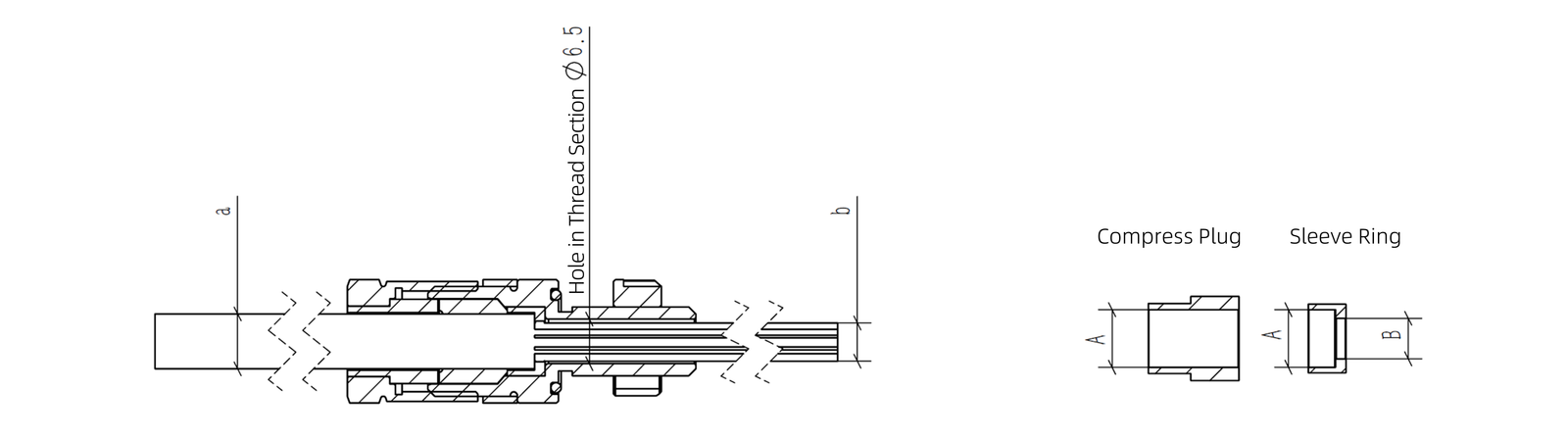
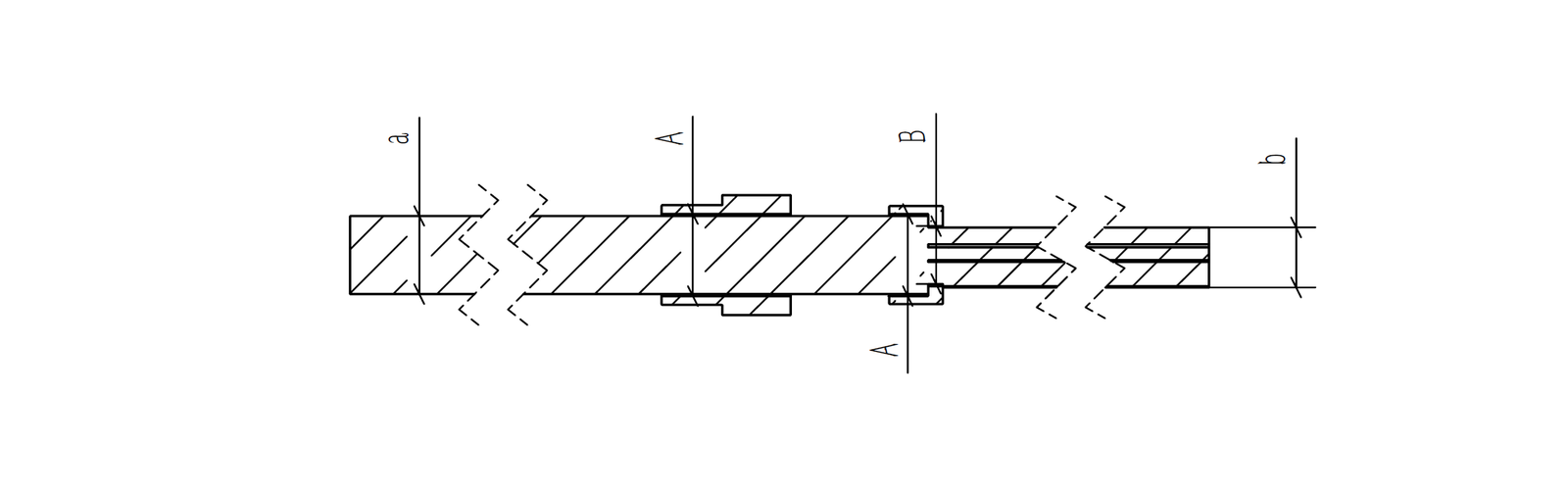
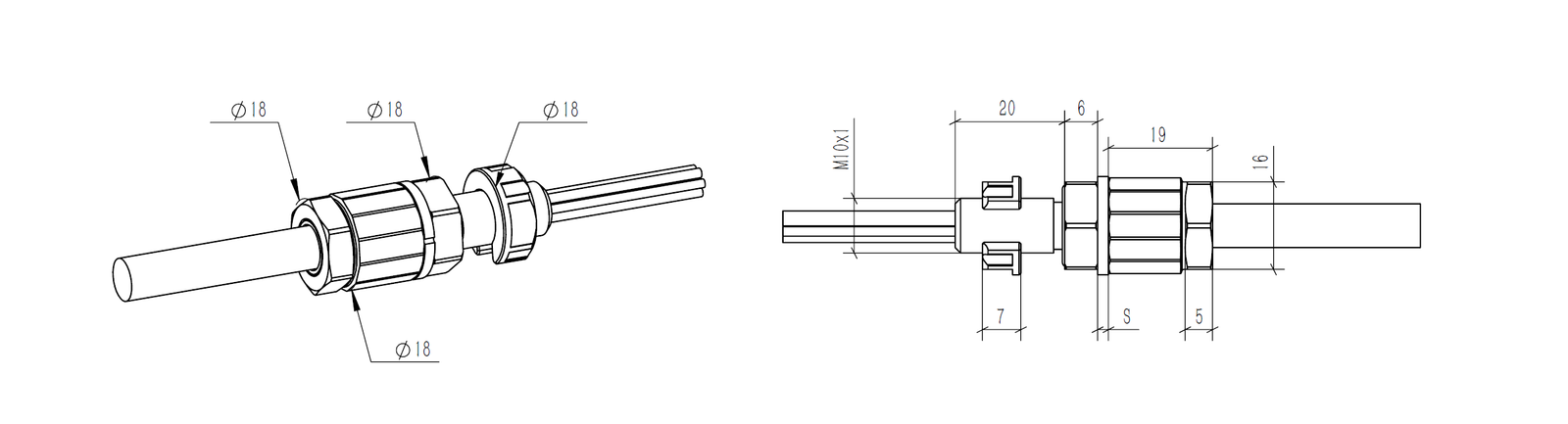
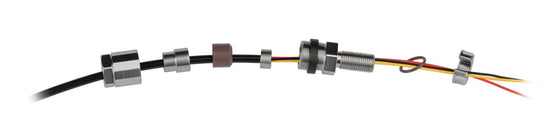
Tip: The surface of the copper gland penetrator will discolor after coming into contact with water. This is a natural result of oxidation, especially in marine or humid environments, and is purely cosmetic. The change in color does not affect sealing performance or structural integrity. See example image below.

To ensure a proper seal, select the correct model by evaluating two cable dimensions:
Compare these to the AxB sleeve ring specs shown in the dimension drawings. A proper fit must meet:
When your cable falls within this range, standard gap rings can be used. Note: sheath material and hardness also affect sealing reliability.
If your cable falls outside these guidelines, we recommend validation testing:
Need help? We can support custom sizing. Contact us with your cable specs and reference the dimension drawings above.
Note: In the dimension drawings, "S" refers to the thickness of the gap ring.
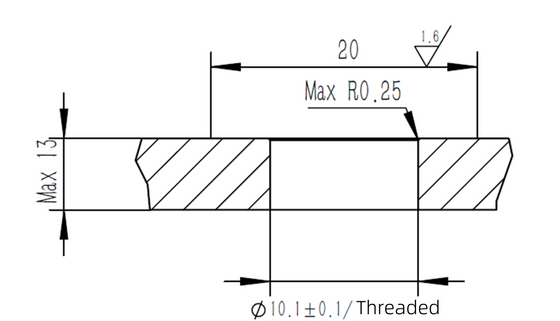
Product: Low-Depth M10 Gland Cable Penetrators
Description: Compact, shallow-water-rated gland-style penetrators for M10 threaded ports. These provide a watertight seal for Deep-Sea Cables entering enclosures in low-depth ROV, AUV, or sensor applications.
Installation Guide:
Notes:
Can the sealing part be disassembled and assembled repeatedly?
It is not recommended to disassemble the sealing section repeatedly. If disassembly is necessary, limit it to no more than two times. Avoid reusing the same section of compressed cable — trim the cable sheath before reinstalling.
How is the waterproof depth guaranteed?
The mechanical design ensures that, when the locking cap is properly tightened, the internal compression creates a reliable seal rated for depths up to 100 m.
What are the advantages over glue-filled cable penetrators or Deep-Sea Cable Connectors?
This solution does not require potting or curing time. The seal is created by mechanical compression alone. It is more convenient, allows for disassembly, and provides a non-pluggable fixed cable exit — unlike Deep-Sea Cable Connectors, which are designed for repeated mating.
Is the depth rating theoretical?
No — the 100 m rating is based on real-world pressure testing. While not designed for deep-sea use, it offers reliable performance for shallow to moderate depth underwater projects.