The Subsea M10 Rotary Waveband Switch provides a durable and flexible solution for multi-channel circuit control in underwater systems. Designed for installation in sealed enclosures, it allows users to select among 2 to 7 switched outputs and OFF without opening the housing. The stated 3- to 8-position count includes OFF. Clear mechanical feedback and tactile “clicks” confirm each position, while the latching rotary design supports continuous 360° rotation in either direction for seamless mode or signal selection.
Constructed with a black anodized aluminum bulkhead and red anodized knob, the switch is depth-rated to 1,000 m and built to withstand harsh subsea environments. It includes color-coded signal wires—one wire per active position, plus a black common wire—for straightforward integration into control or logic circuits. Each output supports up to 0.5 A at 24 VDC or 0.2 A at 48 VDC, making it suitable for low-current signal switching.
For applications requiring higher power switching, the waveband switch is fully compatible with external control electronics such as relay modules or the MOS Low-Side Switch Board. This allows it to serve as a user interface for toggling power to lights, motors, or other subsea hardware while isolating the control logic from load current.
Designed for ease of installation, the switch includes a protective circular step to prevent scratches during mounting and a semi-circular groove at the head for tool-free adjustment using snap ring pliers. For optimal fastening, anti-slip washers and Loctite threadlocker are recommended to prevent loosening from vibration or pressure changes.
The Subsea M10 Rotary Waveband Switch is ideal for underwater mode selection, waveform routing, or multi-function control interfaces on ROVs, sensor modules, or embedded subsea systems requiring compact, sealed, and mechanically positive switching.


Each active position can independently control a separate MOS Low-Side Switch Board, allowing you to toggle between different lights, devices, or power channels using a single rotary selector.
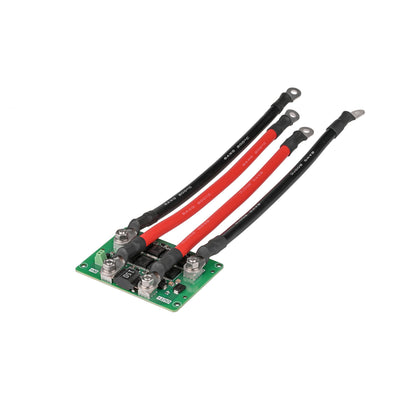
MOS Low-Side Switch Board
A logic-level power control module that operates on the low (negative) side of a DC load. Pair one board per active position to build multi-channel lighting or control systems. Available in 15 A, 30 A, and 120 A versions with fuse protection and optional shell.

The Subsea M10 Rotary Waveband Switch installs easily into a variety of Blu-Sub subsea enclosures using a standard M10 mounting port. Each enclosure provides proper sealing and mechanical stability for reliable operation at depth. Ensure sufficient internal clearance and panel thickness are available for the switch body and wiring.
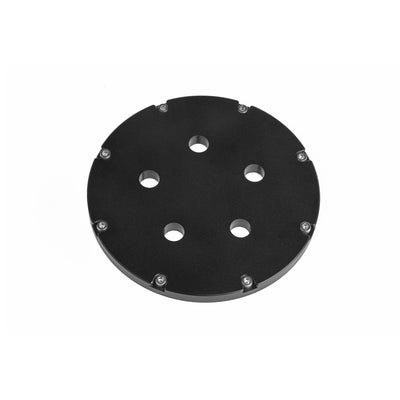
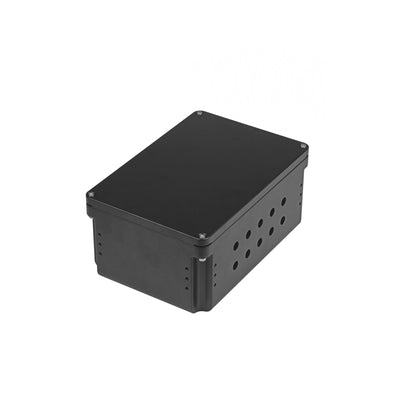
Subsea Watertight Enclosure Box
Compact aluminum enclosure rated to 300 m, pre-drilled with twenty M10 ports—ideal for installing rotary switches, signal indicators, and sensors. No modification required.
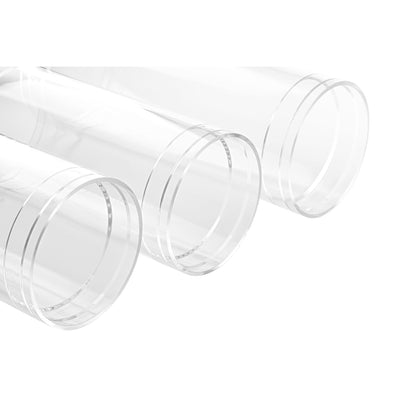
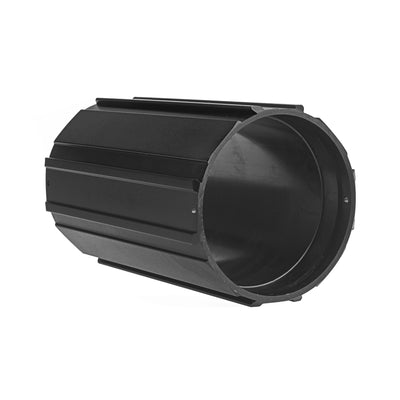
Subsea Enclosure Acrylic Tube
Transparent cast acrylic body rated to 250 m, compatible with Blu-Sub aluminum or acrylic end-caps. Select end-caps with M10 mounting ports for seamless integration of the switch.
Subsea Enclosure Aluminum Tube
Rugged aluminum tube enclosure rated to 1,000 m. Use with matching aluminum or acrylic end-caps that include M10 mounting ports to support rotary switch installation in high-pressure environments.
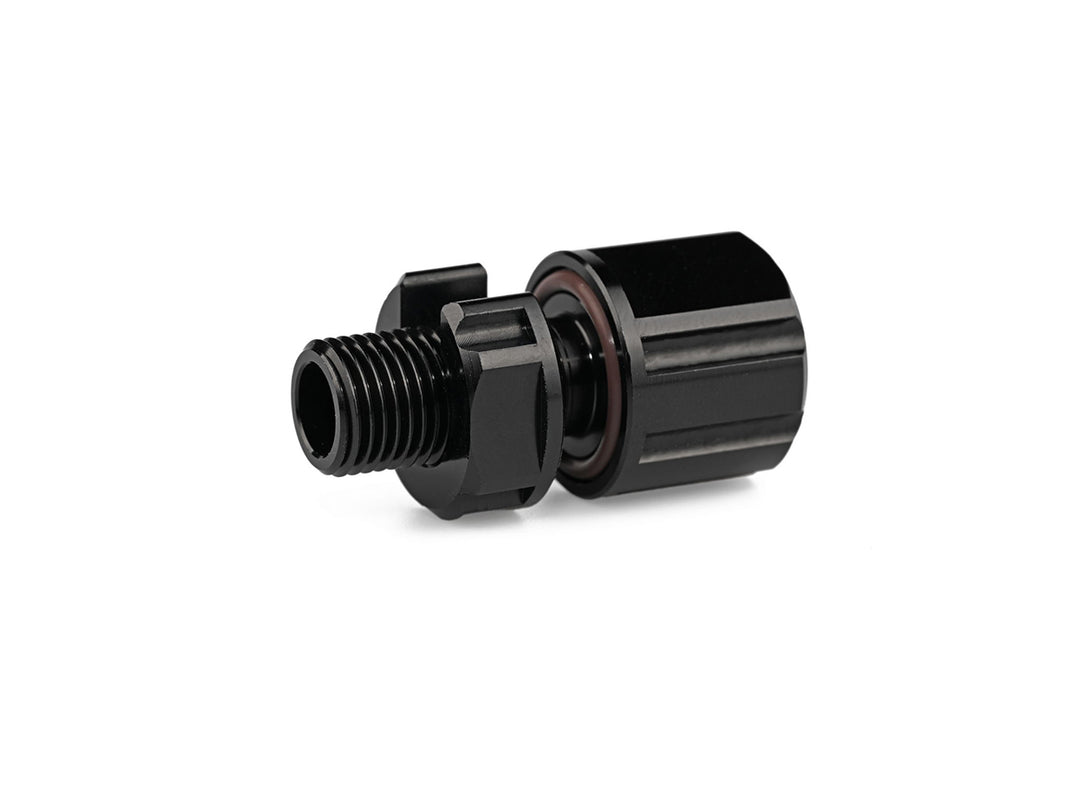
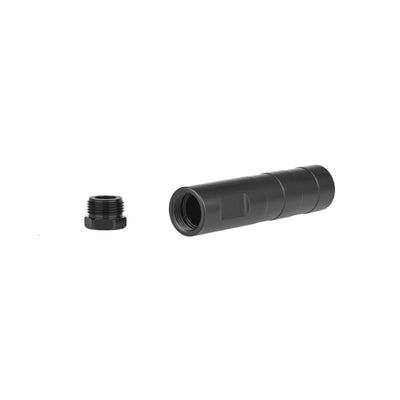
The Subsea M10 Coupling Tube provides an external mounting solution for the rotary waveband switch when direct installation into an enclosure is not possible. It offers internal space for wiring and can be sealed with epoxy for waterproof integrity and added strain relief. Ideal for modular ROV or AUV systems that require accessible and removable control interfaces.

This product can be installed using the Universal M8/M10 Installation Wrench, a dedicated tool designed for Blu-Sub M8 and M10 bulkhead-style components such as penetrators, switches, sensors, and connector-style hardware.
Its compact dual-end design allows installation in tight or closely spaced layouts, while cable-pass slots allow the wrench to slide over pre-attached cables, enabling installation or servicing without disconnecting wiring.


| Subsea M10 Rotary Waveband Switch – Variants | |
| Material | 6061 Aluminum |
| Appearance | Black Bulkhead, Red Knob |
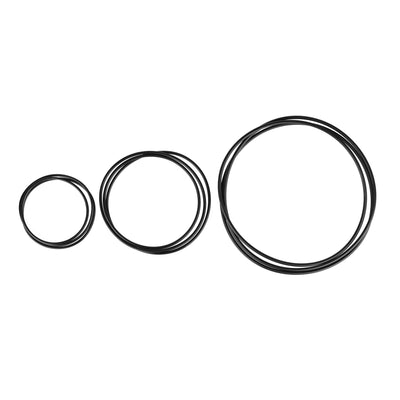
| O-ring Size | Ø12 × 1.5 |
| O-ring Material | FKM75 Brown Fluorine Rubber |
| Available Positions (Including OFF) | 3 / 4 / 5 / 6 / 7 / 8 positions |
| Performance Characteristics | |
| Maximum Rated Depth | 1,000 m / 3,280 ft |
| Design Lifetime | 3 years or 500 cycles to rated depth / 1,500 times of on-off |
| Temperature Rating | -20 ~ 70 °C |
| Rotational Operating Force | 400 ± 150 g |
| Dielectric Strength | 500 VAC (1 min) |
| Insulation Resistance | 100 MΩ min. @ 500 VDC |
| Contact Resistance | 100 mΩ max. |
| Electrical Performance | 0.5 A @ 24 VDC; 0.2 A @ 48 VDC |
| Wire Specification | 24 AWG |
| Rotational Direction | Unlimited 360° in any direction |
| OFF Position (Open Circuit) | Black common wire disconnected from all output wires. |
| Wire Colors | Black, Red, Yellow, Blue, Green, White, Brown, Purple |
| Wire Length | ≈200 mm |
| Common Terminal Wire Color | Black |
| Waveband Switch Position Mapping | |||
| Item | Total Wires (Including Common) | Band Effective Angle Range | Wire Definition (0-Black = Common) |
| 3-position Waveband Switch | 3 | 90° | 0-Black 1-Red 2-Yellow |
| 4-position Waveband Switch | 4 | 135° | 0-Black 1-Red 2-Yellow 3-Blue |
| 5-position Waveband Switch | 5 | 180° | 0-Black 1-Red 2-Yellow 3-Blue 4-Green |
| 6-position Waveband Switch | 6 | 225° | 0-Black 1-Red 2-Yellow 3-Blue 4-Green 5-White |
| 7-position Waveband Switch | 7 | 270° | 0-Black 1-Red 2-Yellow 3-Blue 4-Green 5-White 6-Brown |
| 8-position Waveband Switch | 8 | 315° | 0-Black 1-Red 2-Yellow 3-Blue 4-Green 5-White 6-Brown 7-Purple |


| Recommended Size | Rotary Waveband Subsea Switch |
|---|---|
| Recommended Bulkhead Through Hole Size (A) | Ø10.1 ± 0.1 |
| Hatch Cover Thickness (B) | 13 mm |
| Surface Range (C) | 20 mm |

How do the switch positions and wires correspond, and what is the common terminal?
The stated position count includes OFF. An 8-position switch has eight wires: one black common wire and seven switched-output wires. In the OFF position, the common wire is disconnected from all outputs. At each active position, it connects to the selected output wire.
After using the switch in murky waters for a while, I sense some resistance while rotating. Is this normal?
Yes, this is normal. Impurities or salt crystals might have entered small crevices. You can alleviate this by soaking the switch in warm water and rotating it several times to dislodge any impurities.
Can this switch handle high-current power sources?
No, you should employ MOS switches or relays to manage high voltage and high current power sources.
Will the knob come off during intense vibrations?
No, the knob is equipped with a locking pin mechanism to ensure secure positioning.
Can you provide an electrical schematic for the switch?
No, this is a physical on-off switch. It can be simplified as a multi-position switch with a common terminal.
Can this switch be used in shallow water or in the air?
Yes, it is suitable for usage in water depths ranging from 0 to 1,000 meters, as well as in the air.
Will forcefully twisting the knob cause damage?
No, it won't, but avoid rotating the knob at excessively high speeds as it can lead to excessive wear or damage.