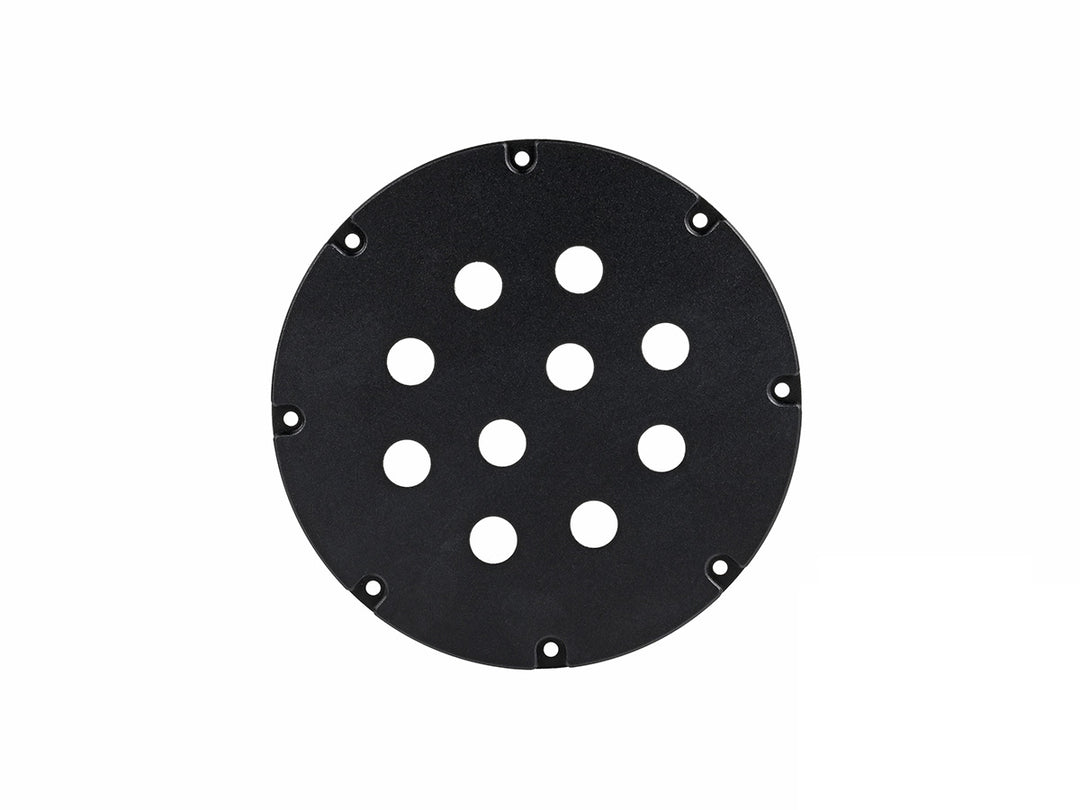
Each Blu-Sub End Cap is offered in two ways: precision-machined standard hole patterns, and fully custom layouts drilled to order. All standard configurations are CNC-machined from transparent acrylic, then polished using a special process to achieve exceptional optical clarity. Custom hole layouts are drilled to match your submitted DXF design.
All custom layouts and all standard variants use precision-drilled thru holes only. No threaded-hole options are available for acrylic end caps, and custom threaded-hole layouts are not offered.
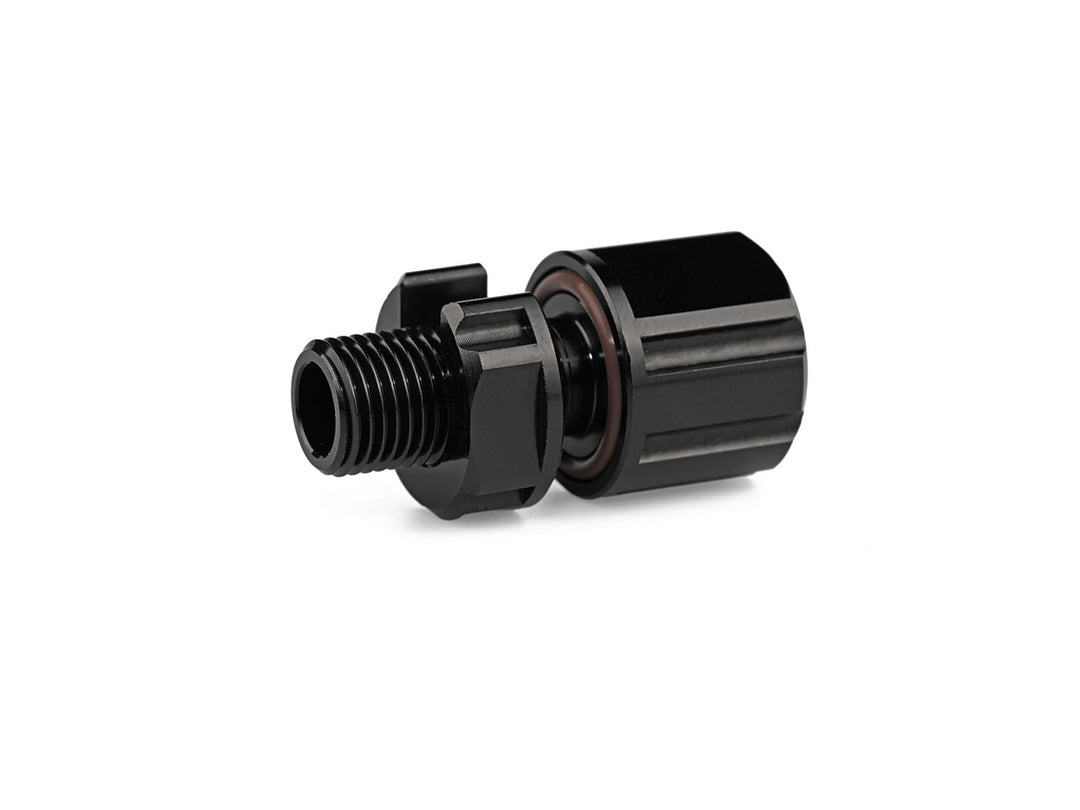
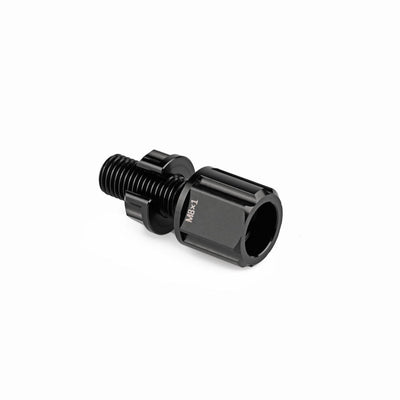
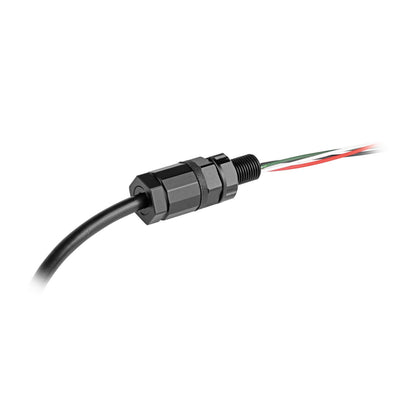
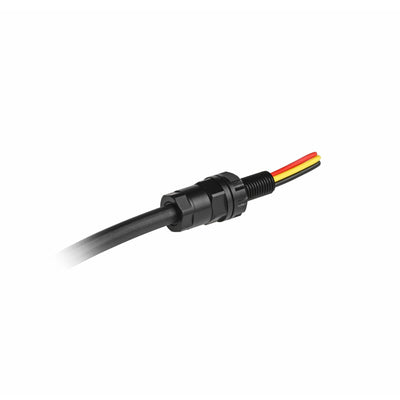
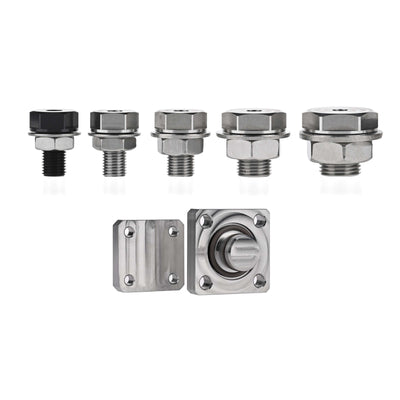
Thru-hole variants require a rear nut for penetrator devices, so ensure adequate internal clearance based on your component selection. The Acrylic End Cap is intended for shallow-water, short-term applications and infrequent disassembly/assembly. Do not overtighten fasteners, as indentations or cracking may occur around mounting holes during repeated assembly.
This acrylic end cap is CNC-machined (not laser-cut) with precise hole and edge dimensions to help avoid chipping or burrs and to improve sealing performance compared to laser-cut acrylic covers.
For full instructions, see the Step-by-Step Guide to Customizing an End Cap.
Guidelines for Custom End Cap Design
Custom Order Process
- Purchase the correct end cap size: Add the appropriate size to your cart (Custom 85 mm, 115 mm, or 165 mm) and complete checkout.
- Download the DXF file: Use the link in the Downloads section below to get the correct 2D CAD template for your selected size.
- Edit the DXF: Open the file in CAD software (e.g., AutoCAD, Fusion 360). Use circles to mark hole positions. Supported thru-hole diameters are M6 (6.1 mm), M8 (8.1 mm), M10 (10.1 mm), M14 (14.1 mm), M16 (16.1 mm). Contact us if you need a different size.
- Submit your design: Email your edited DXF file to contact@blu-sub.com, including your order number and the quantity required. Allow 2 additional business days for processing.
DIY Customization (Blank End Caps)
As an alternative, you may drill your own holes using blank end caps (listed as “End Cap Blank – no holes”). If drilling acrylic, use appropriate drill bits designed for plastics and take care to avoid cracking. Use a drill press or guided equipment to ensure perpendicular holes. Test your layout in advance with the actual components or penetrators you plan to install.
For detailed instructions, refer to the Step-by-Step Guide to Customizing an End Cap.
Important Warnings
- Do not scratch the O-ring contact surface: Any damage can result in leaks or seal failure. Discontinue use if the sealing surface is compromised.
- Do not overtighten fasteners: Acrylic is more prone to indentation and cracking around mounting holes during repeated assembly. Tighten evenly and only as needed to compress the O-ring.
- Rear nut clearance: For thru-hole variants, ensure sufficient internal clearance for penetrators and retaining nuts to avoid interference with internal components or wiring.
- Material compatibility warning: Acrylic products must not come into contact with alcohol, solvents, harsh cleaners, or most threadlockers, as these can cause cracking and failure. Clean only with water or acrylic-safe cleaners.
- Depth rating disclaimer: Custom or user-drilled end caps are made to your specifications. Blu-Sub does not guarantee pressure ratings for modified units. Use at your own risk — we are not liable for leaks or failure due to incorrect drilling, sealing, or design.
Sold Separately
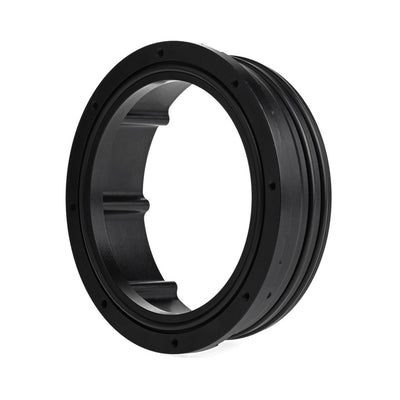
A Subsea Aluminum Flange is required when using either Blu-Sub Aluminum Tubes or Acrylic Tubes. The flange creates a rigid interface that enables secure fastening of end caps to the tube body while ensuring proper compression of the O-rings for a watertight seal.
It also serves as the structural mounting base for the end cap, aligning components precisely and helping to distribute pressure evenly under subsea conditions.
Flanges are matched to the diameter of the tube—available in 85 mm, 115 mm, or 165 mm sizes—and must be installed using compatible screws and sealing methods to ensure enclosure integrity in underwater applications.
Sold Separately
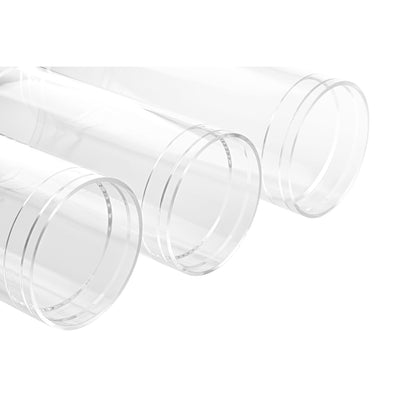
Compatible with Subsea Enclosure Acrylic Tubes
Lightweight, optically clear tube ideal for vision-enabled subsea systems. The Acrylic End Cap mounts securely using a flange, creating a watertight seal while maintaining internal visibility. Compatible with tray sets for organizing internal electronics.
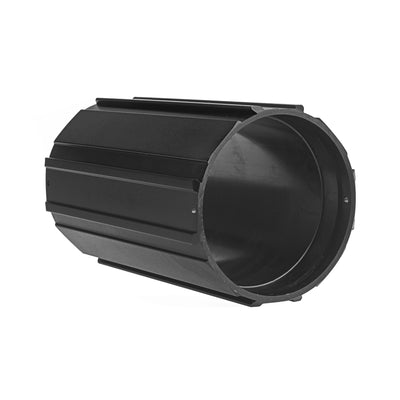
Compatible with Subsea Enclosure Aluminum Tubes
Rugged pressure-rated housing for subsea use. The Acrylic End Cap mates via flange to provide a watertight seal for shallow-water, short-term applications where internal visibility is required. Tray sets fit securely inside for thermal and structural support.
Sold Separately
Subsea Polymer Flange & End-Cap 115 mm: Lightweight and cost-effective option for shallow water use. Suitable for general-purpose enclosures up to 30 m / 98 ft depth.
Subsea Optical Dome Flange & End-Cap 115 mm: Wide-angle acrylic dome for camera and vision-based ROV systems. Requires the Subsea Aluminum Flange for mounting. Depth rated to 1,000 m / 3,281 ft.
Subsea Optical Glass Flange & End-Cap 115 mm: High-clarity flat glass window for optical sensors and imaging payloads. Depth rated to 300 m / 984 ft.
Subsea Aluminum End-Cap 115 mm: Opaque aluminum end cap for higher-duty subsea use when internal visibility is not required.
Sold Separately
Acrylic vs. Aluminum End Caps
Acrylic End Cap
CNC-machined from transparent acrylic and polished for exceptional optical clarity. Intended for shallow-water, short-term use and infrequent assembly/disassembly—do not overtighten fasteners. All variants are thru-hole only (no threaded options). Acrylic must not contact alcohol, solvents, harsh cleaners, or thread locker; clean only with water or acrylic-safe cleaners.
Alternative Option: Aluminum End-Cap
Better suited for deeper subsea use and longer-duration pressure exposure, and more tolerant of frequent assembly/disassembly. Some aluminum end-cap variants offer threaded-hole options. Opaque design when internal visibility is not required.
| Item | Material | Depth Rating* | Weight* |
|---|---|---|---|
| 85 Acrylic End Cap Blank (no holes) | Transparent Acrylic | 300 m / 984 ft | ≈50 g |
| 85 Acrylic End Cap 6 Holes (6×8.1 Thru) | Transparent Acrylic | 300 m / 984 ft | ≈48 g |
| 85 Acrylic End Cap 7 Holes (7×10.1 Thru) | Transparent Acrylic | 300 m / 984 ft | ≈46 g |
| 85 Acrylic End Cap 8 Holes (4×8.1 Thru + 4×10.1 Thru) | Transparent Acrylic | 300 m / 984 ft | ≈47 g |
| 115 Acrylic End Cap Blank (no holes) | Transparent Acrylic | 200 m / 656 ft | ≈94 g |
| 115 Acrylic End Cap 5 Holes (5×10.1 Thru) | Transparent Acrylic | 200 m / 656 ft | ≈90 g |
| 115 Acrylic End Cap 10 Holes (10×10.1 Thru) | Transparent Acrylic | 200 m / 656 ft | ≈86 g |
| 115 Acrylic End Cap 14 Holes (14×10.1 Thru) | Transparent Acrylic | 200 m / 656 ft | ≈84 g |
| 165 Acrylic End Cap Blank (no holes) | Transparent Acrylic | 50 m / 164 ft | ≈195 g |
| 165 Acrylic End Cap 8 Holes (8×10.1 Thru) | Transparent Acrylic | 50 m / 164 ft | ≈185 g |
| 165 Acrylic End Cap 16 Holes (16×10.1 Thru) | Transparent Acrylic | 50 m / 164 ft | ≈175 g |
| 165 Acrylic End Cap 24 Holes (24×10.1 Thru) | Transparent Acrylic | 50 m / 164 ft | ≈172 g |
| Size | Outer Diameter (A) | Thickness (B)* | Mounting Holes (C) | Screw Hole Circle (D) |
|---|---|---|---|---|
| 85 mm | 85 mm | 8 mm | 6ר3.1 mm | 78 mm |
| 115 mm | 115 mm | 8 mm | 8ר3.1 mm | 106.7 mm |
| 165 mm | 165 mm | 8 mm | 8ר3.1 mm | 158 mm |
* Depth ratings shown are the rated pressure-resistant depths from sample testing (short-term), not a long-term guarantee. * Weights are approximate and may vary due to acrylic sheet thickness tolerances.
Can it still be used if the contact surface of the O-ring is accidentally scratched?
No — it should not be used, as damage to the sealing surface increases the risk of leakage.
Are they compatible with Blu-Sub aluminum tubes, acrylic tubes, and flanges?
Yes. Acrylic end caps are compatible with Blu-Sub enclosure tubes and flanges of the same diameter and can be directly replaced within the same size system.
Is it a defective product if there are a few lines on the surface?
Not necessarily. Minor surface lines can be normal manufacturing marks and do not typically affect sealing if they are outside the O-ring contact surface. If the O-ring sealing surface is scratched or damaged, do not use the end cap.
Whether to apply grease to O-rings every time?
Yes. Applying a suitable O-ring lubricant helps remove dust and impurities during assembly and helps the O-ring stay seated in its groove for easier installation.
Can I drill holes myself?
Yes, but take care: acrylic is more prone to cracking than aluminum. Use drill bits intended for plastics/acrylic, keep the drill perpendicular, and avoid aggressive feed rates. If possible, validate your layout and technique on a test piece before drilling a final part.
Are threaded-hole options available for the Acrylic End Cap?
No. There are no threaded-hole options for the Acrylic End Cap. All variants use thru holes only, and penetrator devices must be secured with a rear nut where applicable.
Any special handling or cleaning precautions for acrylic?
Yes. Acrylic products must not come into contact with alcohol, solvents, or harsh cleaners, as these can cause cracking and failure. Clean only with water or acrylic-safe cleaners. Do not use thread locker on acrylic systems, as most threadlockers are chemically incompatible with plastics and can damage the material.
What if I need a higher depth rating or long-term subsea use?
Acrylic end caps are intended for shallow-water, short-term applications and infrequent disassembly/assembly. For higher depth ratings and more robust long-term subsea use, choose the Subsea Aluminum End-Cap.