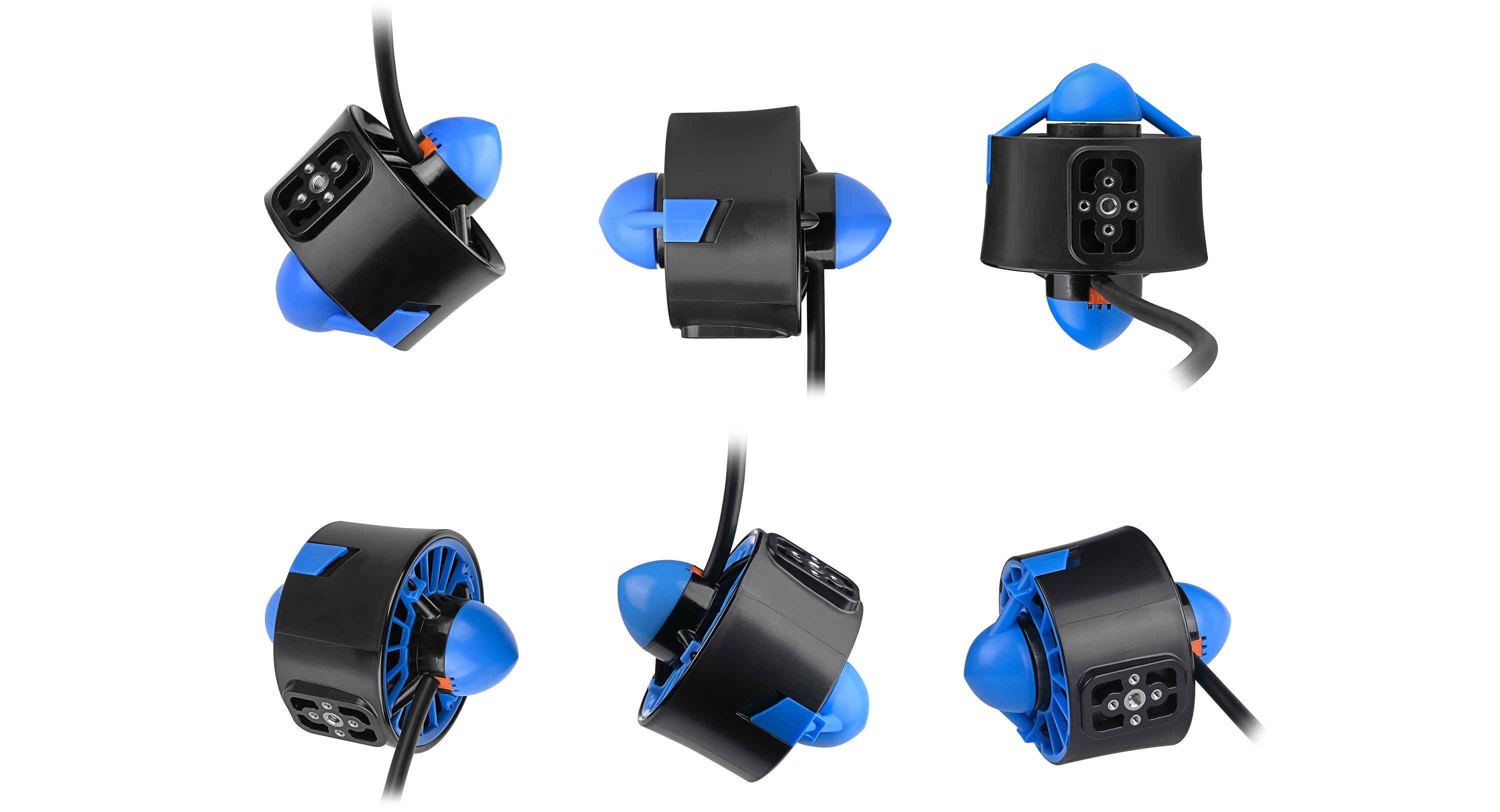
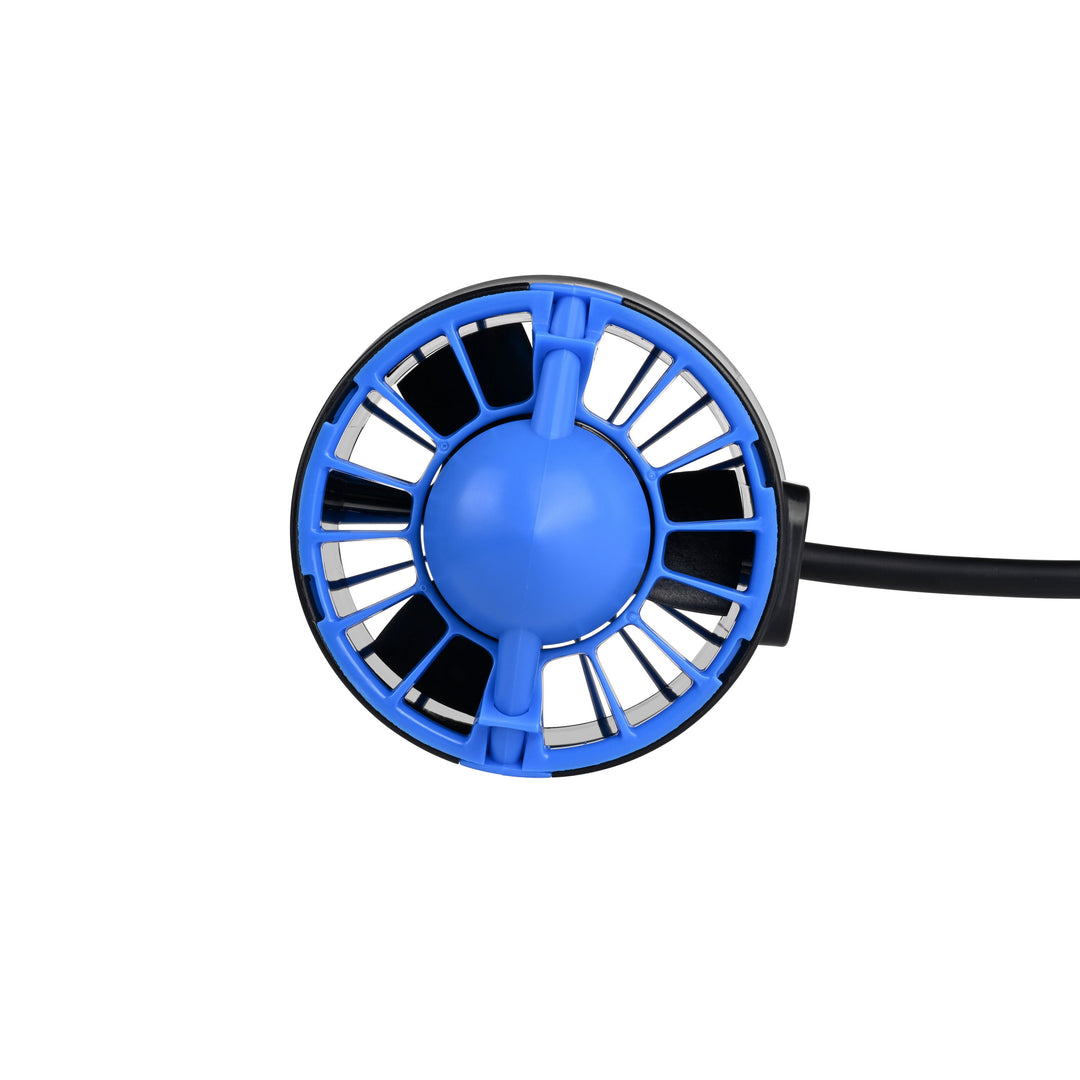
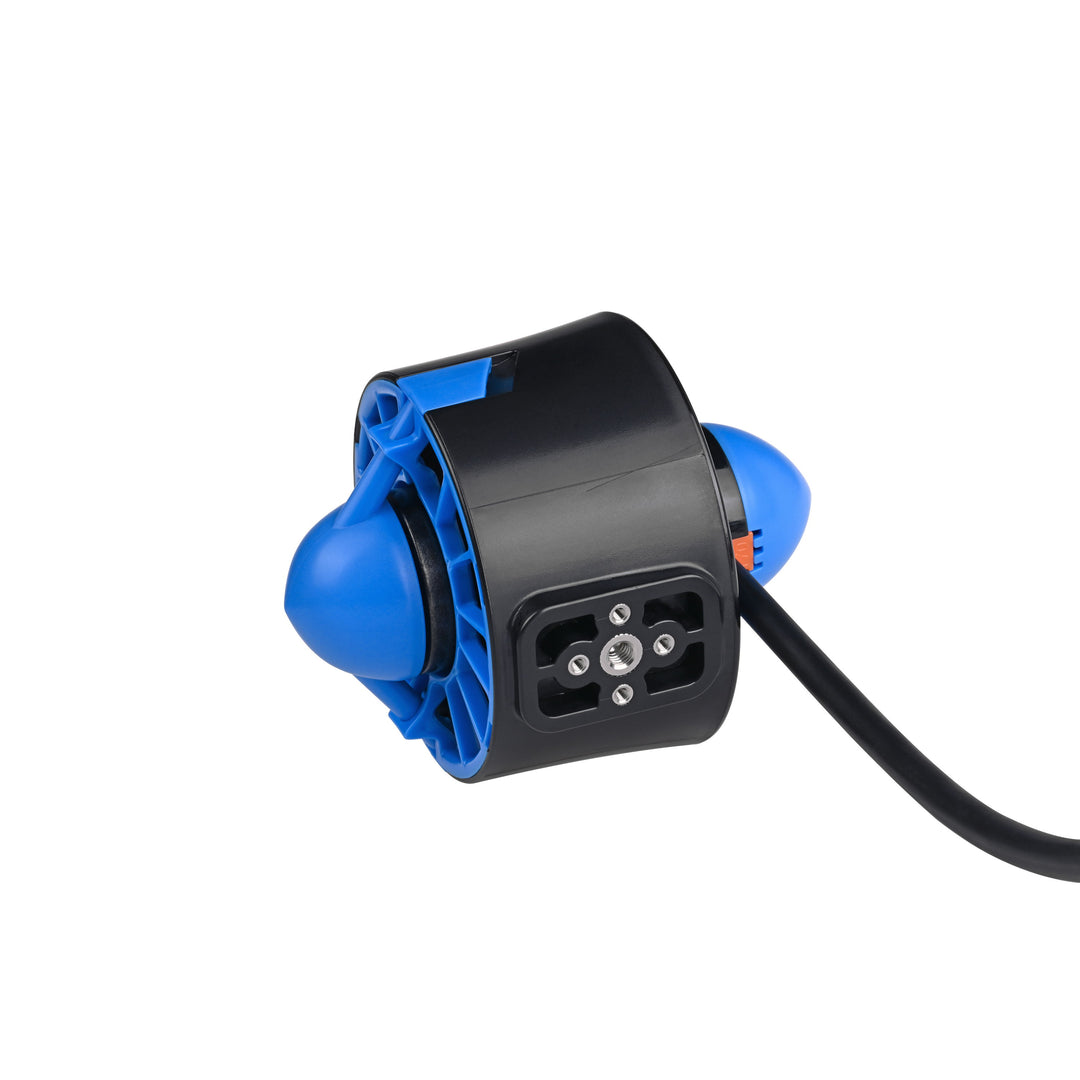
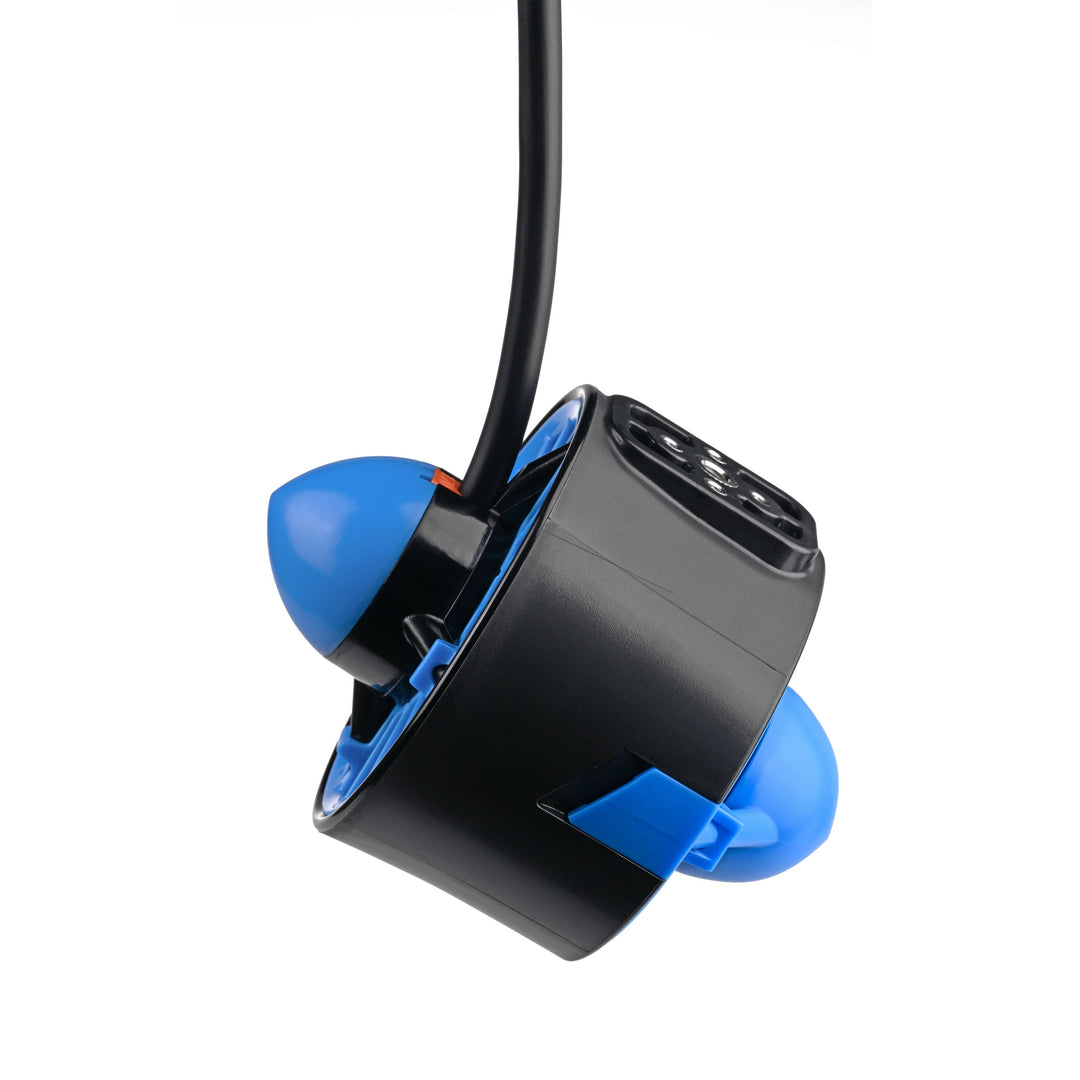
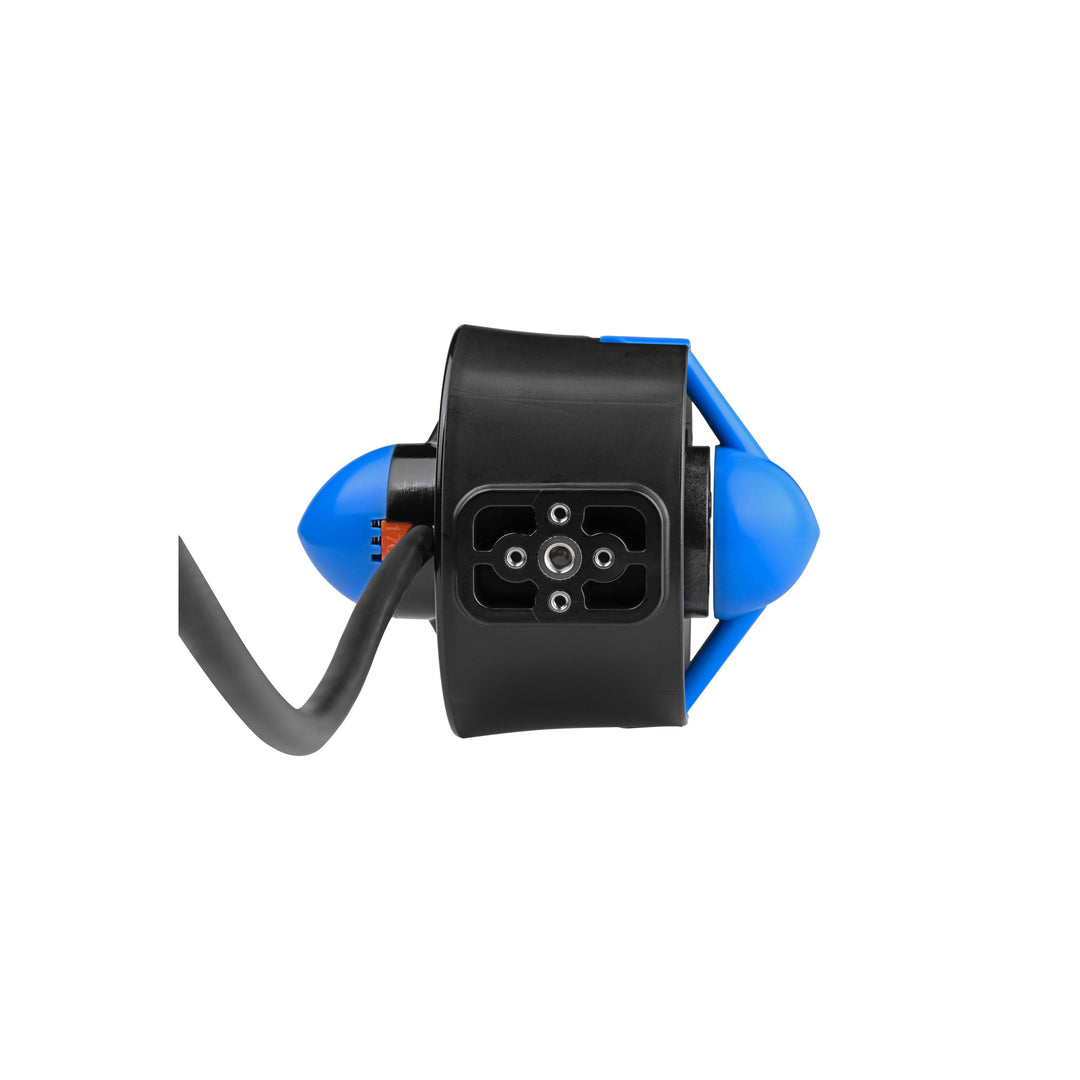
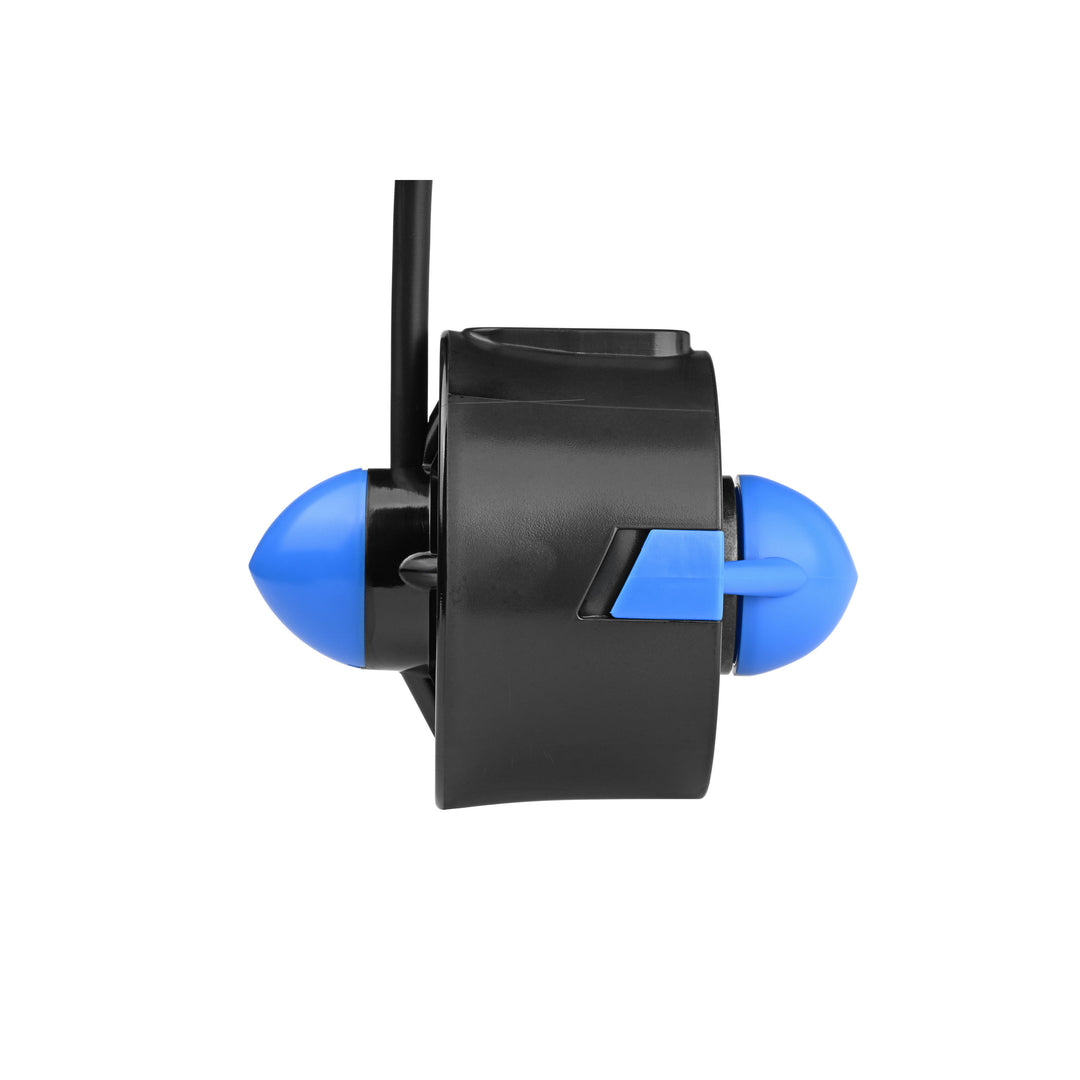
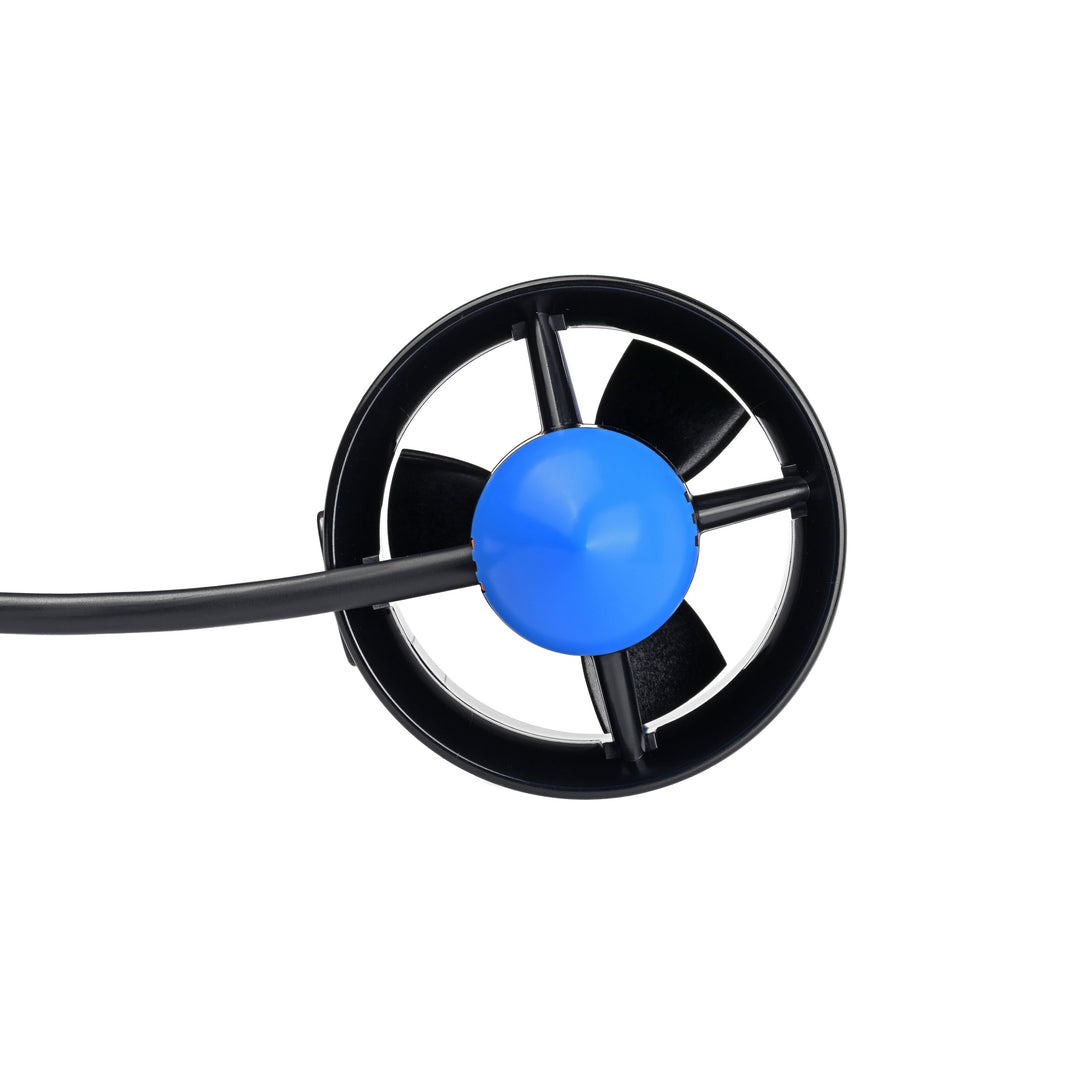
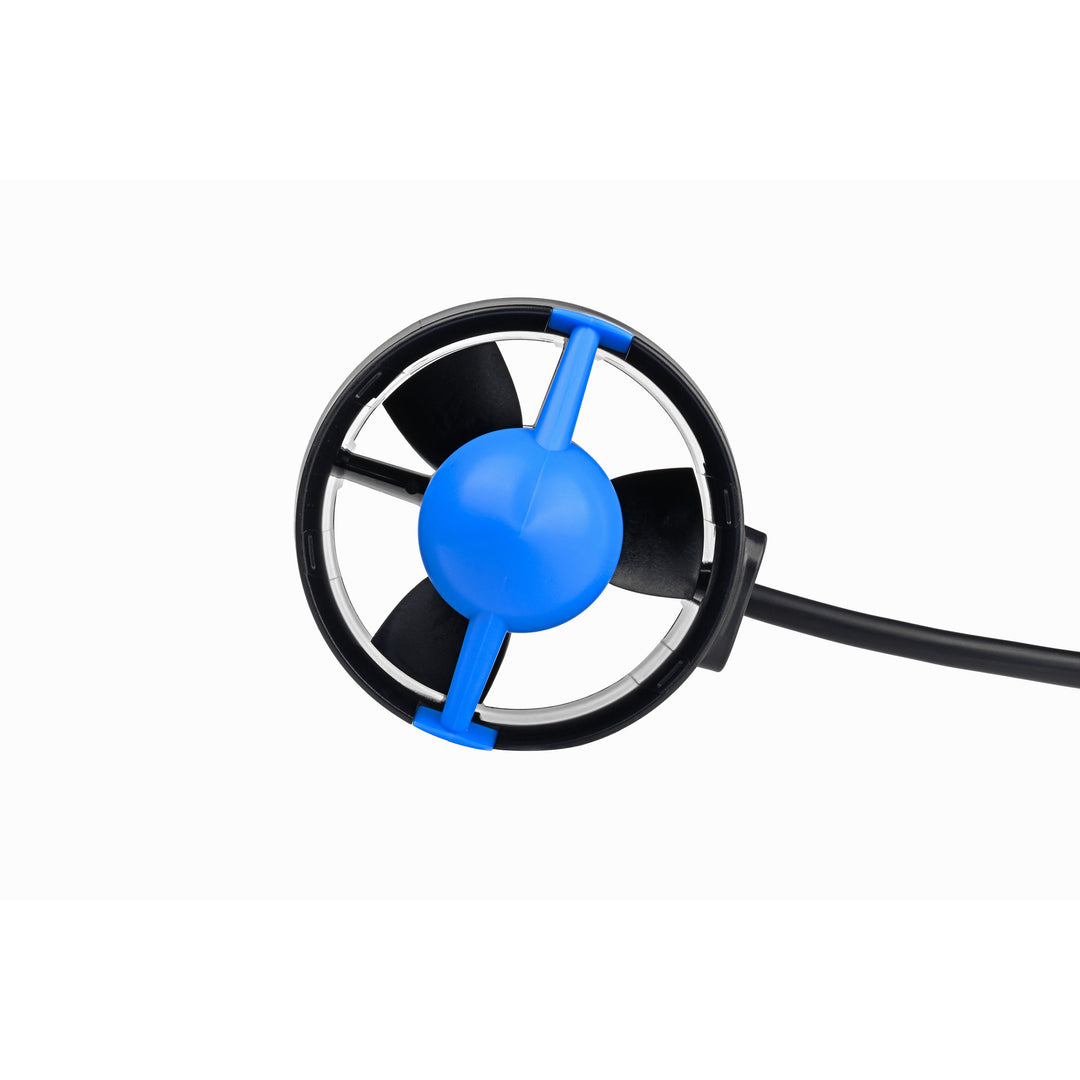
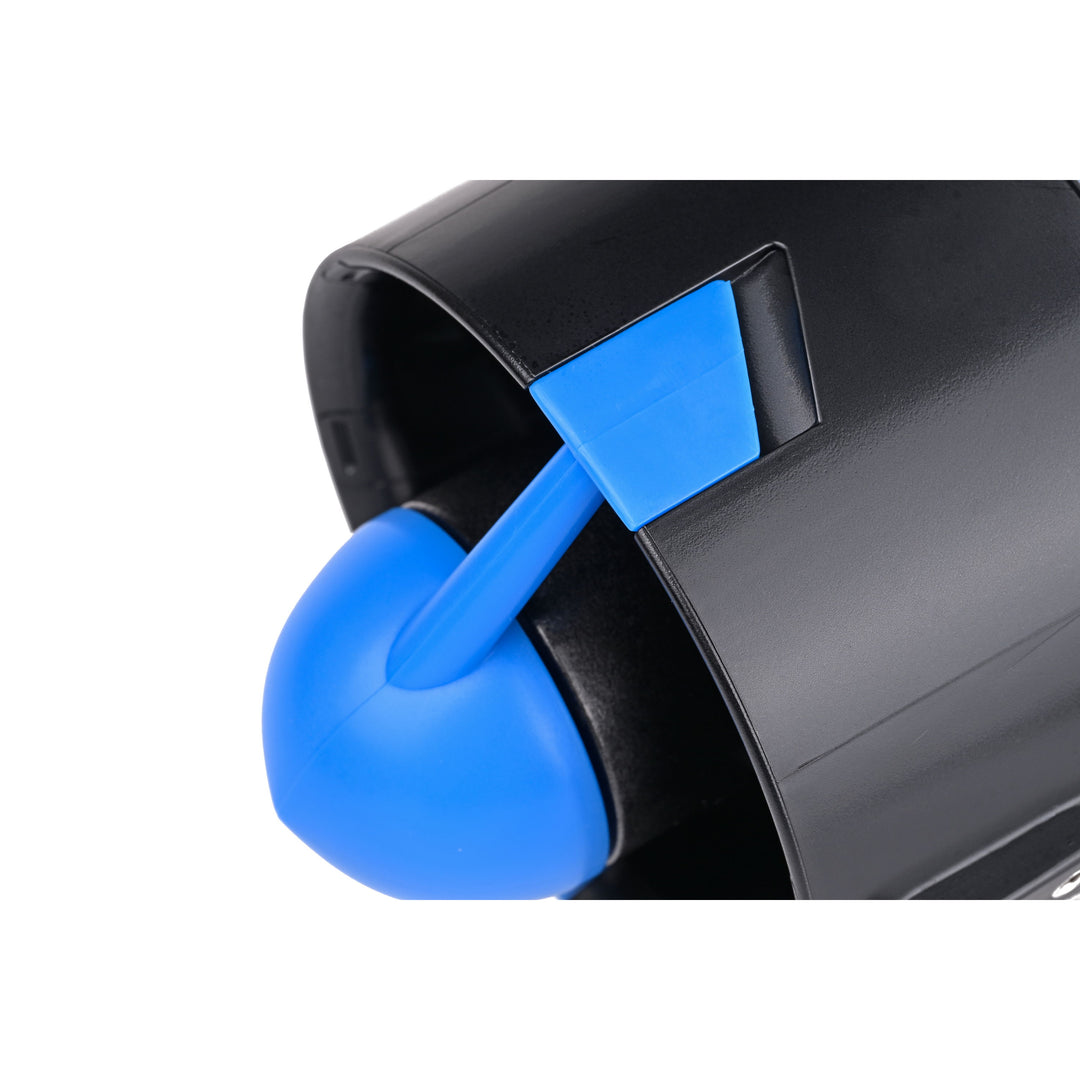
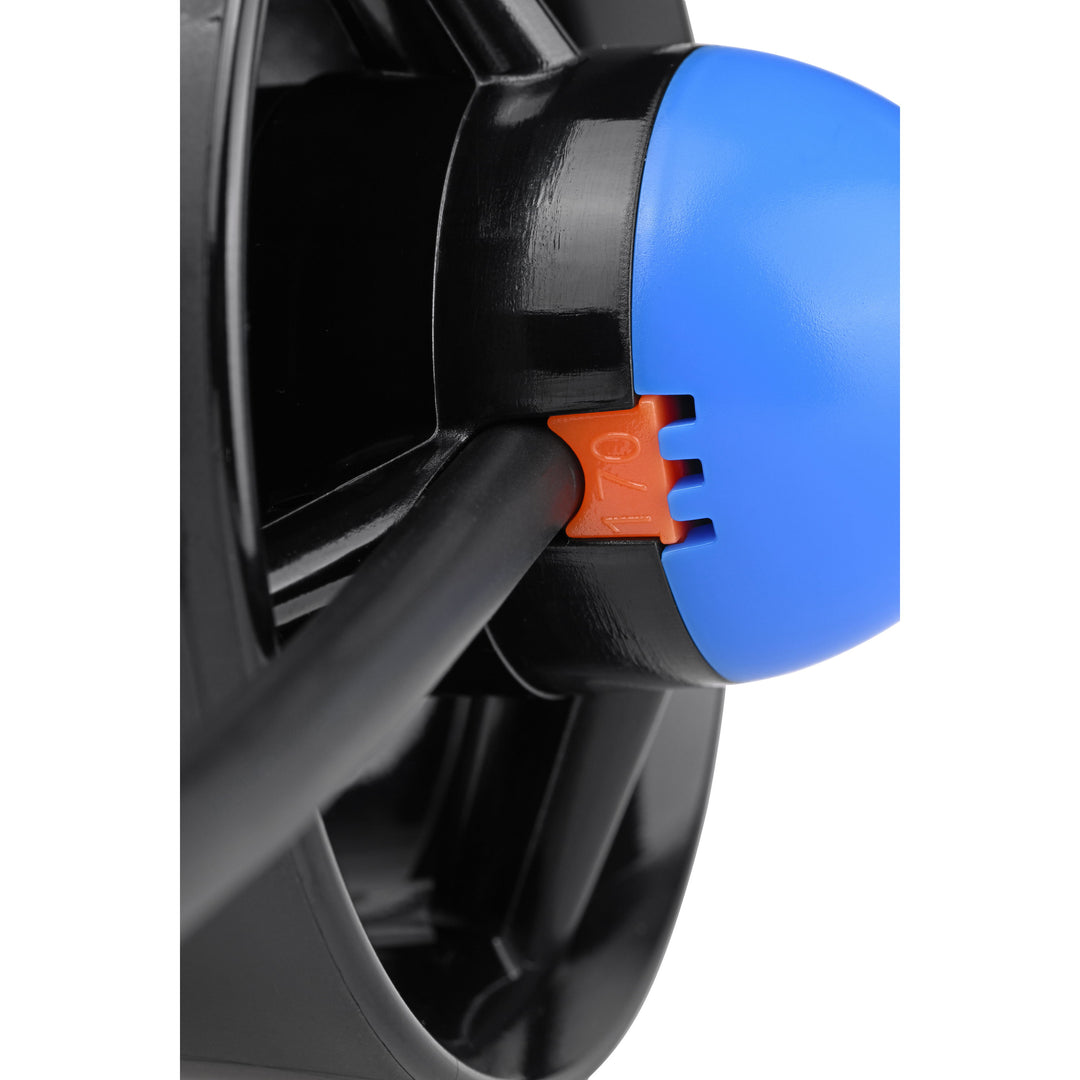
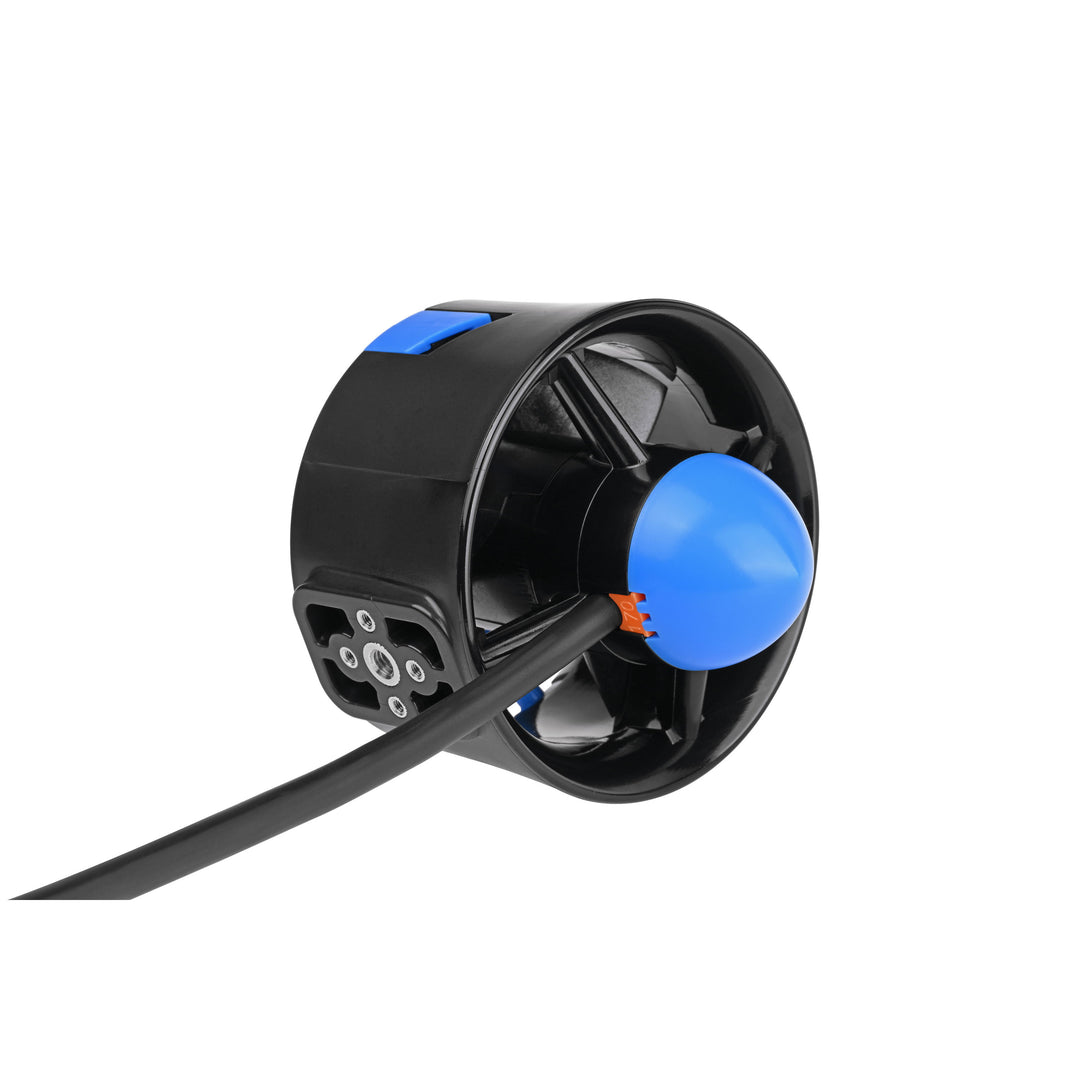
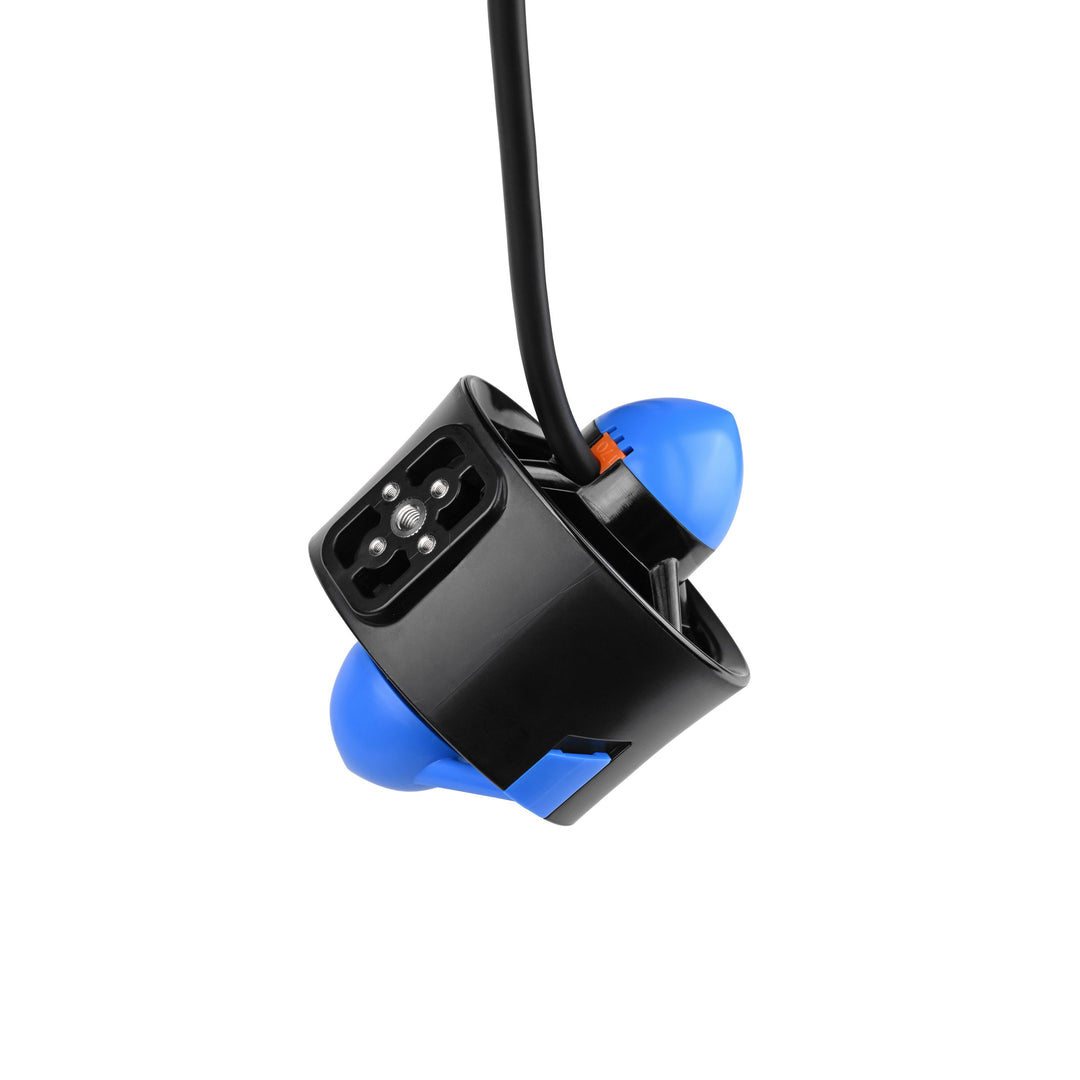
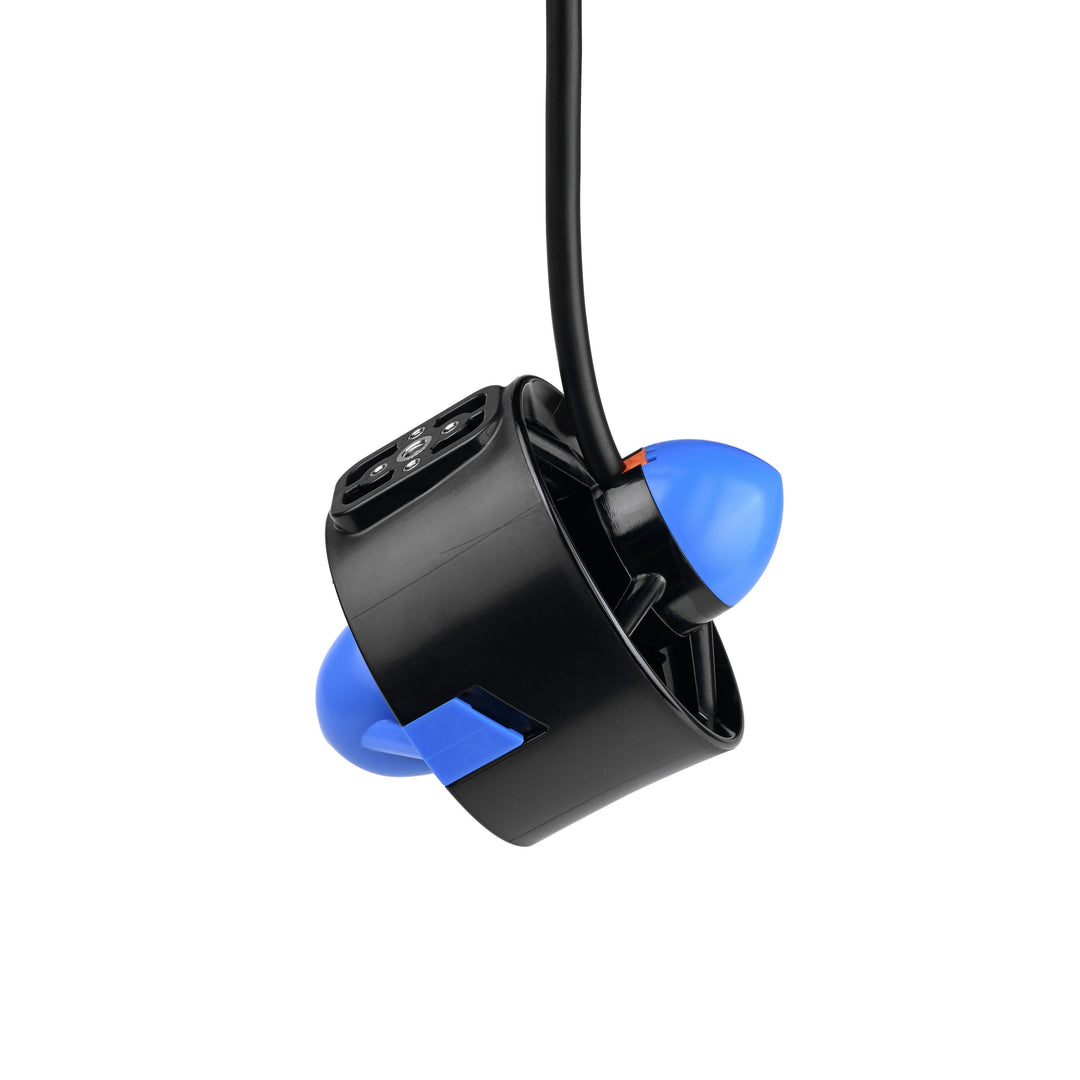
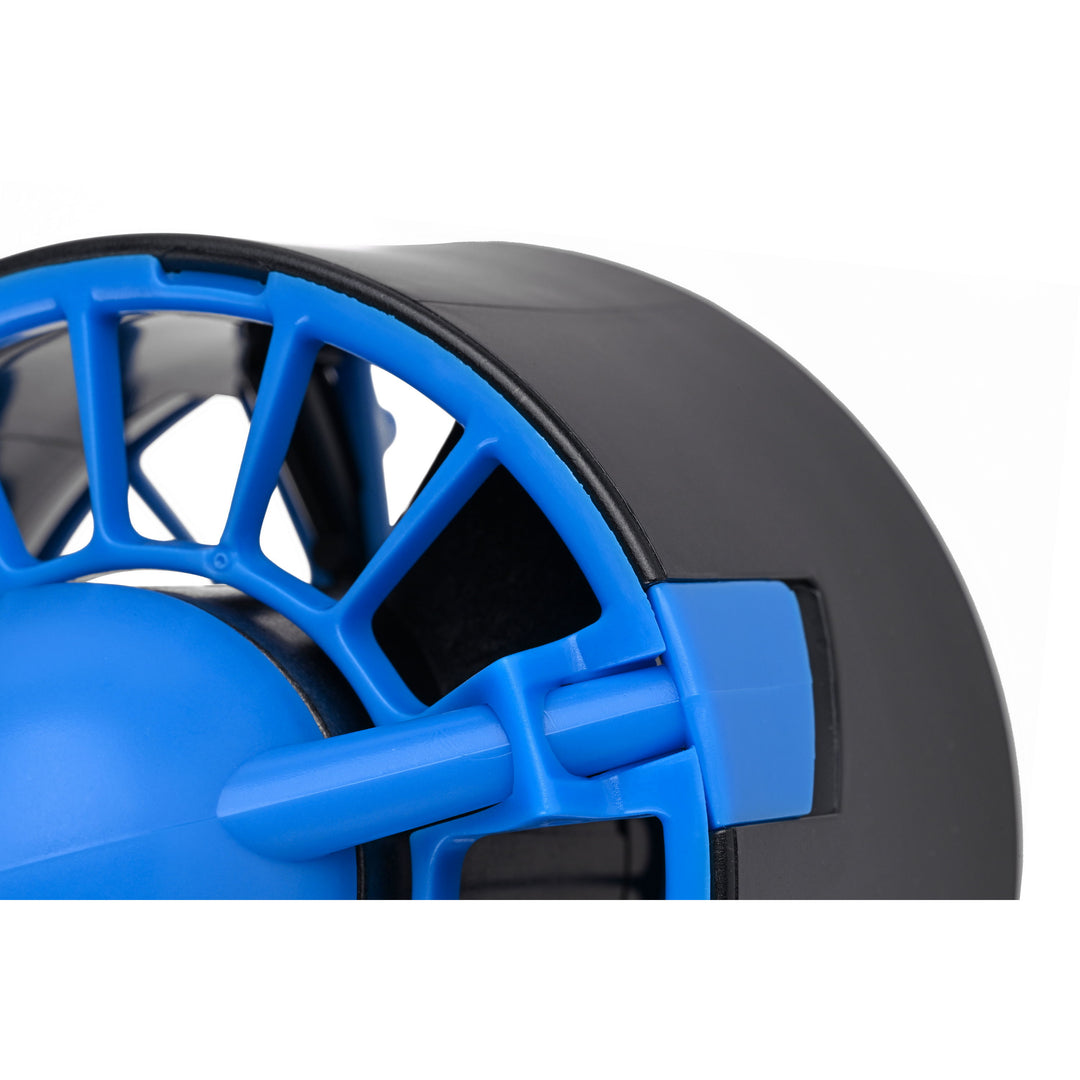
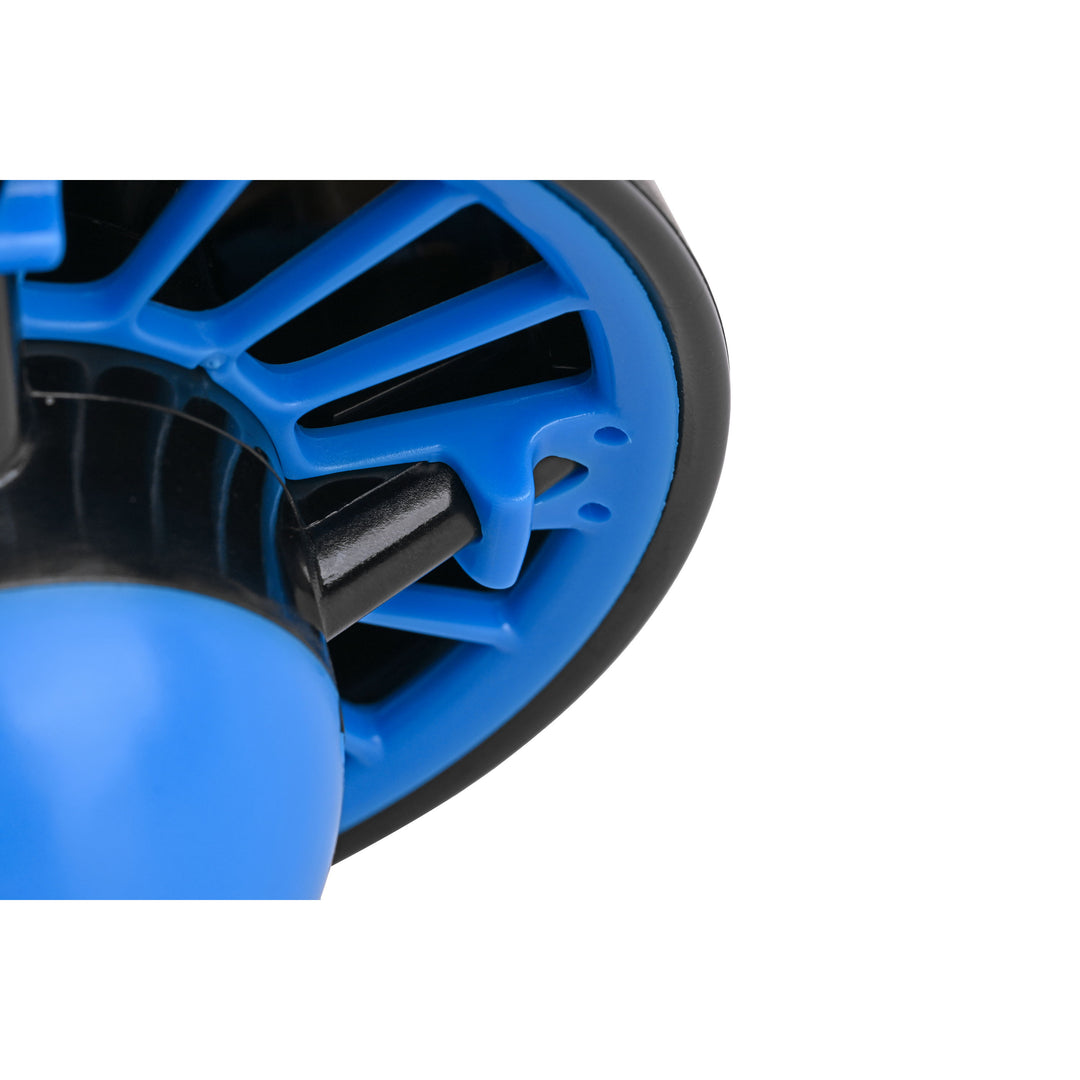
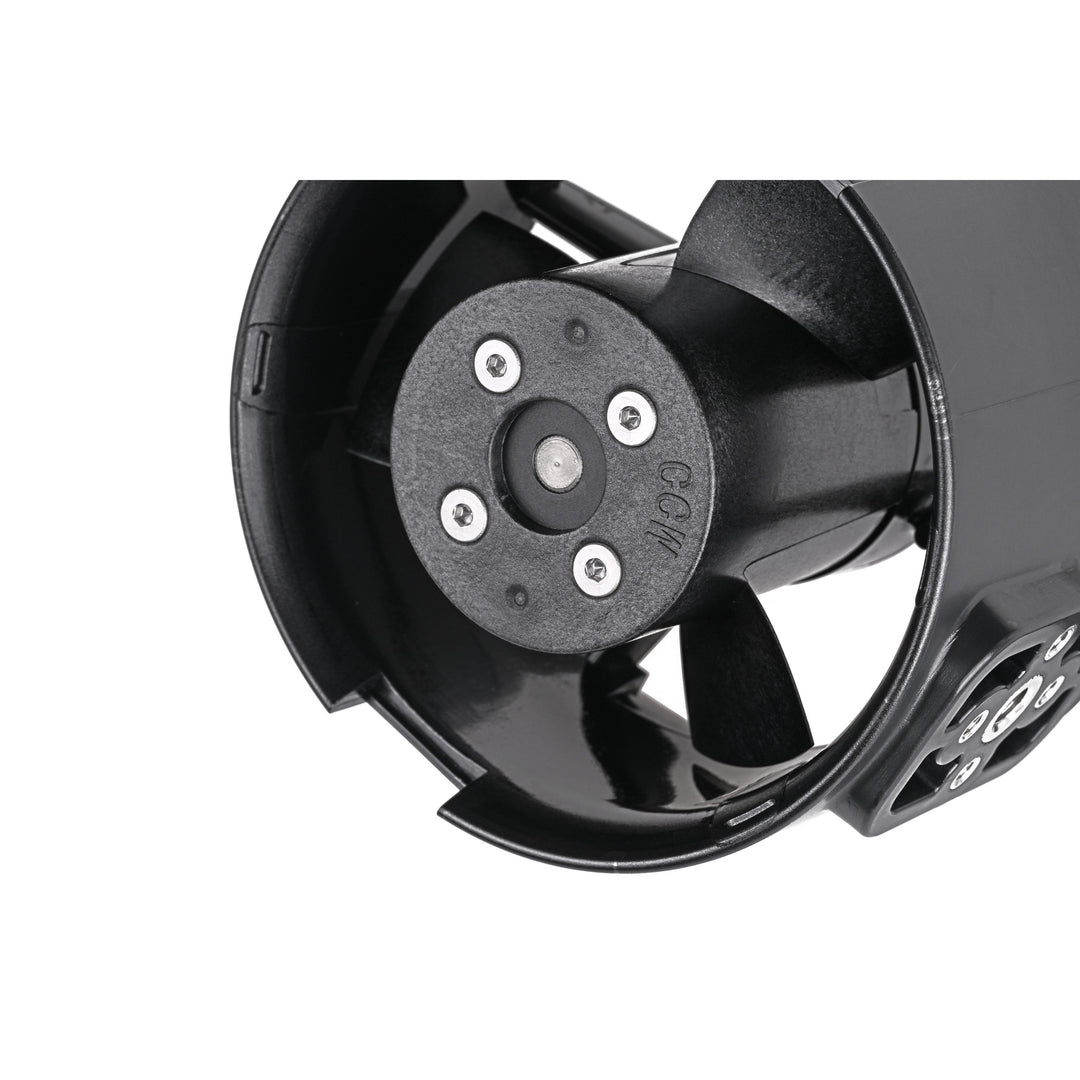
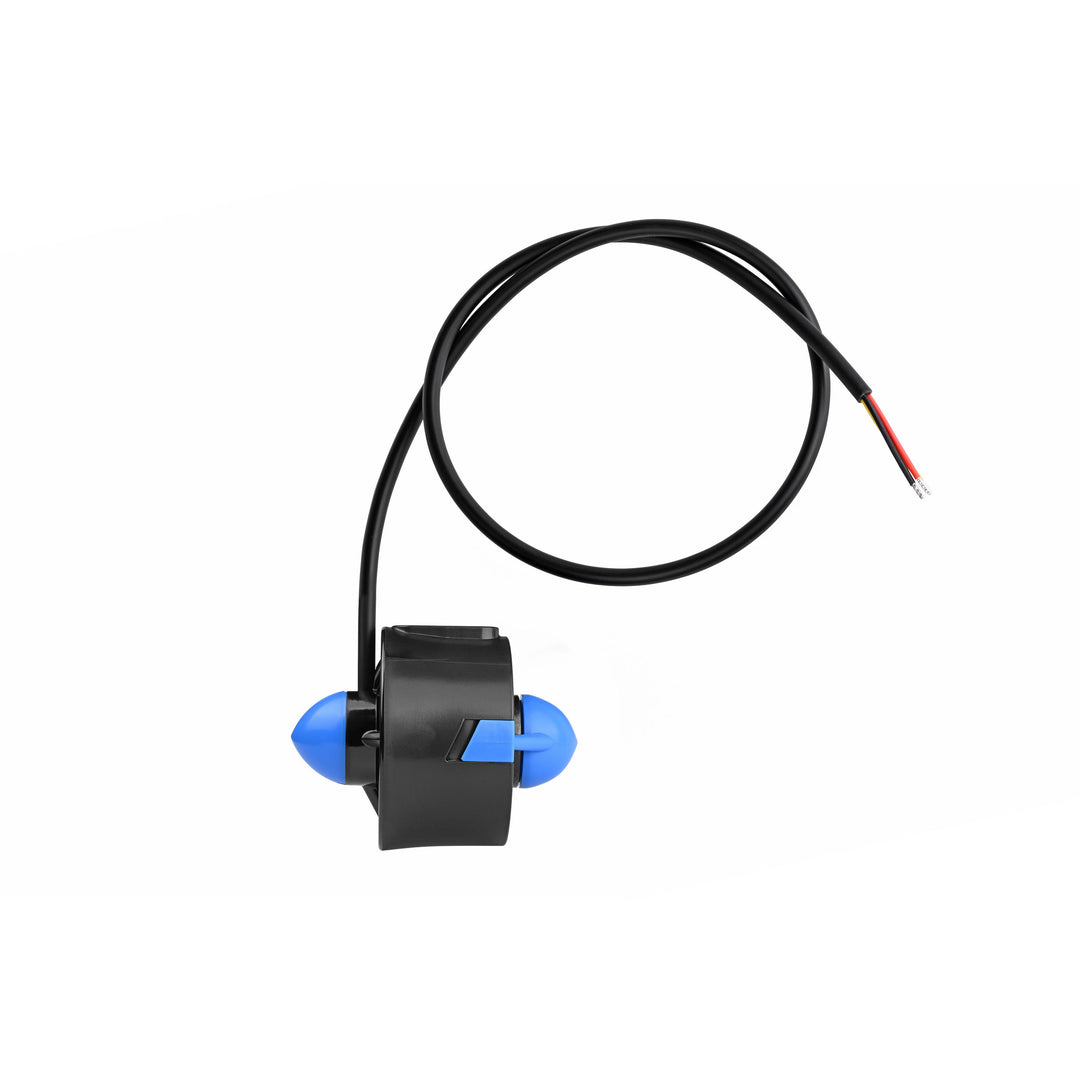
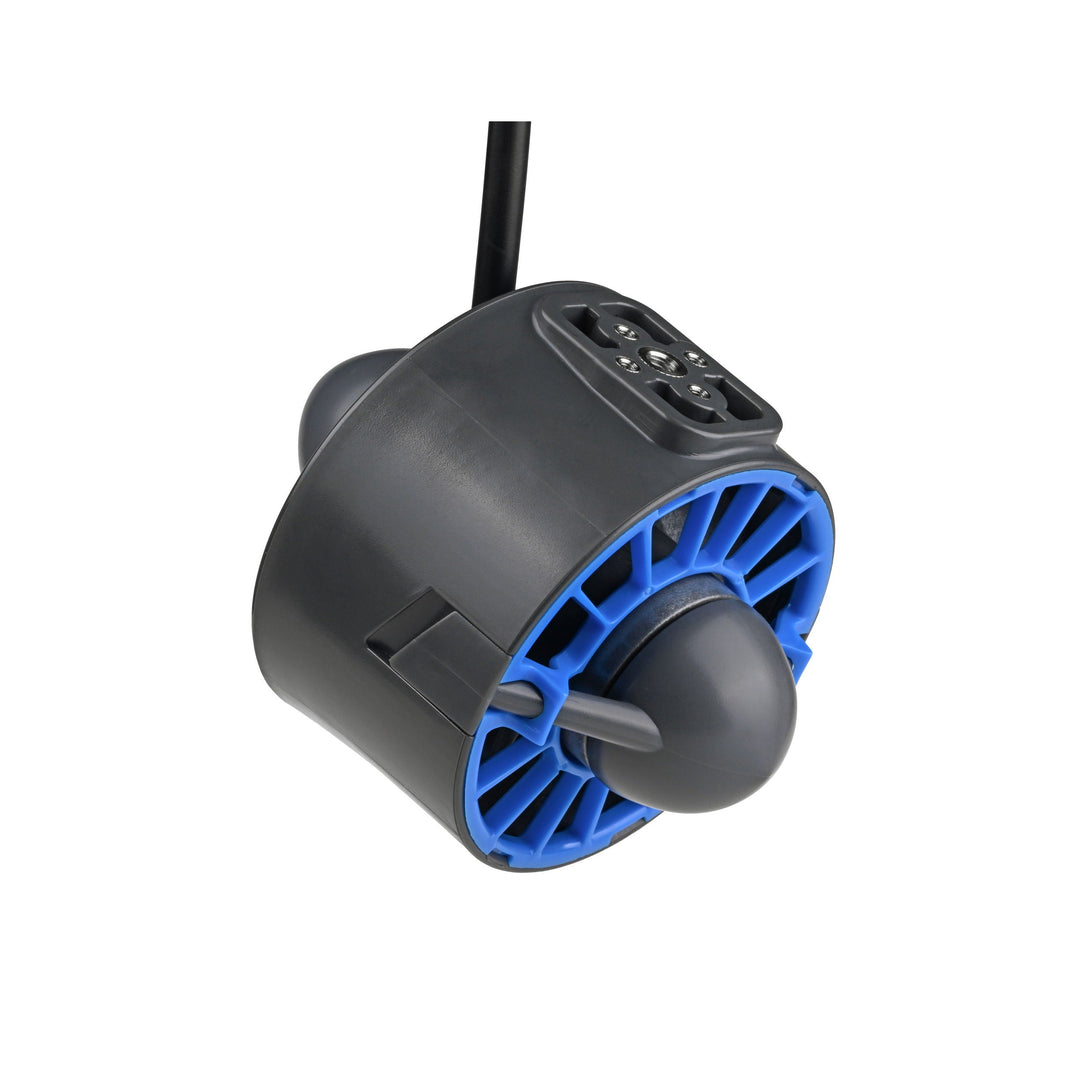
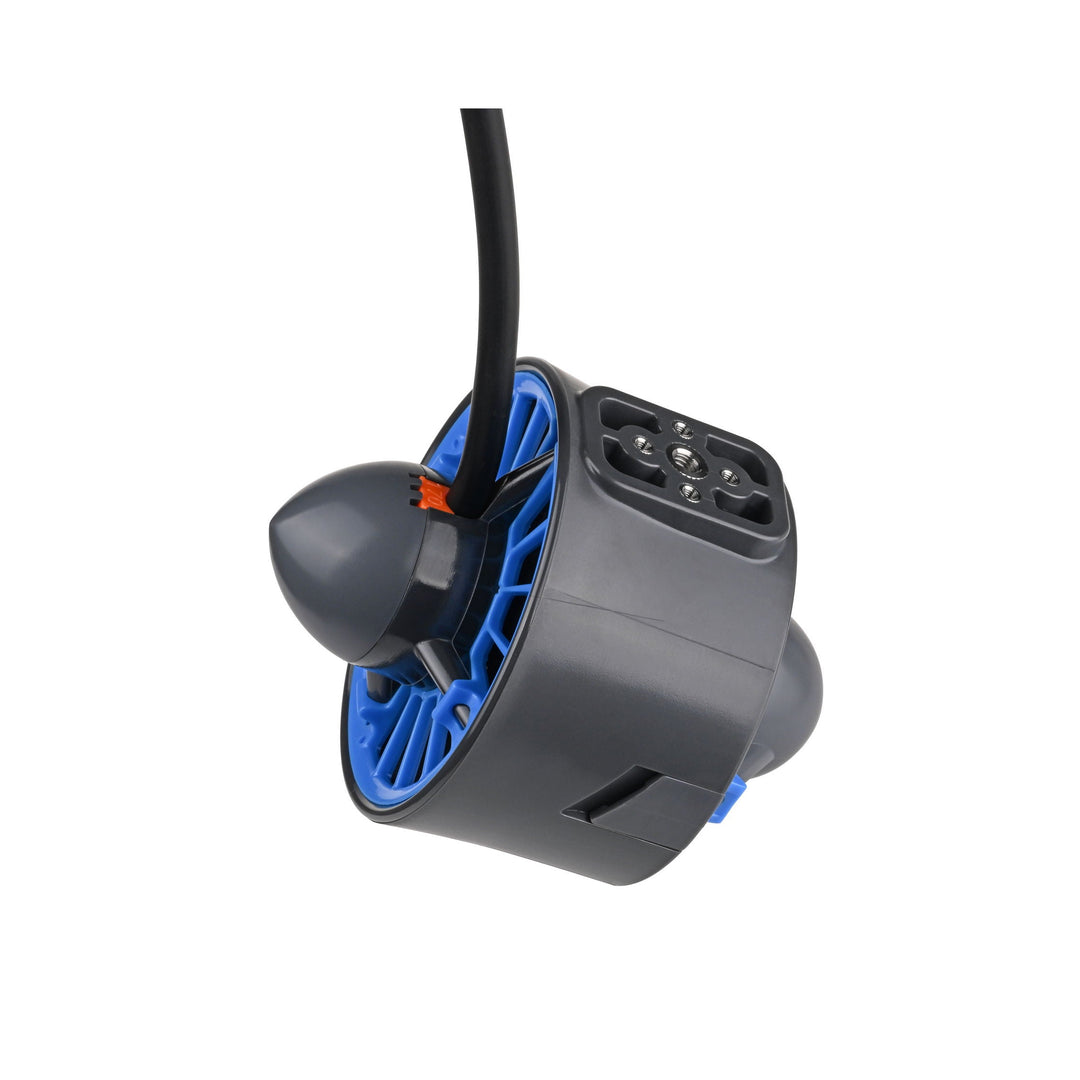
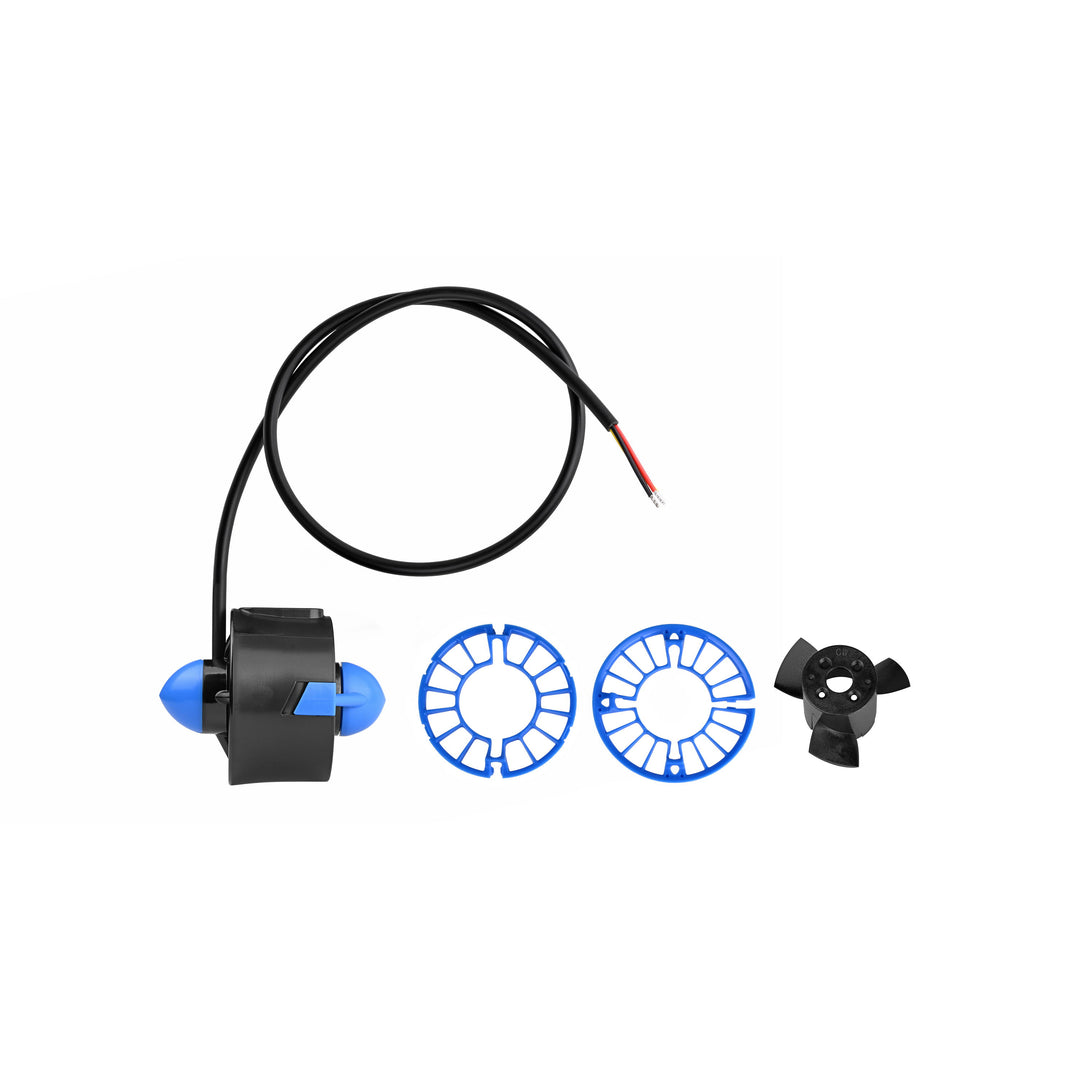
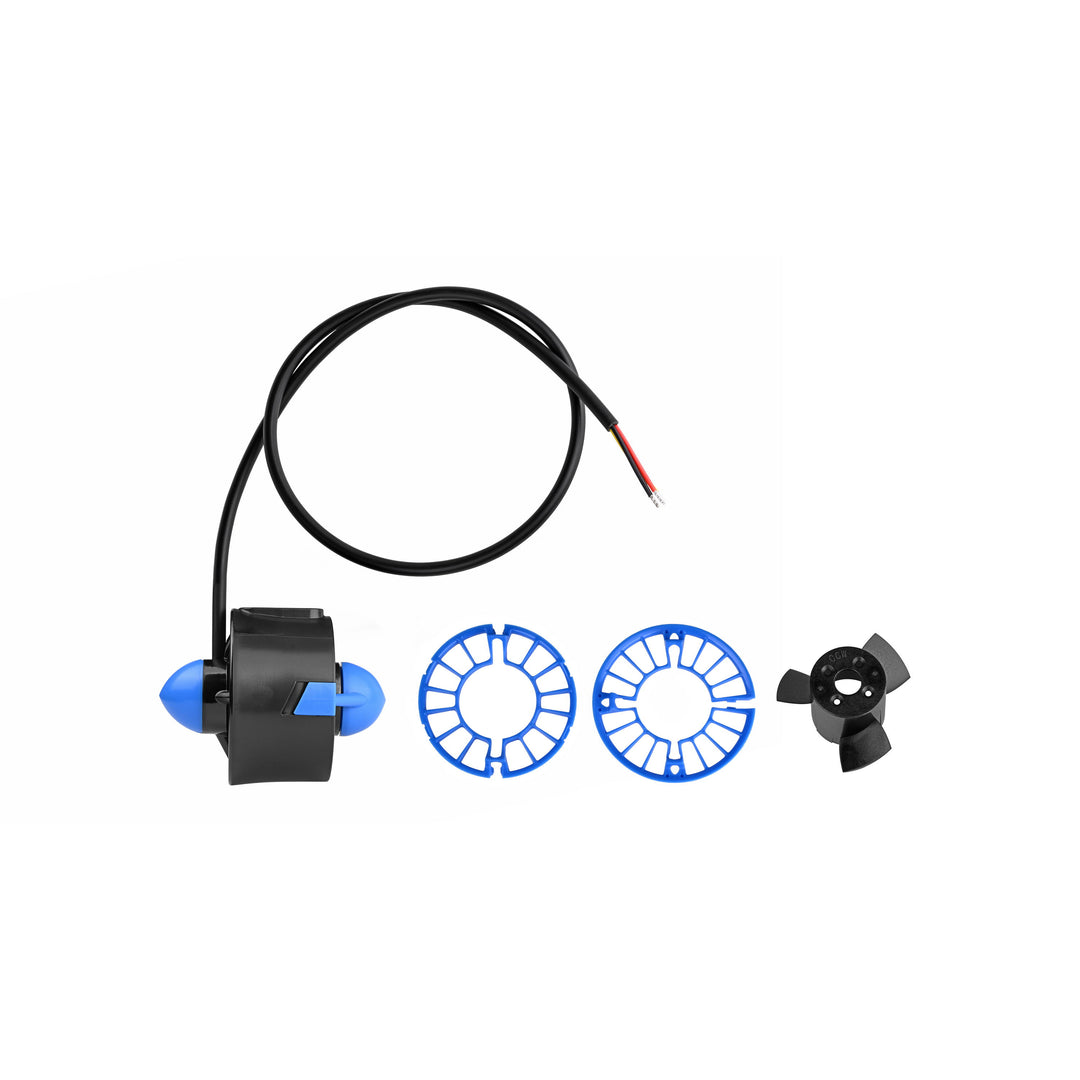


The optimized propeller and thrust-duct geometry provide strong forward and reverse performance, validated through simulation, real-world trials, and in-water testing. Each unit may retain minor water residue from production testing and handling.
Durability testing has demonstrated >200 hours of continuous rotation under controlled freshwater indoor conditions. The Blu-Thrust Z80-170 and Blu-Thrust Z80E-170 operate across a voltage input range of 10 – 25.2 VDC and are optimized for 24 V / 6S systems. At 24 V, the 170 KV models deliver up to 5.3 kgf of forward thrust with just over 11 A of current under standard test conditions.
The Blu-Thrust Z80-290 and Blu-Thrust Z80E-290 operate across a voltage input range of 10 – 16.8 VDC and are optimized for 12 V-class / 4S systems. At 16 V, the 290 KV models deliver up to 5.4 kgf of forward thrust with approximately 20.1 A of current under standard test conditions.
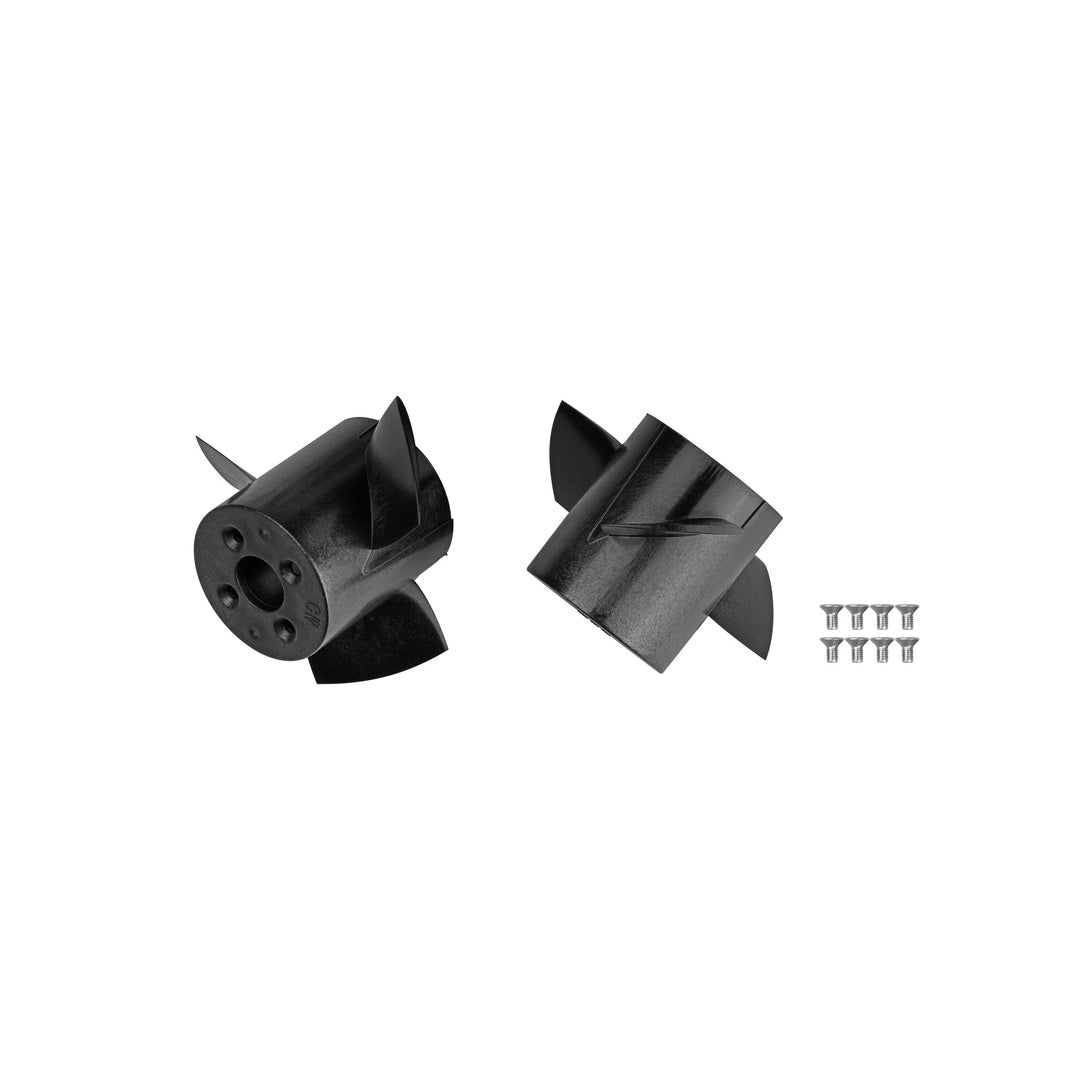
Optional Blu-Thrust Z80/Z80E HD Aluminum Propeller variants are available as direct replacement propellers for the Z80/Z80E platform. These 6061 aluminum propellers use the same blade profile as the standard plastic propellers, so there is no noticeable difference in power output or thrust after installation. They provide improved structural strength for sandy, silty, or debris-prone environments, and the thin aluminum blade edges help cut through weeds and vegetation more effectively than the standard plastic propellers.
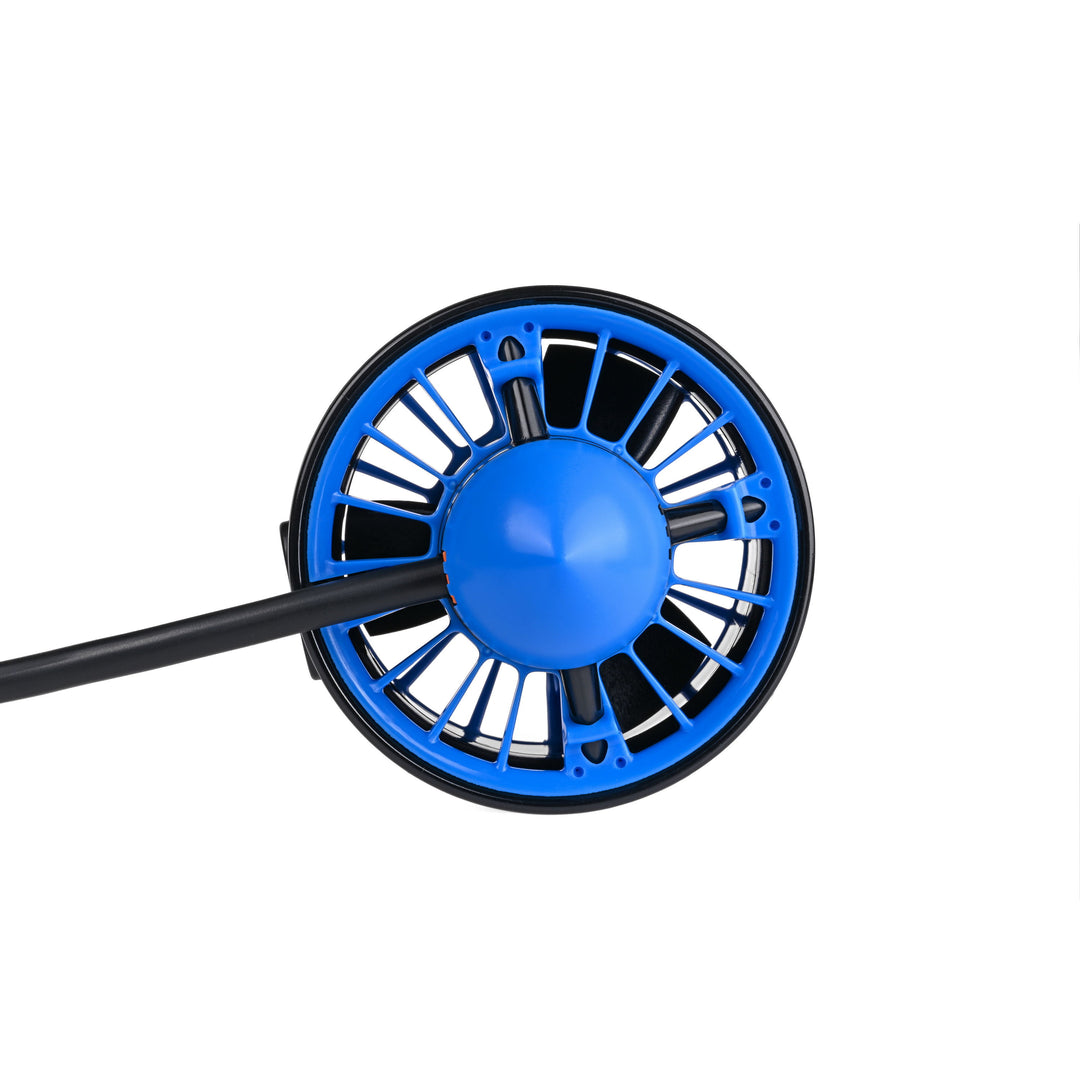
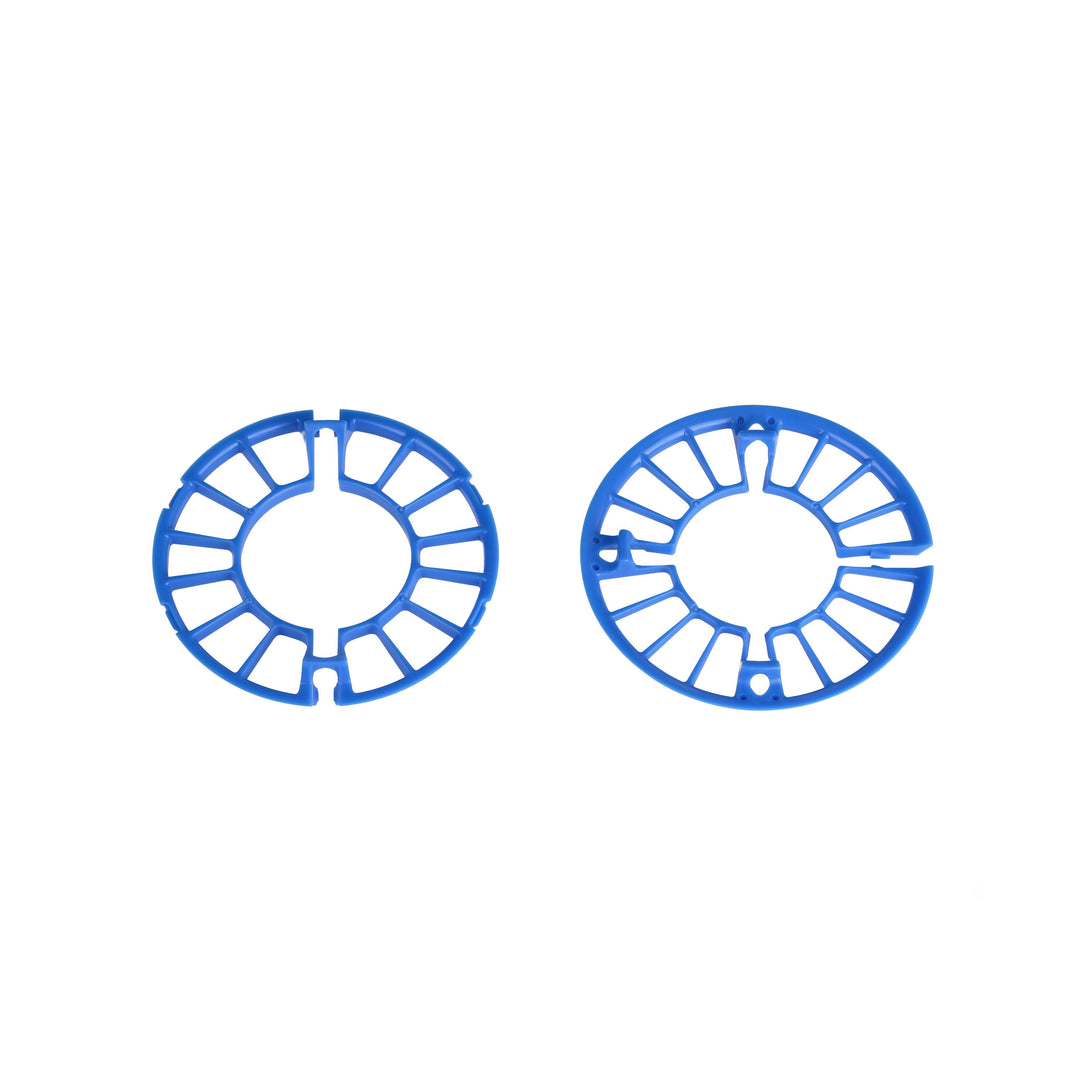
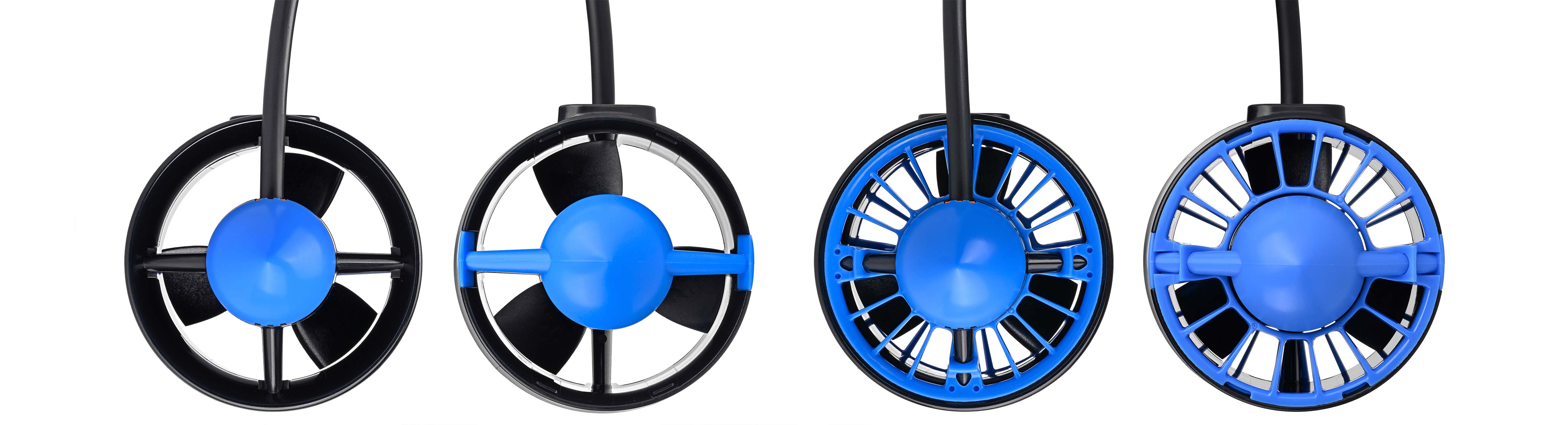
When the weed guard is installed, power consumption increases and thrust decreases; the guard is intended for debris protection and can be removed when maximum thrust is required. Extra caution should be used if operating with the weed guard, finger guard, or other protective components removed, especially around vegetation, rope, fishing line, loose debris, or during handling and inspection.
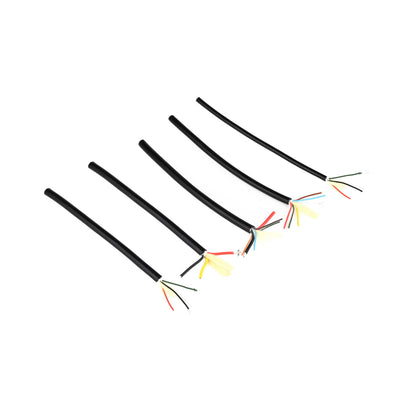
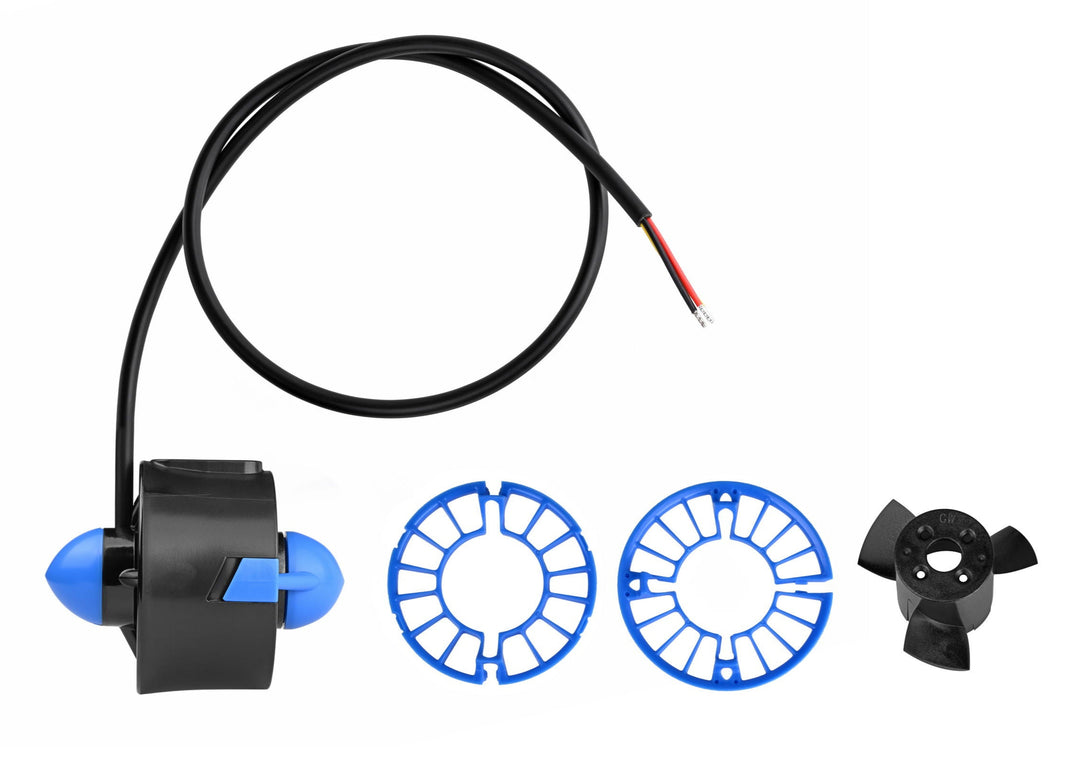
Wiring is provided via the included Deep-Sea 3-Core (16 AWG) Underwater Cable, pressure-rated for 300 m operation when installed with a compatible gland penetrator. The standard Z80 models use three motor phase wires for external ESC connection, while the built-in ESC Z80E models use Power (+), Power (–), and Signal wiring.
Wiring Warning: The standard Z80 and built-in ESC Z80E models use different wiring methods. Please confirm the model, housing type, and wiring definition carefully before connection. Incorrect wiring, reverse polarity, overvoltage, or incorrect ESC configuration may permanently damage the thruster.
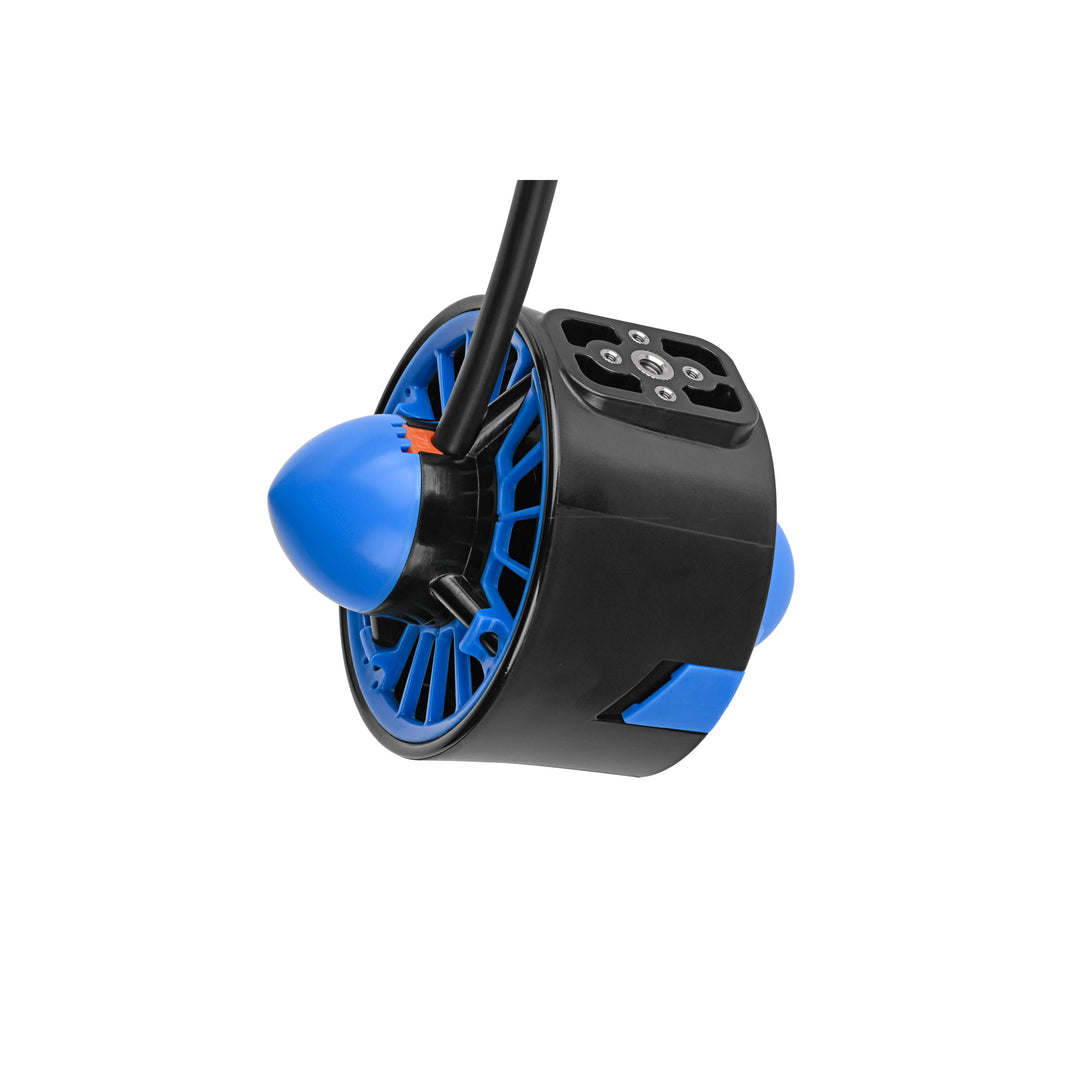
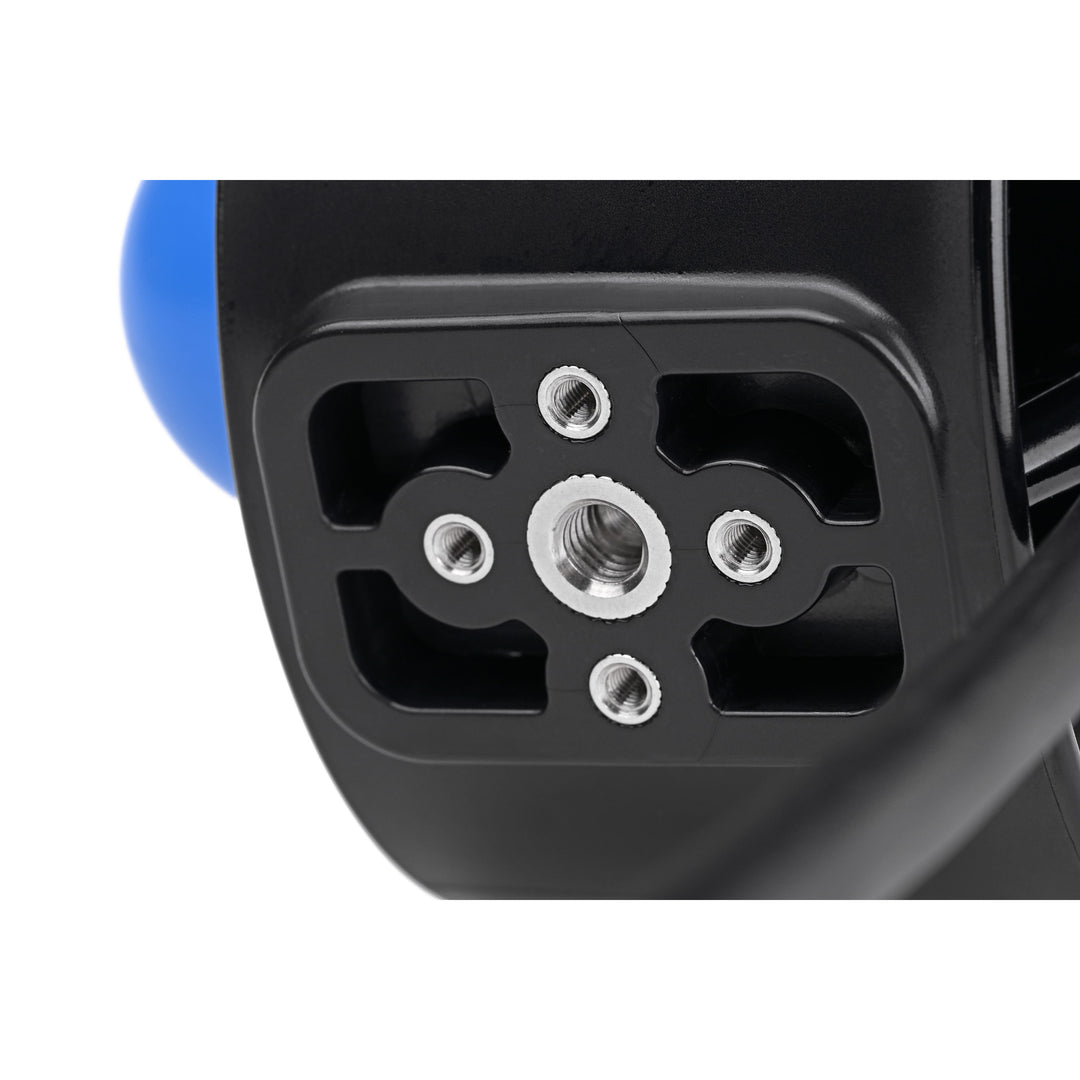
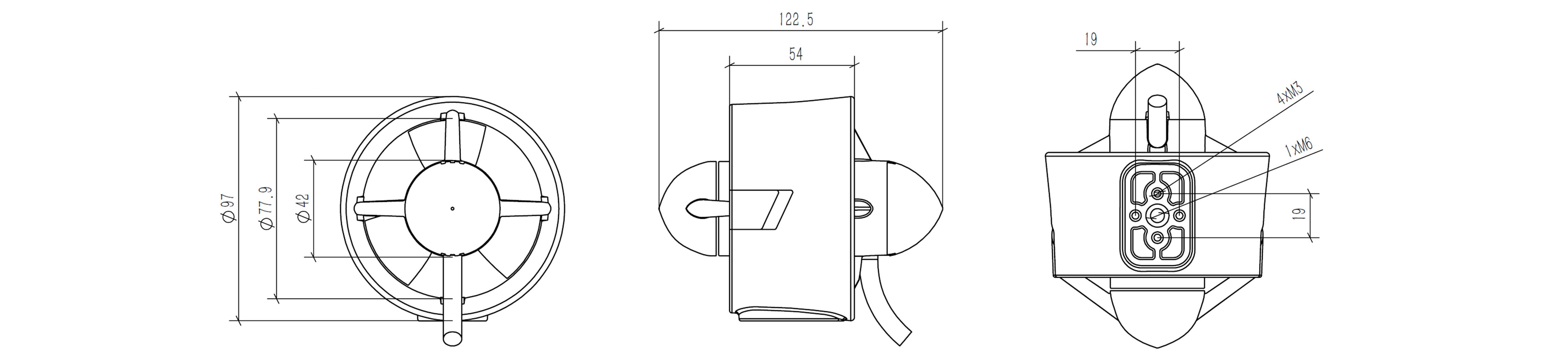
The unit mounts via four M3 threaded holes and one central M6 threaded hole with a spacing of 19 mm, supporting secure mechanical integration into vehicle frames and mounting brackets. The 170 KV and 290 KV models share identical external dimensions, mounting pattern, propeller design, weed guard design, and overall mechanical integration. The HD Aluminum Propeller variants are compatible with Blu-Thrust Z80-170, Blu-Thrust Z80E-170, Blu-Thrust Z80-290, and Blu-Thrust Z80E-290 models.
Suitable for both saltwater and freshwater environments, the thruster should be rinsed with clean water after saltwater use to reduce corrosion risk. While tolerant of limited sand exposure, abrasive particles may accelerate wear—fresh-water flushing is recommended after sediment-rich operation. Aluminum propellers are also susceptible to corrosion and should be rinsed with fresh water after every use.
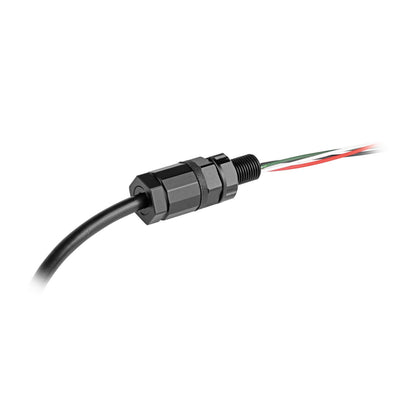
Note: A compatible cable penetrator is required to waterproof and secure the cable connection to your enclosure. Choose a penetrator appropriate for your required depth rating and housing configuration.

Note: A compatible cable penetrator is required to waterproof and secure the cable connection to your enclosure. The Blu-Thrust Z80 series is supplied with a Deep-Sea 3-Core (16 AWG) Underwater Cable, pressure-rated for 300 m / 984 ft operation when paired with the correct penetrator. Choose an option below that matches your depth rating and housing requirements.
Both the standard Z80 models and built-in ESC Z80E models use the same 3-core cable type, and this is the same for both the 170KV and 290KV versions. The standard models provide three motor phase wires for external ESC connection, while the built-in ESC models use Power + / Power – / Signal wiring for direct control. A standalone external ESC board for the standard version will be available soon.
Blu-Sub offers several compatible cable penetrators designed to work with this thruster’s subsea power and signal cable, each suited for different underwater applications:
Deep-Sea Cable Penetrators – Standard, high-pressure design for deepwater, full-depth deployments. Depth Rating: Up to 1,000 m / 3,281 ft
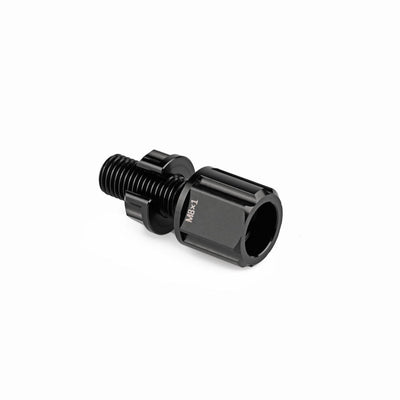
Deep-Sea M10 Gland Cable Penetrators – M10-threaded penetrators with compression glands for secure strain relief and modular housing integration. Depth Rating: Up to 1,000 m / 3,281 ft
Low-Depth M10 Gland Cable Penetrators – Cost-effective, compact solution for shallow-water or low-pressure applications. Depth Rating: Up to 100 m / 328 ft

Blu-Thrust Z60 & Z60E Underwater Thruster
A more compact propulsion platform designed for space-constrained vehicle layouts and moderate thrust requirements. While the Z80 series prioritizes higher maximum output and torque capacity, the Z60 series offers reduced size and weight for smaller ROVs, USVs, diver propulsion vehicles, and compact subsea systems. Available in both standard external ESC and built-in trapezoidal ESC configurations, with a standard 24 V / 6S propeller setup and optional 12 V / 3S 3-blade propeller conversion set.
About the Cable:
The Blu-Thrust Z80 series is supplied with a Deep-Sea 3-Core (16 AWG) Underwater Cable, a rugged subsea cable designed for power and signal transmission to propulsion systems. Both the standard Z80 models and built-in ESC Z80E models use the same cable type, and this is the same for both the 170KV and 290KV versions. Only the internal wiring configuration differs between the standard and built-in ESC models. A standalone external ESC board will soon be available for the non-ESC version, enabling plug-and-play installation using the same connector standard.
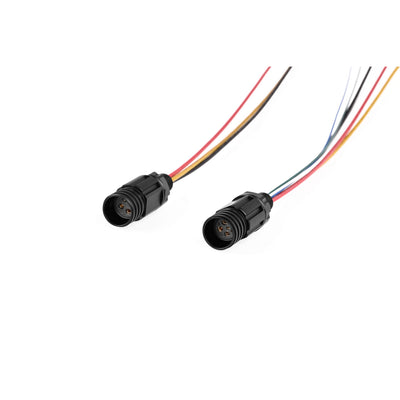
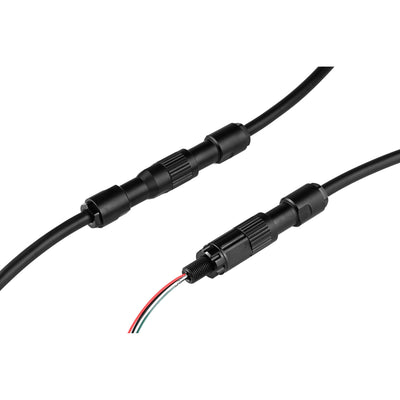
For modular setups, quick-disconnect capability, or extended cable runs, the following compatible connection options are available:
Deep-Sea Cable Connectors – Female Socket & Male Plug
Inline plug-and-socket connectors that allow the thruster’s cable to be terminated with sealed ends for removable, watertight propulsion connections.
Deep-Sea Cable Connectors – M10 Bulkhead
Panel-mounted connector designed for thruster cable pass-through on enclosure walls or end-caps. Requires a matching plug to form a sealed, high-pressure connection.
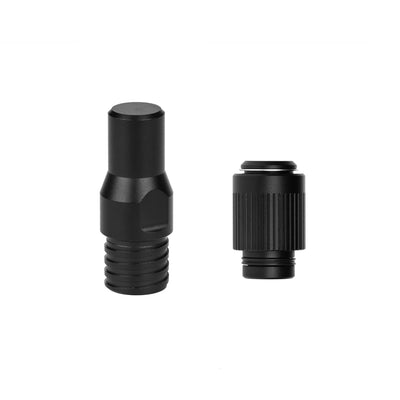
Deep-Sea Cable Connectors – Dummy Sealing Cap
Protects unused thruster cable connectors during storage, transport, or inactive operation by sealing off exposed ends against water ingress.
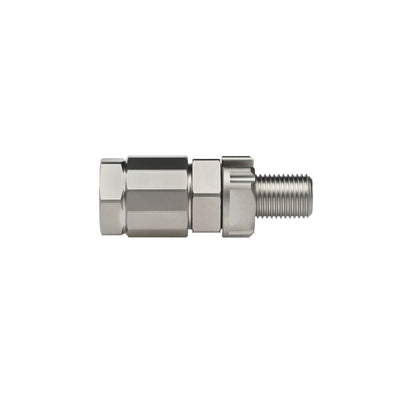
Subsea M10 Coupling Tube
Enables secure inline splicing of thruster cables using penetrators and potting compound.

The Blu-Thrust Z80 series is supplied with a Deep-Sea 3-Core (16 AWG) Underwater Cable, pressure-rated for 300 m / 984 ft when paired with a compatible cable penetrator. Once the cable is routed into your housing through the chosen penetrator, the thruster can be secured to your ROV frame or mounting structure using its built-in M3 and M6 mounting holes. The Z80-170, Z80E-170, Z80-290, and Z80E-290 models share identical mounting dimensions and enclosure compatibility.
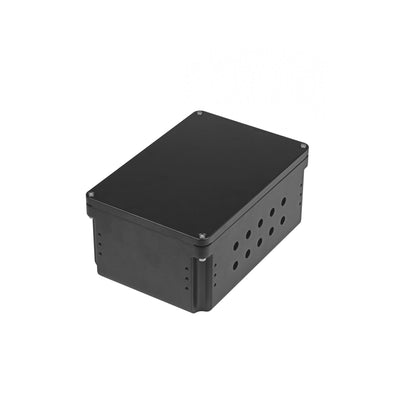
Subsea Watertight Enclosure Box
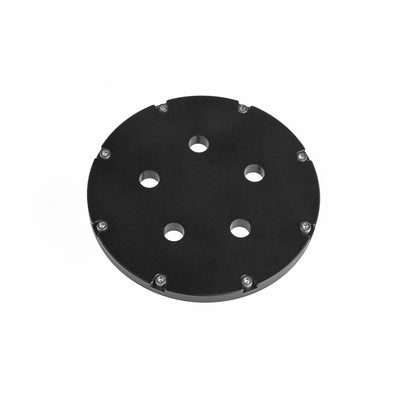
Compact aluminum enclosure rated to 300 m, pre-drilled with twenty M10 ports for penetrator installation—ideal for direct thruster cable pass-through without modification.
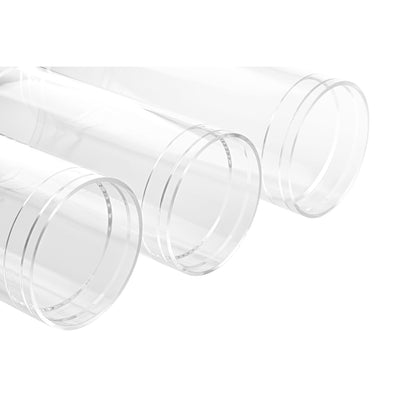
Subsea Enclosure Acrylic Tube
Transparent cast acrylic body rated to 250 m, compatible with Blu-Sub aluminum flanges and end-caps. Choose end-caps with penetrator ports to route thruster cables cleanly into the enclosure.
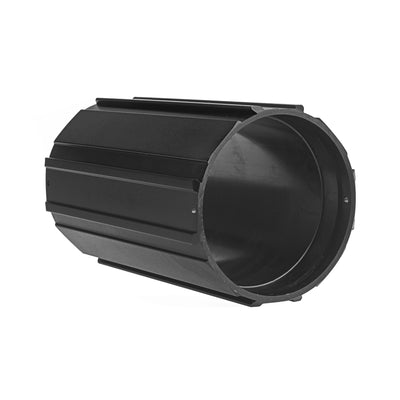
Subsea Enclosure Aluminum Tube
Rugged aluminum tube enclosure rated to 1,000 m. Use with matching deepwater-rated end-caps featuring penetrator ports for thruster cable integration in high-pressure environments.


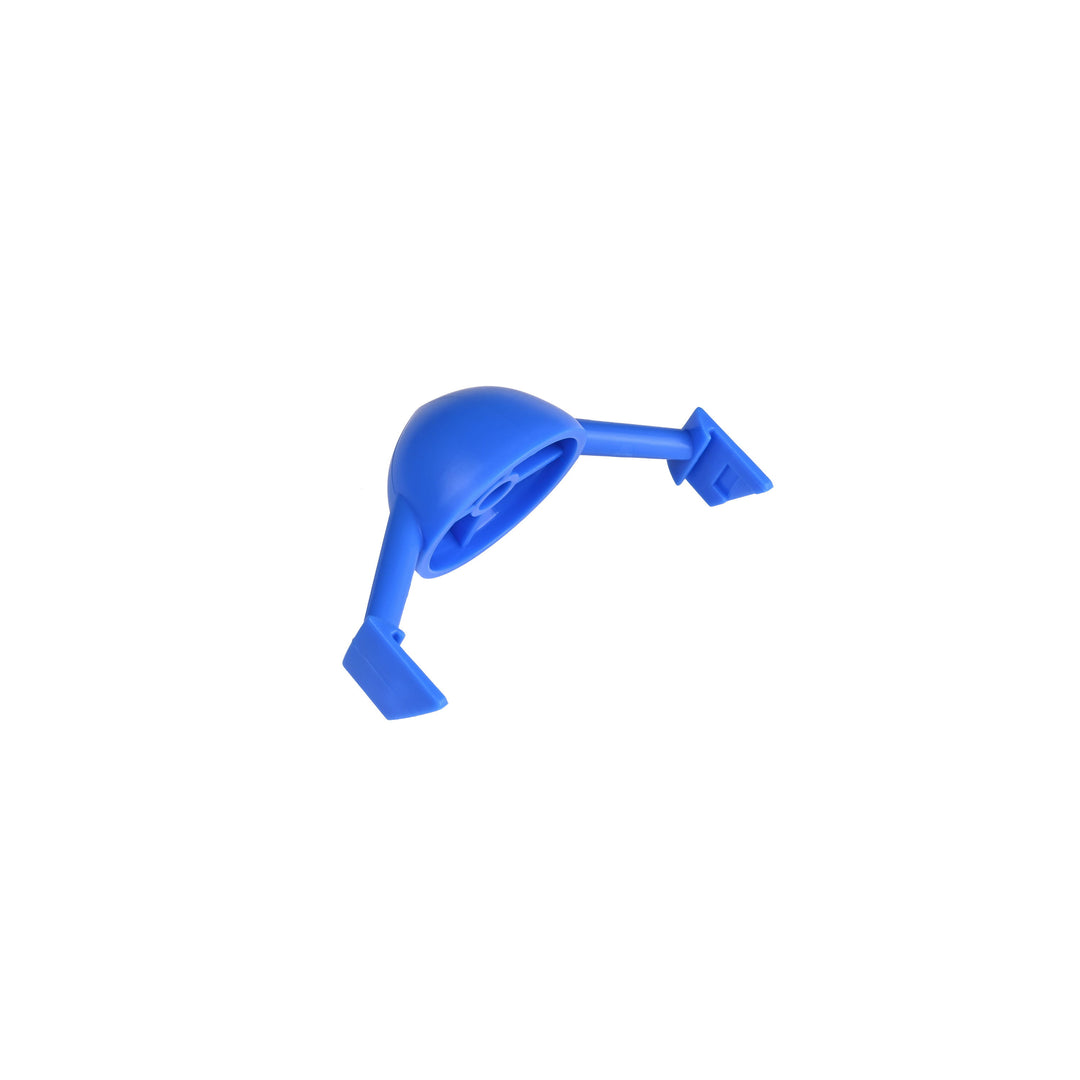
Optional HD aluminum propellers are available for the Blu-Thrust Z80/Z80E platform, offering a stronger direct replacement for the standard plastic propellers while maintaining the same blade profile and similar thrust and power characteristics.
Made from 6061 aluminum with a natural hard anodized finish, these propellers are designed for harsher operating environments such as sandy, silty, or debris-prone waters. The thin aluminum blade edges help cut through weeds and vegetation more effectively than the standard plastic propellers.
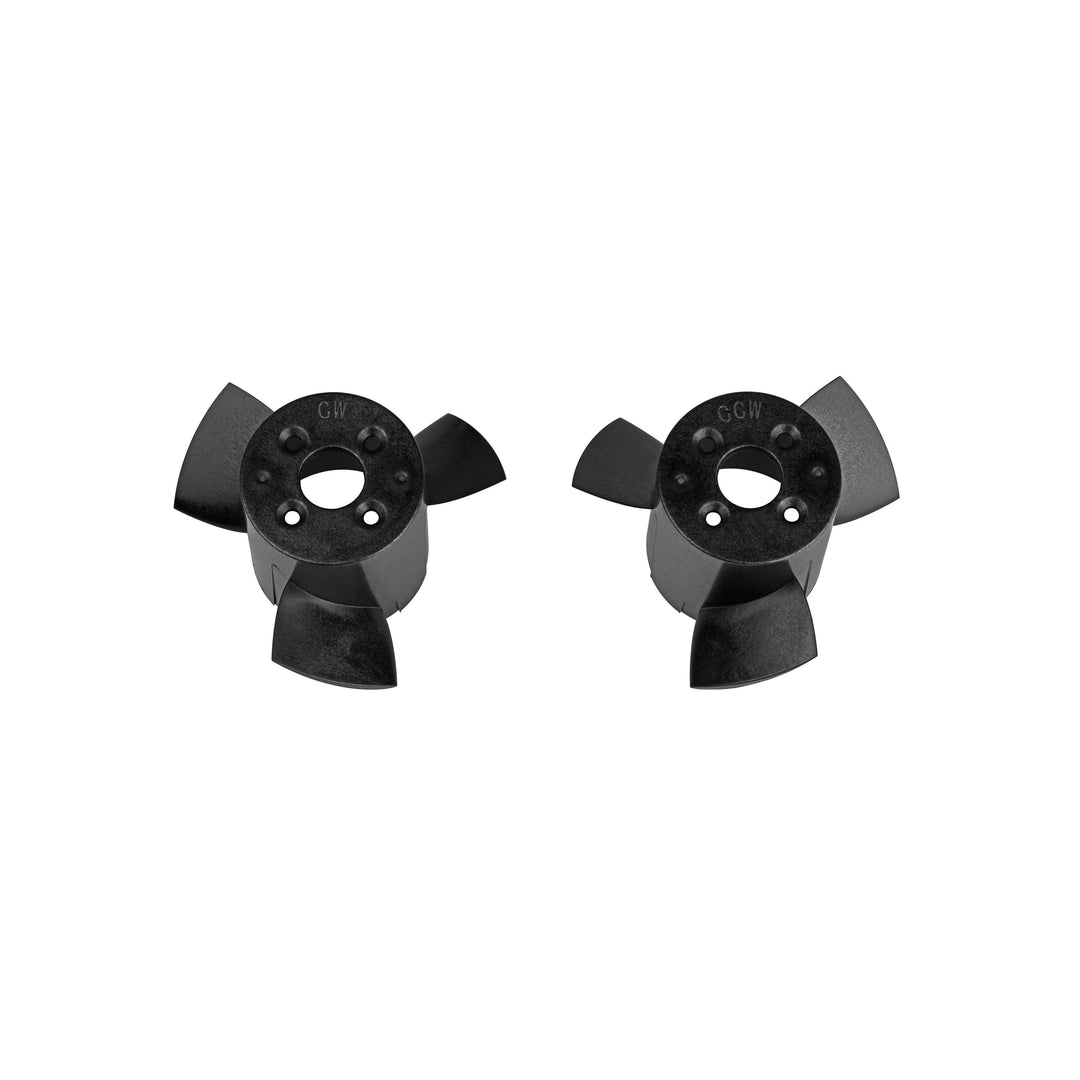
HD Aluminum Propellers are compatible with Blu-Thrust Z80-170, Blu-Thrust Z80E-170, Blu-Thrust Z80-290, and Blu-Thrust Z80E-290 models. They are sold individually in either CW or CCW rotation and include 4 × mounting screws.
Important: Aluminum propellers are stronger than plastic propellers, but they are not indestructible. Impacts with hard foreign objects can cause permanent damage, and abrasive sediment-laden conditions may also accelerate wear on the thruster unit. Rinse with fresh water after every use, especially after saltwater, sandy, or silty operation.
| Item | 170KV Models Blu-Thrust Z80-170 & Blu-Thrust Z80E-170 |
290KV Models Blu-Thrust Z80-290 & Blu-Thrust Z80E-290 |
| Material & Appearance |
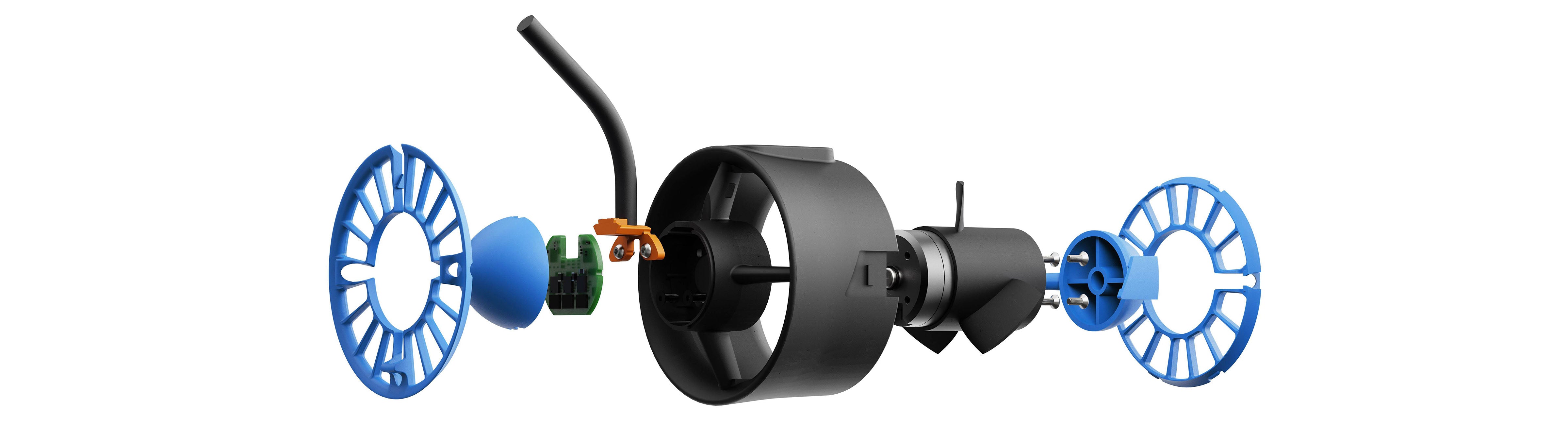
Standard Z80: PC Black + Blue Built-In ESC Z80E: PC Grey Standard Propellers: PC + Glass Fiber Black HD Aluminum Propellers: 6061 Aluminum with Natural Hard Anodizing Weed Guard: PC Blue Snap-On Cap: PC Blue / Grey 316 Stainless Steel Inserts |
Standard Z80: PC Black + Blue Built-In ESC Z80E: PC Grey Standard Propellers: PC + Glass Fiber Black / Grey HD Aluminum Propellers: 6061 Aluminum with Natural Hard Anodizing Weed Guard: PC Blue Snap-On Cap: PC Blue / Grey 316 Stainless Steel Inserts |
| Weight |
Thruster: 500 g Standard Propeller Set: 34.2 g HD Aluminum Propeller: 33 g each Weed Guard: 13.3 g Snap-On Cap: 14.3 g |
Thruster: 500 g Standard Propeller Set: 34.2 g HD Aluminum Propeller: 33 g each Weed Guard: 13.3 g Snap-On Cap: 14.3 g |
| Maximum Rated Depth | 300 m / 984 ft | 300 m / 984 ft |
| Mechanical Endurance (Test Reference) | >200 hours (controlled freshwater testing) | >200 hours (controlled freshwater testing) |
| Max Power |
Without Weed Guard: 300 W With Weed Guard: 335 W |
Without Weed Guard: 365 W With Weed Guard: 405 W |
| Rated Power | 270 W | 320 W |
| Full Throttle Current: |
At 6S Full Charge Voltage: Forward: 11.9 A Reverse: 12.4 A With Weed Guard FWD: 13.2 A With Weed Guard REV: 13.3 A |
At 4S Full Charge Voltage: Forward: 21.7 A Reverse: 21.3 A With Weed Guard FWD: 24.1 A With Weed Guard REV: 22.8 A |
| Full Throttle Thrust: |
At 6S Full Charge Voltage: Forward: 5.6 kgf Reverse: 5.3 kgf With Weed Guard FWD: 3.2 kgf With Weed Guard REV: 3.1 kgf |
At 4S Full Charge Voltage: Forward: 5.7 kgf Reverse: 5.2 kgf With Weed Guard FWD: 3.3 kgf With Weed Guard REV: 3.1 kgf |
| Power Supply Voltage Range | 10 – 25.2 VDC | 10 – 16.8 VDC |
| Rated Voltage | 24 V / 6S Battery | 16 V / 4S Battery |
| Rated Voltage Thrust Parameters |
24 V FWD: 5.3 kgf / 266 W / 11.1 A 24 V REV: 4.6 kgf / 254 W / 10.6 A |
16 V FWD: 5.2 kgf / 315 W / 19.7 A 16 V REV: 4.7 kgf / 307 W / 19.2 A |
| Temperature Range |
Air: –25 °C to 60 °C Water: –10 °C to 40 °C |
Air: –25 °C to 60 °C Water: –10 °C to 40 °C |
| Mounting Details |
Insert Nut Material: 316 Stainless Steel Mounting Threads: 4 × M3 + 1 × M6 Hole Spacing: 19 × 19 mm |
Insert Nut Material: 316 Stainless Steel Mounting Threads: 4 × M3 + 1 × M6 Hole Spacing: 19 × 19 mm |
| Cable |
Length: ≈ 900 mm Spec: 3 × 16 AWG Standard Z80-170: Motor phases (U, V, W) for external ESC Built-In ESC Z80E-170: Power (+) / Power (–) / Signal line Cable Type: Gland penetrator compatible, pressure-rated for 300 m |
Length: ≈ 900 mm Spec: 3 × 16 AWG Standard Z80-290: Motor phases (U, V, W) for external ESC Built-In ESC Z80E-290: Power (+) / Power (–) / Signal line Cable Type: Gland penetrator compatible, pressure-rated for 300 m |
| Motor |
Type: Outrunner Brushless Motor Pole-pairs: 8 KV Rating: 170KV Sealing: Selectively resin-encapsulated, electrically isolated, open-water-contact design Built-In ESC Version: Integrated Trapezoidal ESC |
Type: Outrunner Brushless Motor Pole-pairs: 8 KV Rating: 290KV Sealing: Selectively resin-encapsulated, electrically isolated, open-water-contact design Built-In ESC Version: Integrated Trapezoidal ESC |
* Performance parameters such as mechanical endurance and thrust are influenced by operating environment, duty cycle, test setup, and usage conditions, and may vary in real-world applications.
* Optional Blu-Thrust Z80/Z80E HD Aluminum Propeller variants are available as individual CW or CCW replacement propellers for all Z80-170, Z80E-170, Z80-290, and Z80E-290 models. They use the same blade profile as the standard plastic propellers, so no noticeable difference in power output or thrust is expected after installation. Natural hard anodizing may exhibit slight color variation, while color consistency can typically be maintained within each production batch.
Full throttle thrust parameters at different voltages — 170KV models:
| Voltage (V) | Forward Thrust (kgf) | FWD Thrust Current (A) | Reverse Thrust (kgf) | REV Thrust Current (A) |
| 26 | 5.9 | 12.5 | 5.6 | 13.1 |
| 24 | 5.3 | 11.1 | 4.6 | 10.6 |
| 22 | 4.7 | 9.7 | 4.4 | 10.5 |
| 20 | 3.9 | 8.5 | 3.9 | 9.3 |
| 18 | 3.2 | 7.4 | 3.3 | 8.2 |
| 16 | 2.8 | 6.4 | 2.9 | 7.1 |
| 14 | 2.3 | 5.2 | 2.3 | 5.9 |
| 12 | 1.8 | 4.3 | 1.7 | 4.8 |
| 10 | 1.4 | 3.2 | 1.3 | 3.7 |
Full throttle thrust parameters at different voltages — 290KV models:
| Voltage (V) | Forward Thrust (kgf) | FWD Thrust Current (A) | Reverse Thrust (kgf) | REV Thrust Current (A) |
| 16 | 5.4 | 20.1 | 4.7 | 19.3 |
| 14 | 4.4 | 17.0 | 4.0 | 16.3 |
| 12 | 3.6 | 13.5 | 3.2 | 13.4 |
| 10 | 2.7 | 10.8 | 2.5 | 10.5 |
Data Curve:
* Thrust parameters are actual test data from Blu-Sub's proprietary test bench. Variations may occur across different test environments due to multiple factors. Due to a slight downward measurement bias in our test platform, data obtained from other test systems may generally be higher than those in this table. Note: When used with the weed guard, power consumption increases and thrust decreases measurably. Optional HD Aluminum Propeller variants use the same blade profile as the standard plastic propellers, so no noticeable difference in thrust or power output is expected after installation.
Performance Consistency:
The 170KV and 290KV models share the same Z80 mechanical platform, external dimensions, mounting pattern, propeller design, weed guard design, and overall installation method. The main differences are motor KV rating, voltage optimization, operating voltage range, and current draw. The standard Z80 models use an external ESC, while the Z80E models integrate a trapezoidal ESC inside the thruster housing. On the standard non-ESC versions, measured current draw and response characteristics depend on the external ESC and tuning parameters. The optional Blu-Thrust Z80/Z80E HD Aluminum Propeller variants are compatible with the Blu-Thrust Z80-170, Blu-Thrust Z80E-170, Blu-Thrust Z80-290, and Blu-Thrust Z80E-290 models.
Operational Lifecycle Considerations:
The Blu-Thrust Z80 series is designed as a high-performance underwater propulsion component intended for active use in marine propulsion applications. Like all subsea thrusters, its operational lifespan is influenced by duty cycle, load conditions, water quality, operating depth, and maintenance practices. Controlled laboratory testing has demonstrated continuous rotation capability exceeding 200 hours under fresh-water, indoor conditions. Actual service duration in real-world deployments may vary depending on environmental exposure and usage profile. Routine inspection, cleaning, and appropriate operating limits are recommended to support consistent performance over time. HD Aluminum Propellers provide increased structural strength compared with the standard plastic propellers, but impacts with hard foreign objects can still cause permanent damage. Aluminum propellers are also susceptible to corrosion and should be rinsed with fresh water after every use, especially after saltwater, sandy, or silty operation.
170KV Model Performance Curves (Z80-170 & Z80E-170):
The following thrust and power curves apply to both the Blu-Thrust Z80-170 and Blu-Thrust Z80E-170 models. These curves are based on 24V testing, which represents the primary operating condition for the 170KV platform. Because both models use the same motor, propeller, housing geometry, and mechanical platform, hydraulic thrust performance is effectively identical under equivalent operating conditions. The primary difference between the two models is control architecture: the Z80-170 requires an external ESC, while the Z80E-170 integrates a built-in trapezoidal ESC. When HD Aluminum Propellers are installed, the same blade profile is retained, so the existing thrust and power curves remain representative under equivalent operating conditions.
170KV Thrust Curve (24V):

170KV Power Curve (24V):

290KV Model Performance Curves (Z80-290 & Z80E-290):
The following thrust and power curves apply to both the Blu-Thrust Z80-290 and Blu-Thrust Z80E-290 models. These charts compare operation at 12V and 16V, representing common low-voltage operating conditions for the 290KV platform. The 290KV models are optimized for lower-voltage systems compared with the 170KV versions. Because both models use the same motor, propeller, housing geometry, and mechanical platform, hydraulic thrust performance is effectively identical under equivalent operating conditions. The primary difference between the two models is control architecture: the Z80-290 requires an external ESC, while the Z80E-290 integrates a built-in trapezoidal ESC. When HD Aluminum Propellers are installed, the same blade profile is retained, so the existing thrust and power curves remain representative under equivalent operating conditions.
290KV Thrust Curve (12V vs 16V):

290KV Power Curve (12V vs 16V):

Wiring Definition (Blu-Thrust Z80 — Non-ESC Models):

Wiring Definition (Blu-Thrust Z80E — Built-In ESC Models):

Wiring Warning:
The standard Z80 and built-in ESC Z80E models use different wiring methods. Please confirm the model, housing type, and wiring definition carefully before connection. Incorrect wiring, reverse polarity, overvoltage, or incorrect ESC configuration may permanently damage the thruster.
Rotation Direction, Thrust Direction, and Forward/Reverse Propeller Direction Description:

When replacing propellers, confirm the correct CW or CCW blade direction before installation. The Blu-Thrust Z80/Z80E HD Aluminum Propeller - CCW - Propeller Only and Blu-Thrust Z80/Z80E HD Aluminum Propeller - CW - Propeller Only are sold as individual replacement propellers and include 4 × mounting screws. Extra caution should be used when operating, handling, or testing the thruster with the weed guard, finger guard, or other protective components removed.
If you require a pre-installed gland penetrator with a specified cable length, please contact us and provide the A and B dimensions as shown in the figure below. The penetrator is pressure-rated for 300 m and uses an integrated compression plug and sleeve ring for sealing. We will respond with lead times and price implications, as these may be extended for custom wiring lengths. Generally, the combined A + B measurement should be less than 850 mm.

What is the difference between the standard and built-in ESC versions?
Both versions share identical external dimensions and comparable thrust performance when using the same KV version. The standard models (Blu-Thrust Z80-170 and Blu-Thrust Z80-290) connect to an external ESC via their 3-core cable, while the built-in ESC models (Blu-Thrust Z80E-170 and Blu-Thrust Z80E-290) integrate a trapezoidal ESC inside the housing, simplifying wiring to Power (+), Power (–), and Signal. The Z80E versions also use a grey housing for easy identification.
What is the difference between the 170KV and 290KV versions?
The 170KV versions are optimized for 24 V / 6S systems and operate across a voltage range of 10 – 25.2 VDC. The 290KV versions are optimized for 12 V-class / 4S systems and operate across a voltage range of 10 – 16.8 VDC. The 170KV and 290KV versions share the same Z80 external dimensions, mounting pattern, propeller design, weed guard design, and overall mechanical integration.
How can I identify the 170KV and 290KV models?
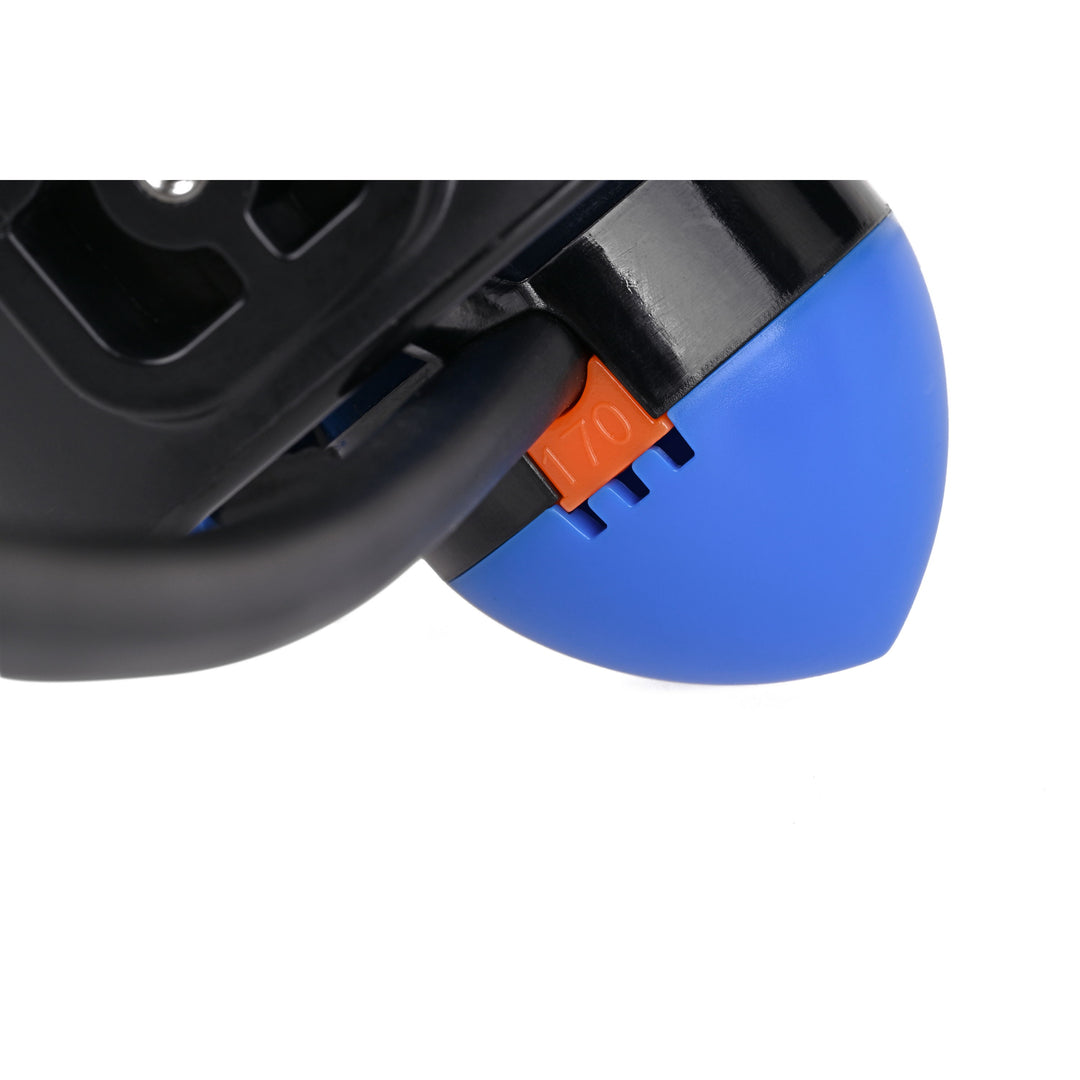
Models marked 170 are the 24 V / 6S optimized versions, while models marked 290 are the 12 V-class / 4S optimized versions. Standard Z80 models use a black + blue housing, while built-in ESC Z80E models use a grey housing.
Is the thruster repairable if damaged or miswired?
No. These thrusters use selective encapsulation and protective coatings and are not intended to be user-serviceable. Damage from overvoltage, reverse polarity, incorrect wiring, incorrect ESC configuration, or severe mechanical shock typically requires replacement rather than repair. The standard Z80 and built-in ESC Z80E models use different wiring methods, so the wiring definition should be checked carefully before connection.
Why are there CW/CCW propellers?
The CW (clockwise) and CCW (counterclockwise) propellers are mirror-image designs used to help balance reactive torque when multiple thrusters are installed. For example, if all thrusters generate thrust with the same propeller rotation direction, the net torque applied to the vehicle can cause undesired yaw. Using a mix of CW and CCW propellers helps reduce this effect and improve handling.
What are the HD Aluminum Propeller variants?
The Blu-Thrust Z80/Z80E HD Aluminum Propeller - CCW - Propeller Only and Blu-Thrust Z80/Z80E HD Aluminum Propeller - CW - Propeller Only are optional 6061 aluminum replacement propellers for the Z80/Z80E platform. They are sold individually in CW or CCW rotation and include the required mounting screws.
Which Z80 models are compatible with the HD Aluminum Propeller?
The HD Aluminum Propeller variants are compatible with the Blu-Thrust Z80-170, Blu-Thrust Z80E-170, Blu-Thrust Z80-290, and Blu-Thrust Z80E-290. They are direct replacement propellers for the Z80/Z80E platform and use the same blade profile as the standard plastic propellers.
Will the HD Aluminum Propeller change thrust or power output?
No noticeable difference is expected. The HD Aluminum Propeller uses the same blade profile as the standard plastic propeller, so thrust and power characteristics remain similar after installation.
Why choose the HD Aluminum Propeller?
The HD Aluminum Propeller provides increased structural strength compared with the standard plastic propeller and is better suited for sandy, silty, or debris-prone environments. The thin aluminum blade edges also help cut through weeds and vegetation more effectively than the standard plastic propellers.
Can the front cap be removed?
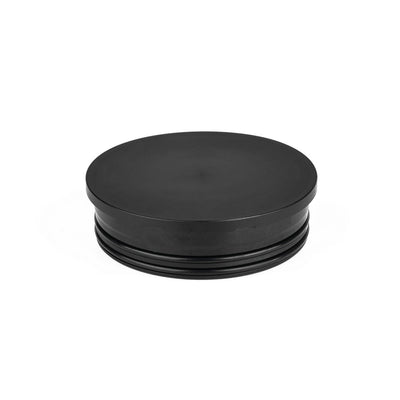
No. The front assembly is fixed, while the rear snap-on cap is designed to be detachable for cleaning or inspection.
Will foreign object insertion or forced blockage cause permanent damage?
It can. Severe blockage—especially debris entanglement or forced rotor stoppage—may overload the motor and/or ESC and can cause permanent damage. Aluminum propellers are stronger than the standard plastic propellers, but they are not indestructible; impacts with hard foreign objects can permanently damage the propeller or thruster.
Is it suitable for sandy underwater environments?
The thruster offers some sand tolerance, but fine abrasive particles may still enter and accelerate wear. After operating in sandy or silty conditions, promptly flush the rotating components with fresh water to minimize abrasive buildup and reduce long-term wear. The optional HD Aluminum Propeller offers improved structural strength for sandy or silty environments, but abrasive sediment-laden conditions may still harm the thruster unit itself.
Can it be used in both saltwater and freshwater?
Yes, it is compatible with both. After use in saltwater, promptly soak and rinse with fresh water to remove salt residue and help reduce corrosion risk or mechanical seizure. Aluminum propellers are also susceptible to corrosion and should be rinsed with fresh water after every use.
Is minor curling at the HD Aluminum Propeller blade edge a quality defect?
No. The aluminum propeller blade edges are extremely thin, and slight curling or minor edge deformation does not affect normal operation.
What is the expected service life?
In laboratory testing, the thruster demonstrated over 200 hours of continuous rotation in freshwater under controlled indoor conditions. Actual service life varies with duty cycle, load, water quality, operating environment, and maintenance practices.
Can it operate in air?
Yes. The Blu-Thrust Z80-170, Blu-Thrust Z80E-170, Blu-Thrust Z80-290, and Blu-Thrust Z80E-290 can operate in air. For extended high-power operation, allow for adequate cooling and avoid sustained stall or blockage conditions.