The optimized propeller and duct geometry have been validated through simulation, practical testing, and long-term underwater evaluation. Each unit undergoes full-power underwater testing during production and may retain minor water residue from final validation.
Durability testing has demonstrated >200 hours of continuous rotation under controlled freshwater indoor conditions. In the standard propeller configuration, the thruster operates across a voltage range of 10 – 25.2 VDC and is optimized for 24 V / 6S systems. At 24 V, it delivers approximately 3.7 kgf of forward thrust under standard test conditions, with maximum thrust approaching ~4 kgf near the upper end of the operating voltage range.
For higher-strength 24V / 6S use, the standard plastic 2-blade propeller can be replaced with the Blu-Thrust Z60 HD Aluminum Propeller. The HD aluminum propeller is compatible with both Blu-Thrust Z60 and Blu-Thrust Z60E thrusters in the standard 24V / 6S configuration and maintains the same thrust and power characteristics as the standard plastic propeller because the blade profile remains identical. The thin aluminum blade edges help cut through weeds and vegetation more effectively than the standard plastic propellers, while the 6061 aluminum construction provides enhanced structural strength.
For 12V-class / 3S systems, the same Z60 or Z60E thruster body can be used with the Blu-Thrust Z60/Z60E 12V 3-Blade Propeller Conversion Set (CCW+CW). This is not a separate 12V motor model; the Z60 and Z60E retain the same approximate 500KV motor platform. The 12V optimization is achieved through the dedicated 3-blade propeller geometry, which is tested for operation across a 9 – 12.6 VDC input range. The HD aluminum propeller is not a 12V / 3S conversion propeller and is only available as a 2-blade propeller for the standard 24V / 6S configuration.
With the 12V 3-blade propeller installed, the thruster delivers up to 1.7 kgf of forward thrust and 1.3 kgf of reverse thrust at 3S full throttle without weed guards under standard test conditions. When the weed guard is installed, thrust output decreases and current draw may vary depending on operating direction, propeller configuration, and test conditions.
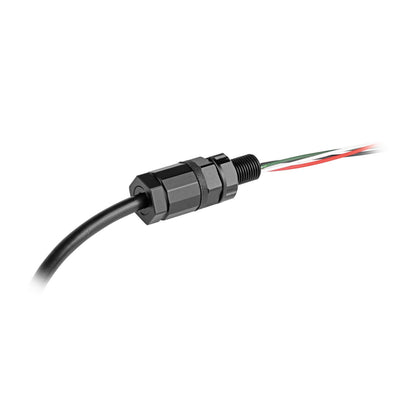
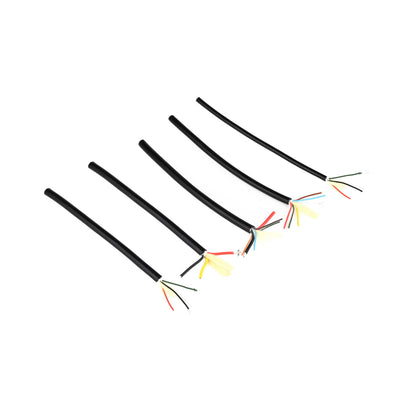
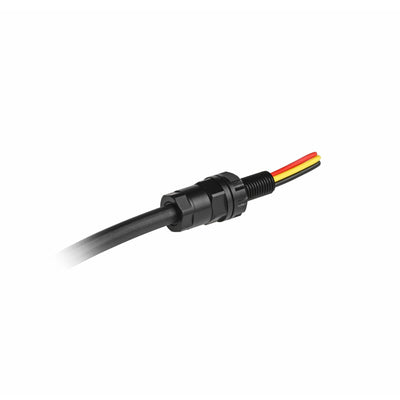
Wiring is provided via the included Deep-Sea 3-Core (20 AWG) Underwater Cable, approximately 900 mm in length. The cable is compatible with Blu-Sub M10 gland cable penetrators and the dedicated Mid-Depth M8 gland cable penetrator for watertight enclosure integration.
The unit mounts using 4 × M3 threaded inserts plus 1 × M5 central threaded insert with a mounting hole spacing of 15 × 25 mm. Suitable for both saltwater and freshwater environments, the thruster should be rinsed with clean water after saltwater use to help reduce corrosion risk.
Note: A compatible cable penetrator is required to waterproof and secure the cable connection to your enclosure. Select a penetrator model that matches your required depth rating and housing configuration.


Note: A compatible cable penetrator is required to waterproof and secure the cable connection to your enclosure. The Blu-Thrust Z60 & Z60E Underwater Thruster is supplied with a Deep-Sea 3-Core (20 AWG) Underwater Cable, pressure-rated for 300 m / 984 ft operation when paired with the correct penetrator. Choose an option below that matches your depth rating and housing requirements.
Both the standard (non-ESC) and built-in ESC versions use the same 3-core cable type. The standard (Z60) version provides three motor phase wires (red / yellow / black) for connection to an external ESC. The built-in ESC version (Z60E) uses a different internal wiring configuration—use the housing color to identify the correct version and avoid incorrect wiring.
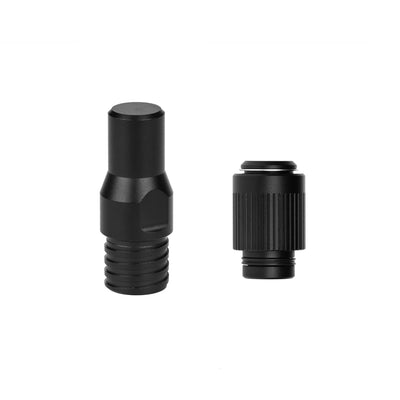
Blu-Sub offers several compatible gland cable penetrators designed to work with this thruster’s subsea power cable:
Deep-Sea M10 Gland Cable Penetrators – M10-threaded compression gland penetrators for secure strain relief and modular enclosure integration. Depth Rating: Up to 1,000 m / 3,281 ft
Low-Depth M10 Gland Cable Penetrators – Compact, cost-effective solution for shallow-water or lower-pressure applications. Depth Rating: Up to 100 m / 328 ft
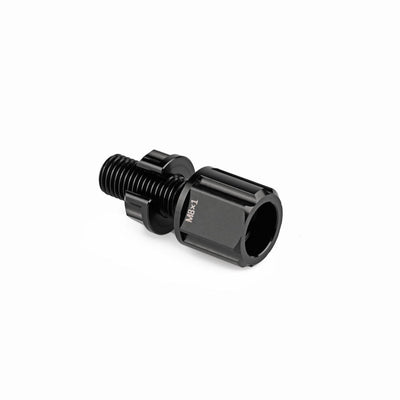
Mid-Depth M8 Gland Cable Penetrator – Dedicated thruster-compatible penetrator designed specifically for the Blu-Thrust Z60 cable configuration. Depth Rating: Up to 300 m / 984 ft

Blu-Thrust Z80 & Z80E Underwater Thruster
A larger, higher-thrust propulsion platform designed for applications requiring increased output and torque capacity. While the Z60 series prioritizes compact integration and space efficiency, the Z80 series delivers greater maximum thrust and mechanical robustness for heavier vehicles, higher-speed operation, or payload-intensive subsea systems. Available in 24V / 6S-optimized and 12V-class / 4S-optimized models, with both standard external ESC and built-in trapezoidal ESC configurations.
About the Cable:
The Blu-Thrust Z60 & Z60E Underwater Thruster is supplied with a
Deep-Sea 3-Core (20 AWG) Underwater Cable,
a rugged subsea cable designed for power transmission to propulsion systems. Both thruster versions (standard non-ESC and built-in ESC) use the same cable type, with only the internal wiring configuration differing.
The standard (Z60) version provides three motor phase wires (red / yellow / black) for connection to an external ESC. The built-in ESC version (Z60E) integrates a trapezoidal ESC within the housing and uses a different internal wiring configuration. Use the housing color to identify the correct version before wiring.
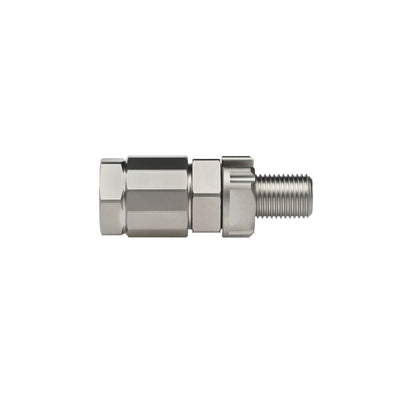
For modular setups, quick-disconnect capability, or extended cable runs, the following compatible connection options are available:
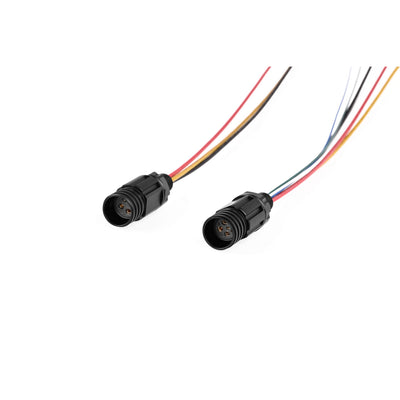
Deep-Sea Cable Connectors – Female Socket & Male Plug
Inline plug-and-socket connectors that allow the thruster’s cable to be terminated with sealed ends for removable, watertight propulsion connections.
Deep-Sea Cable Connectors – M10 Bulkhead
Panel-mounted connector designed for thruster cable pass-through on enclosure walls or end-caps. Requires a matching plug to form a sealed, high-pressure connection.
Deep-Sea Cable Connectors – Dummy Sealing Cap
Protects unused thruster cable connectors during storage, transport, or inactive operation by sealing off exposed ends against water ingress.
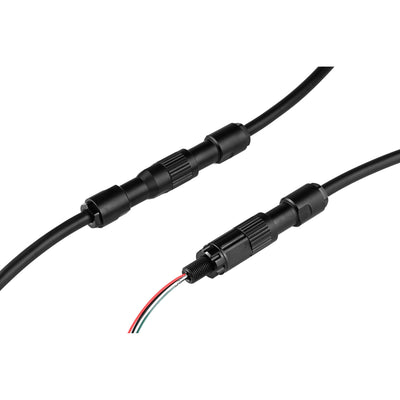
Subsea M10 Coupling Tube
Enables secure inline splicing of thruster cables using compatible gland penetrators and potting compound.

The Blu-Thrust Z60 & Z60E Underwater Thruster is supplied with a Deep-Sea 3-Core (20 AWG) Underwater Cable, pressure-rated for 300 m / 984 ft when paired with a compatible gland penetrator. Once the cable is routed into your housing through the chosen penetrator, the thruster can be secured to your ROV frame or mounting structure using its built-in 4 × M3 threads plus 1 × M5 central thread with a mounting hole spacing of 15 × 25 mm. Both the standard and built-in ESC versions share identical mounting dimensions and enclosure compatibility.
Subsea Watertight Enclosure Box
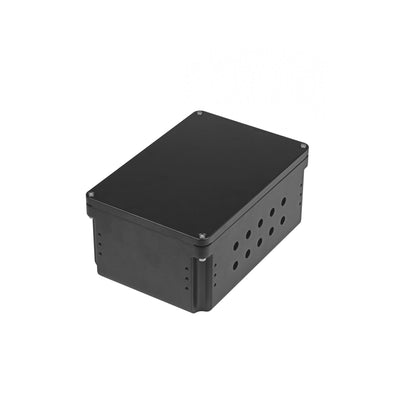
Compact aluminum enclosure rated to 300 m, pre-drilled with twenty M10 ports for penetrator installation—ideal for direct thruster cable pass-through without modification.
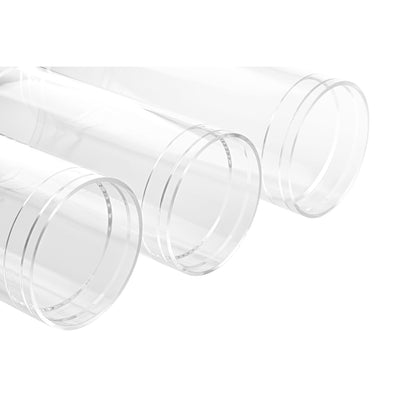
Subsea Enclosure Acrylic Tube
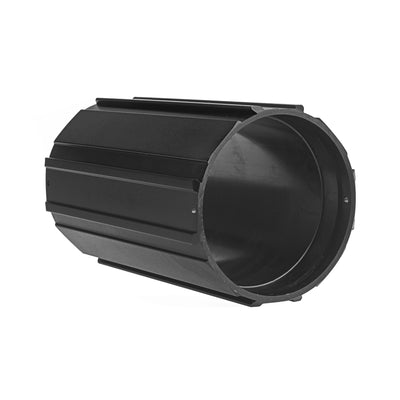
Transparent cast acrylic body rated to 250 m, compatible with Blu-Sub aluminum flanges and end-caps. Select end-caps with penetrator ports to route thruster cables cleanly into the enclosure.
Subsea Enclosure Aluminum Tube
Rugged aluminum tube enclosure rated to 1,000 m. Use with matching end-caps featuring penetrator ports for thruster cable integration in higher-pressure environments.


Blu-Thrust Z60/Z60E 12V 3-Blade Propeller Conversion Set (CCW+CW) allows the same Blu-Thrust Z60 or Z60E thruster body to be configured for 12V-class / 3S operation by replacing the original propellers with a dedicated 3-blade propeller set.
This is not a separate 12V motor model. The Z60 and Z60E retain the same approximate 500KV motor platform; the 12V optimization is achieved through the propeller geometry. This keeps the Z60 lineup simple while allowing customers to choose either the standard 24V / 6S propeller configuration or the optional 12V / 3S conversion configuration.
Conversion Set Includes:
1 × 12V 3-blade CCW propeller
1 × 12V 3-blade CW propeller
4 × installation screws
12V / 3S Performance Reference:
Voltage Range: 9 – 12.6 VDC
Maximum Power: 110 W
Full Throttle Thrust, No Weed Guard: Forward 1.7 kgf / Reverse 1.3 kgf
Full Throttle Thrust, With Weed Guard: Forward 1.3 kgf / Reverse 0.9 kgf
Important Installation Note:
The 12V 3-blade propellers use the same mounting screws as the standard Z60/Z60E 2-blade propellers.
For propeller replacement, weed guard installation, and duct disassembly guidance, see the Blu-Thrust Z60 / Z80 Weed Guard Assembly Guide.

Optional HD aluminum propellers are available for the Blu-Thrust Z60 and Blu-Thrust Z60E platform, offering a stronger direct replacement for the standard 24V / 6S plastic propellers while maintaining the same blade profile and no noticeable difference in thrust or power characteristics.
Made from 6061 aluminum with a natural hard anodized finish, these propellers are designed for harsher operating environments such as sandy, silty, or vegetation-heavy waters. The thin aluminum blade edges help cut through weeds and vegetation more effectively than the standard plastic propellers.
HD Aluminum Propellers are compatible with the standard 24V / 6S 2-blade configuration of the Blu-Thrust Z60 and Blu-Thrust Z60E. They are sold individually in either CW or CCW rotation and include 2 × mounting screws.
Important: These are 2-blade propellers for the standard 24V / 6S configuration only. They are not compatible with the 12V / 3S 3-blade conversion configuration. Aluminum propellers are stronger than plastic propellers, but they are not indestructible. Impacts with hard foreign objects can cause permanent damage, and abrasive sandy or silty conditions may accelerate wear on the propeller or thruster unit. Rinse with fresh water after every use, especially after saltwater, sandy, or silty operation.

| Item | Blu-Thrust Z60 Thruster (Z60 Standard & Z60E Built-In ESC Versions) |
| Material & Appearance |
Standard: PC Black + Blue Built-In ESC: PC Grey Standard Propellers: PC + Glass Fiber HD Aluminum Propeller: 6061 Aluminum, Natural Hard Anodized 12V 3-Blade Propeller Conversion Set: Nylon + Glass Fiber, Black Weed Guard: PC Insert Nuts: 316 Stainless Steel |
| Weight |
Thruster: 245 g Standard Propeller Set: 16 g HD Aluminum Propeller: 17 g each 12V 3-Blade Propeller Conversion Set: 16 g Weed Guard (Front & Rear Set): 18 g |
| Maximum Rated Depth | 300 m / 984 ft |
| Rated Mechanical Durability | >200 hours |
| Maximum Power |
Standard 24V / 6S Propeller Configuration: Without Weed Guard: 290 W With Weed Guard: 340 W HD Aluminum Propeller Configuration: Same as Standard 24V / 6S Propeller Configuration 12V / 3S 3-Blade Propeller Conversion Configuration: Without Weed Guard: 110 W With Weed Guard: 110 W |
| 6S Full Throttle Current (No Weed Guard) |
Standard 24V / 6S Propeller Configuration: Forward: 11.5 A Reverse: 11.1 A HD Aluminum Propeller Configuration: Same as Standard 24V / 6S Propeller Configuration |
| 6S Full Throttle Current (With Weed Guard) |
Standard 24V / 6S Propeller Configuration: Forward: 11.1 A Reverse: 13.5 A HD Aluminum Propeller Configuration: Same as Standard 24V / 6S Propeller Configuration |
| 6S Full Throttle Thrust (No Weed Guard) |
Standard 24V / 6S Propeller Configuration: Forward: 4 kgf Reverse: 3.7 kgf HD Aluminum Propeller Configuration: Same as Standard 24V / 6S Propeller Configuration |
| 6S Full Throttle Thrust (With Weed Guard) |
Standard 24V / 6S Propeller Configuration: Forward: 3.2 kgf Reverse: 3.7 kgf HD Aluminum Propeller Configuration: Same as Standard 24V / 6S Propeller Configuration |
| Power Supply Voltage Range |
Standard 24V / 6S Propeller Configuration: 10 – 25.2 VDC HD Aluminum Propeller Configuration: Same as Standard 24V / 6S Propeller Configuration 12V / 3S 3-Blade Propeller Conversion Configuration: 9 – 12.6 VDC |
| Rated Temperature |
Air: –25 °C to 60 °C Water: –10 °C to 40 °C |
| Mounting Details |
Insert Nut Material: 316 Stainless Steel Mounting Hole Thread: 4 × M3 + 1 × M5 Mounting Hole Spacing: 15 × 25 mm |
| Cable |
Length: ≈ 900 mm Spec: 3 × 20 AWG Standard Version (Z60): Three motor phase wires (red / yellow / black) for external ESC Built-In ESC Version (Z60E): Different internal wiring configuration — use housing color to identify the correct version to avoid incorrect connection |
| Sealing Method | Resin full-encapsulated isolation |
| Motor |
Type: Outrunner Brushless Motor KV Value (approx.): 500 Built-In ESC Version (Z60E): Built-in Trapezoidal ESC HD Aluminum Propeller Note: Same motor, KV rating, blade profile, and 24V / 6S performance characteristics as the standard 2-blade propeller configuration. The HD aluminum propeller is not a 12V / 3S conversion propeller. 12V Configuration Note: Same motor and KV rating; 12V optimization is achieved using the dedicated 3-blade propeller conversion set. |
* Parameters such as mechanical life and thrust are influenced by operating environment, duty cycle, and usage conditions, and may vary in real-world applications.
* HD Aluminum Propeller notes: The Blu-Thrust Z60 HD Aluminum Propeller is a 2-blade replacement propeller for the standard 24V / 6S Z60 and Z60E configuration only. It is made from 6061 aluminum with a natural hard anodized finish and weighs 17 g each. Natural hard anodizing may exhibit slight color variation, though color consistency can generally be maintained within each production batch. The thin blade edges may show slight curling or deformation, which is not normally considered a quality defect and does not affect normal operation. Aluminum propellers are susceptible to corrosion and should be rinsed thoroughly with fresh water after every use.
Full throttle thrust parameters at different voltages — standard 24V / 6S propeller configuration:
| Voltage (V) | Forward Thrust (kgf) | FWD Thrust Current (A) | Reverse Thrust (kgf) | REV Thrust Current (A) |
| 26 | 4.2 | 12.3 | 4.0 | 11.8 |
| 24 | 3.7 | 11.2 | 3.5 | 10.4 |
| 22 | 3.1 | 9.4 | 3.2 | 9.2 |
| 20 | 2.6 | 8.2 | 2.7 | 7.9 |
| 18 | 2.2 | 6.9 | 2.3 | 6.9 |
| 16 | 1.8 | 5.7 | 1.9 | 5.8 |
| 14 | 1.5 | 4.7 | 1.5 | 4.8 |
| 12 | 1.0 | 3.7 | 1.0 | 3.7 |
| 10 | 0.8 | 2.8 | 0.8 | 2.9 |
* The Blu-Thrust Z60 HD Aluminum Propeller uses the same blade profile as the standard 24V / 6S plastic propeller, so the standard 24V / 6S thrust and current data also applies to the HD aluminum propeller configuration.
Full throttle thrust parameters — 12V / 3S 3-blade propeller conversion configuration:
| Configuration | Forward | Reverse |
| 3S Full Throttle Current (No Weed Guard) | 8.8 A | 7.9 A |
| 3S Full Throttle Current (With Weed Guard) | 8.7 A | 8.1 A |
| 3S Full Throttle Thrust (No Weed Guard) | 1.7 kgf | 1.3 kgf |
| 3S Full Throttle Thrust (With Weed Guard) | 1.3 kgf | 0.9 kgf |
* The Blu-Thrust Z60 HD Aluminum Propeller is not used for the 12V / 3S 3-blade propeller conversion configuration.


Data Curve:
* Thrust parameters are measured test data obtained from a dedicated underwater thruster test bench. Variations may occur across different test environments due to multiple factors. When used with the weed guard, thrust output decreases and current draw may vary depending on operating direction, propeller configuration, and test conditions. The Blu-Thrust Z60 HD Aluminum Propeller uses the same blade profile as the standard 24V / 6S plastic propeller, so the standard 24V / 6S thrust and power data also applies to the HD aluminum propeller configuration.
Performance Consistency:
The Blu-Thrust Z60 (no built-in ESC) and Blu-Thrust Z60E (built-in trapezoidal ESC) share identical external dimensions and core performance parameters when using the same propeller configuration. Differences relate to wiring architecture, housing color identification, and ESC integration. For the standard (non-ESC) version, measured current draw and response characteristics depend on the selected external ESC and tuning parameters. The Blu-Thrust Z60 HD Aluminum Propeller is a direct 2-blade replacement for the standard 24V / 6S plastic propeller and maintains the same thrust and power characteristics because the blade profile remains identical. It does not change the motor, KV rating, cable, mounting pattern, depth rating, or 24V / 6S performance data. The Blu-Thrust Z60/Z60E 12V 3-Blade Propeller Conversion Set (CCW+CW) does not change the motor, KV rating, cable, mounting pattern, or depth rating; it changes the propeller geometry to optimize the same Z60/Z60E thruster platform for 12V / 3S operation. The HD aluminum propeller is not used for the 12V / 3S configuration.
Operational Lifecycle Considerations:
Laboratory freshwater testing demonstrates >200 hours of continuous operation under controlled indoor conditions. Actual service life varies depending on duty cycle, load conditions, water quality, operating depth, propeller configuration, debris exposure, and maintenance practices. Routine inspection, cleaning, and operation within specified limits are recommended to support consistent performance over time. The Blu-Thrust Z60 HD Aluminum Propeller provides enhanced structural strength compared with the standard plastic propeller, but it is not indestructible. Impacts with foreign objects can cause permanent damage, and abrasive sandy or silty conditions may still accelerate wear on the propeller or thruster unit. Aluminum is susceptible to corrosion and should be rinsed thoroughly with fresh water after every use.
24V Thrust Curve:
Standard 24V / 6S propeller configuration for Blu-Thrust Z60 and Z60E. This data also applies to the Blu-Thrust Z60 HD Aluminum Propeller, which uses the same blade profile as the standard 24V / 6S plastic propeller.

24V Power Curve:
Standard 24V / 6S propeller configuration for Blu-Thrust Z60 and Z60E. This data also applies to the Blu-Thrust Z60 HD Aluminum Propeller, which uses the same blade profile as the standard 24V / 6S plastic propeller.

12V Thrust Curve:
12V / 3S 3-blade propeller conversion configuration for Blu-Thrust Z60 and Z60E. The Blu-Thrust Z60 HD Aluminum Propeller is not used for the 12V / 3S configuration.

12V Power Curve:
12V / 3S 3-blade propeller conversion configuration for Blu-Thrust Z60 and Z60E. The Blu-Thrust Z60 HD Aluminum Propeller is not used for the 12V / 3S configuration.

Wiring Definition (Blu-Thrust Z60 — Non-ESC Models):

Wiring Definition (Blu-Thrust Z60E — Built-In ESC Models):

Wiring Warning:
The standard Z60 and built-in ESC Z60E models use different wiring methods. Please confirm the model, housing color, and wiring definition carefully before connection. Incorrect wiring, reverse polarity, overvoltage, or incorrect ESC configuration may permanently damage the thruster.
Rotation Direction, Thrust Direction, and Forward/Reverse Propeller Direction Description:

Propeller and Weed Guard Installation Reference:
For propeller replacement, weed guard installation, and duct disassembly guidance, see the
Blu-Thrust Z60 / Z80 Weed Guard Assembly Guide.
This guide is applicable when replacing the standard Z60/Z60E propellers, installing or removing weed guards, replacing the standard plastic 2-blade propeller with the Blu-Thrust Z60 HD Aluminum Propeller, or converting a Z60/Z60E thruster to the 12V 3-blade propeller configuration.
Important HD Aluminum Propeller Screw Note:
The Blu-Thrust Z60 HD Aluminum Propeller is supplied with 2 mounting screws and is used only as a 2-blade replacement for the standard 24V / 6S propeller configuration.
Important 12V 3-Blade Propeller Screw Note:
The 12V 3-blade propellers use the same mounting screws as the standard Z60/Z60E 2-blade propellers.
Cable Length Reference:
The included thruster cable is approximately 900 mm in length. Ensure sufficient internal clearance and strain relief when routing through a compatible gland cable penetrator to maintain watertight enclosure integrity.

What is the difference between the standard and built-in ESC versions?
Both versions share identical external dimensions and core performance parameters when using the same propeller configuration. The standard model (Blu-Thrust Z60) requires connection to an external ESC via its three motor phase wires (red, yellow, black). The built-in ESC version (Blu-Thrust Z60E) integrates a specially tuned trapezoidal ESC inside the housing, reducing internal equipment bay space requirements while supporting effective drive heat dissipation. The Z60E uses a grey housing for version identification and wiring distinction.
Is the 12V version a different Z60 motor model?
No. The 12V configuration is not a separate motor model. The Z60 and Z60E remain the same approximate 500KV thruster platform. 12V optimization is achieved by replacing the standard propellers with the Blu-Thrust Z60/Z60E 12V 3-Blade Propeller Conversion Set (CCW+CW).
What does the 12V 3-blade propeller conversion set include?
The conversion set includes 1 × 12V 3-blade CCW propeller, 1 × 12V 3-blade CW propeller, and 4 × installation screws.
When should I choose the standard 24V / 6S propeller configuration?
Choose the standard propeller configuration when your vehicle uses a 24V-class / 6S power system and you want the highest Z60 thrust output. This is the standard configuration supplied with the Z60 and Z60E thruster kits.
What is the Blu-Thrust Z60 HD Aluminum Propeller?
The Blu-Thrust Z60 HD Aluminum Propeller is a 6061 aluminum 2-blade replacement propeller for the standard 24V / 6S Blu-Thrust Z60 and Blu-Thrust Z60E thruster configuration. It is sold individually in separate CW and CCW versions and includes 2 × mounting screws.
Does the HD aluminum propeller work with both Z60 and Z60E?
Yes. The HD aluminum propeller is compatible with both the Blu-Thrust Z60 and Blu-Thrust Z60E thrusters when used in the standard 24V / 6S 2-blade propeller configuration.
Can the HD aluminum propeller be used for the 12V / 3S configuration?
No. The HD aluminum propeller is a 2-blade propeller for the standard 24V / 6S configuration only. It is not a 12V / 3S conversion propeller and is not available in a 3-blade version.
Will the HD aluminum propeller change thrust or power output?
No noticeable difference is expected. The HD aluminum propeller uses the same blade profile as the standard plastic 2-blade propeller, so thrust and power characteristics remain effectively identical after installation.
Why choose the HD aluminum propeller instead of the standard plastic propeller?
The HD aluminum propeller provides enhanced structural strength and is less prone to fracture than the standard plastic propeller. Its thin aluminum blade edges also help cut through weeds and vegetation more effectively than the standard plastic propellers.
Is minor curling or bending at the aluminum blade edge a defect?
No. The aluminum blade edges are extremely thin, and slight curling or minor edge deformation is not normally considered a quality defect. Minor edge curling does not affect normal operation.
Is the HD aluminum propeller indestructible?
No. Although stronger than the standard plastic propeller, the aluminum propeller can still be permanently damaged by impacts with rocks, hard debris, foreign objects, or severe blockage.
Does the HD aluminum propeller require special maintenance?
Yes. Aluminum is susceptible to corrosion, especially after saltwater use. Rinse the propeller and thruster thoroughly with fresh water after every use.
When should I choose the 12V 3-blade propeller conversion set?
Choose the 12V 3-blade propeller conversion set when your vehicle uses a 12V-class / 3S battery system, or when lower-voltage compatibility is more important than maximum Z60 thrust output. This can be useful for compact ROVs, student vehicles, prototypes, and systems already built around a 12V power architecture.
Does the 12V propeller conversion set work with both Z60 and Z60E?
Yes. The 12V 3-blade propeller conversion set is compatible with both the Blu-Thrust Z60 and Blu-Thrust Z60E thrusters.
Does the 12V conversion change the depth rating or mounting dimensions?
No. The 12V conversion changes the propellers only. It does not change the thruster body, cable, sealing method, mounting pattern, or 300 m / 984 ft depth rating.
Can I use the original standard propeller screws with the 12V 3-blade propeller conversion set?
Yes. The 12V 3-blade propellers use the same mounting screws as the standard Z60/Z60E 2-blade propellers.
Is the thruster repairable if damaged or miswired?
No. The motor utilizes fully resin-encapsulated isolation sealing and is not intended to be user-serviceable. Severe electrical or mechanical damage typically requires replacement.
Why are there CW/CCW propellers?
The CW (clockwise) and CCW (counterclockwise) propellers are mirror-image designs used to help balance reactive torque generated during motor rotation. In multi-thruster systems, using matched CW and CCW propellers can help reduce unwanted rotational forces on the vehicle.
What does the “VENT” mark on the propeller blade mean?
“VENT” indicates the water inlet and outlet openings used for cooling the motor stator. For the standard Z60 series propellers, only two screws are required for installation. The remaining two VENT openings must be left unobstructed to allow proper water circulation and cooling.
Can the front cap be removed?
No. The front assembly is non-removable. The thrust duct assembly can be disassembled to allow propeller replacement and cleaning of foreign objects.
Will foreign object insertion or forced blockage cause permanent damage?
Yes. Severe blockage may permanently damage the motor or ESC through burnout.
Is it suitable for sandy underwater environments?
The thruster offers some sand resistance, but fine abrasive particles may still cause wear. After operating in sandy conditions, rinse the rotating components with fresh water to help reduce abrasive friction and long-term wear.
Can it be used in both saltwater and freshwater?
Yes. After use in saltwater, it should be promptly rinsed with fresh water to help reduce corrosion risk.
What is the expected service life?
Laboratory freshwater testing demonstrates 200+ hours of continuous operation. Actual service life varies depending on operating environment and usage conditions.
Can it operate in air?
Yes. There is no limit to the continuous rotation time in air.